
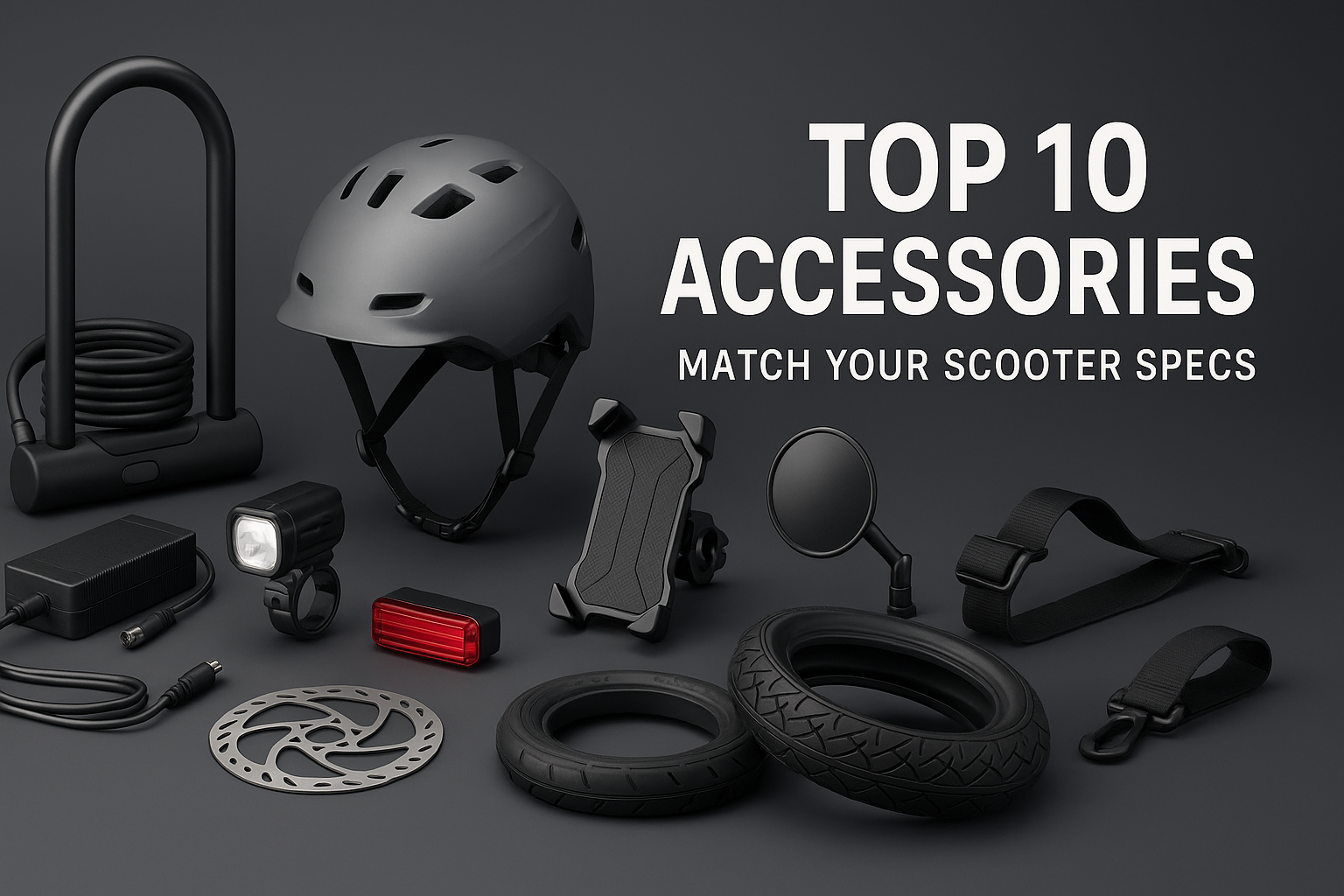
Upgrading is simple once your gear truly matches your scooter’s numbers. Accordingly, this guide spotlights ten essentials you can align with battery voltage, connector type, tire size, brake setup, handlebar diameter, IP rating, weight, and folded size. Moreover, if you want quick real-world sizing context, check the spec-driven overviews for the Hiboy S2 Pro and the Segway Ninebot E2 Pro. Finally, each section ends with one practical Amazon pick so you can move from research to purchase confidently and quickly.
Quick Compatibility Guide (Chart)
| Spec | What to Check | Compatible Options | Notes |
|---|---|---|---|
| Battery Voltage & Charger Output | 36 V packs charge to ~42 V; 48 V packs to ~54.6 V; therefore, confirm output voltage and max current (A) on the charger label. | 42 V 2–3 A chargers for 36 V; 54.6 V 2–3 A for 48 V. | Match voltage exactly; furthermore, keep current within manual limits. |
| Connector Type | Measure or compare plug: DC 5.5×2.1 mm, 5.5×2.5 mm, GX16-3, XLR-3. | Multi-tip kits or exact-fit OEM. | Never force a connector; in addition, verify polarity. |
| Tire Size & Width | Sidewall stamping (e.g., 8.5×2, 10×2.125). | Same size and width; tubed or tubeless to match rim. | Choose tread for terrain and weather; meanwhile, check fender clearance. |
| Tubed vs. Tubeless | Check rim and valve type. | Inner tubes for tubed rims; tubeless tires + sealant for tubeless rims. | Do not mix types unless the rim supports it; otherwise, leaks follow. |
| Brake Type | Mechanical disc, hydraulic disc, or e-brake only. | Pads must match caliper; rotors must match mounting. | Bed-in new pads/rotors for best bite; consequently, noise drops. |
| Rotor Size | Measure rotor diameter (e.g., 140/160 mm). | Replacement must match diameter and 6-bolt pattern. | Larger rotors require caliper/frame clearance; otherwise, rub occurs. |
| Handlebar Diameter | Most scooters use 22.2 mm. | Phone mounts, mirrors, and lights with 22.2 mm clamps or shims. | Some bars vary; therefore, measure first. |
| IP Rating | Manual label (e.g., IPX4, IP54, IP55, IPX6). | Lights and mounts with equal or higher rating. | IP resists ingress, not immersion; as a result, avoid submersion. |
| Deck & Folded Size | Tape-measure both. | Straps rated above scooter weight; bags sized to folded dims. | Extra capacity increases durability; similarly, comfort improves. |
| Weight | Actual scooter weight. | Pick accessories rated above that weight. | A margin of safety helps over time; in short, overbuild slightly. |
The Top 10 Accessories (Matched by Specs)
1) Smart Charger (Match Voltage, Current, and Connector)
What it is & why it matters.
A smart charger refills lithium-ion packs safely and consistently. Because lithium cells are voltage-sensitive, the correct output prevents damage and controls heat. Furthermore, a precise connector and polarity avoid arcing, wobble, or premature wear.
How to match it to your specs.
- First, match voltage: 36 V pack → 42 V charger; 48 V pack → 54.6 V.
- Next, set current within the manual’s limit; 2 A is gentle, 3 A+ is quicker.
- Then, confirm connector: 5.5×2.1, 5.5×2.5, GX16-3, or XLR-3.
- Also, verify polarity (center-positive is common).
- Finally, prefer UL/ETL safety listings and over-voltage protection.
Buying checklist.
- Clearly labeled output specs and sturdy strain relief.
- Additionally, adequate cooling and legible LED status.
- Moreover, cable length that suits your parking spot.
Install & usage tips.
Plug wall → charger → scooter in that order; consequently, the brick avoids inrush stress. Also, keep it ventilated and off soft surfaces.
Amazon pick:

2) Lock for Scooters (Shackle/Cable/Folding That Fits Your Frame)
What it is & why it matters.
Scooters offer fewer lock points than bikes; therefore, a compact U-lock plus a short cable often balances security, clearance, and carry weight.
How to match it to your specs.
- First, identify a frame/stem lock point that meets a fixed rack.
- Next, measure shackle interior vs. deck height and stem diameter.
- Then, weigh carry burden against security level for your area.
- Finally, choose weather-protected cylinders and coated shackles.
Buying checklist.
- Hardened shackle, double deadbolt, and a frame mounting bracket.
- Additionally, a short cable for a wheel or fork.
- Moreover, key replacement support for peace of mind.
Install & usage tips.
Lock the frame, keep minimal slack, and orient the keyway down. Additionally, use an indoor anchor for overnight storage.
Amazon pick:

3) Helmet (Certifications Matched to Speed & Use)
What it is & why it matters.
Your helmet mitigates both linear and rotational impacts. Consequently, models using MIPS or similar slip-plane tech can reduce rotational forces during angled crashes.
How to match it to your specs.
- First, confirm standards: CPSC (US) or EN1078 (EU); for higher speeds, consider ASTM F1952.
- Next, measure head circumference and pick the correct size band.
- Then, choose ventilation for climate and weight for comfort.
- Finally, check for reflective accents and mount compatibility.
Buying checklist.
- Dial-fit retention and washable pads.
- Additionally, a crash-replacement policy adds value.
- Moreover, bright colors boost conspicuity.
Install & usage tips.
Level the shell, tighten the dial, and set straps so two fingers fit under the chin; afterward, recheck monthly.
Amazon pick:

4) Front & Rear Lights (Beam Pattern, Mount & Power)
What it is & why it matters.
Good lighting improves what you see and how early others see you. Moreover, a cutoff beam prevents glare and concentrates light on the pavement.
How to match it to your specs.
- First, pick brightness: 400–900 lm front for city; more for unlit paths.
- Next, confirm mount range for 22.2 mm bars or choose stem/fork mounts.
- Then, ensure runtime exceeds your longest ride.
- Finally, target IP64+ if rain is common.
Buying checklist.
- Day-flash on the rear, mode memory, and USB-C charging.
- Additionally, sturdy brackets and thoughtful optics.
- Likewise, lens quality often matters more than raw lumens.
Install & usage tips.
Aim the front slightly down; mount the rear high and centered. Finally, add a second rear light for redundancy.
Amazon pick:

5) Phone Mount (Handlebar Diameter & Vibration Damping)
What it is & why it matters.
Navigation is safer when your phone stays stable and readable. Therefore, vibration control and a firm clamp are non-negotiable.
How to match it to your specs.
- First, verify bar diameter: most scooters use 22.2 mm.
- Next, check clearance near throttle, bell, and light brackets.
- Then, confirm case compatibility or choose a universal clamp.
- Finally, prefer a mechanical latch for rough roads.
Buying checklist.
- Metal clamps or reinforced polymers, anti-shake corners, and one-hand release.
- Additionally, portrait/landscape rotation improves mapping.
- Moreover, tool-free install speeds setup.
Install & usage tips.
Mount near the stem for stability; then, pull hard sideways to confirm it won’t slip.
Amazon pick:

6) Mirrors (Clamp-On vs. Bar-End That Actually Fits)
What it is & why it matters.
Mirrors add rearward awareness so you can change lanes with fewer shoulder checks. Likewise, bar-end styles often reduce vibration blur.
How to match it to your specs.
- First, choose mount style: bar-end (open ends) or clamp-on.
- Next, measure bar I.D. for expansion plugs.
- Then, pick a glass or polished-steel lens with anti-glare.
- Finally, ensure 360° adjustability for fine-tuning.
Buying checklist.
- Shatter-resistant lenses and firm pivots.
- Additionally, replaceable hardware extends lifespan.
- Moreover, decide on left, right, or both sides.
Install & usage tips.
Set the view to center the lane two car lengths behind you; then, re-check tightness after the first ride.
Amazon pick:

7) Tires & Tubes (Exact Size, Width, and Type)
What it is & why it matters.
Tires control grip, comfort, and puncture resistance. Consequently, the wrong size or type creates rubbing, pinch flats, or vague handling.
How to match it to your specs.
- First, match sidewall size: diameter × width (e.g., 10×2.125).
- Next, confirm rim type: tubed vs. tubeless.
- Then, choose tread for city or mixed terrain.
- Finally, verify valve angle (straight vs. 45°) for fender clearance.
Buying checklist.
- Butyl tubes (thicker for pothole zones) and puncture belts.
- Additionally, reinforced beads and proper load/speed ratings.
- Moreover, quality rubber compounds improve wear.
Install & usage tips.
Use plastic levers, seat the bead evenly, and inflate in steps; afterward, re-align brakes and re-torque axle nuts.
Amazon pick:

8) Brake Pads & Rotors (Match Caliper Type & Rotor Size)
What it is & why it matters.
Fresh friction surfaces restore stopping confidence. However, pads and rotors are model-specific, so correct matching matters.
How to match it to your specs.
- First, measure rotor diameter (commonly 140–160 mm).
- Next, confirm 6-bolt mounting and rotor thickness.
- Then, match pad shape to caliper family (Zoom, Nutt, Tektro, etc.).
- Finally, pick a compound (resin = quiet; semi-metallic = durable).
Buying checklist.
- Stainless rotors with included bolts and deburred edges.
- Additionally, pads with springs and solid backplates.
- Moreover, check flatness tolerances for smoother braking.
Install & usage tips.
Center the caliper and tighten rotor bolts in a star pattern; then, bed-in with 10–15 controlled stops from moderate speed.
Amazon pick:

9) Fenders/Mudguards (Model Fit & Clearance)
What it is & why it matters.
Fenders keep spray off your shoes, deck, and electronics. Moreover, a stiff rear fender protects the tail light and wiring.
How to match it to your specs.
- First, check model fit because many kits are scooter-specific.
- Next, verify clearance for your tire size.
- Then, confirm mount points and bracket style.
- Finally, choose stiffeners to reduce flutter and rubbing.
Buying checklist.
- High-density plastic or composite with solid hardware.
- Additionally, integrated tail lights simplify wiring on some models.
- Moreover, include screws, caps, and washers for a clean install.
Install & usage tips.
Apply threadlocker and then retighten after your first wet ride; finally, verify no rubbing under full suspension compression.
Amazon pick:

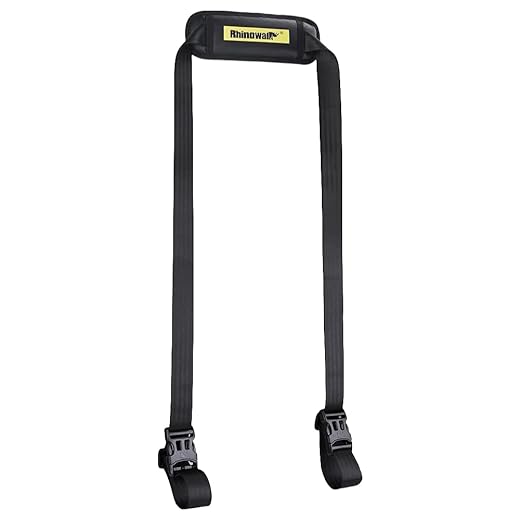
10) Carrying Solutions (Straps, Shoulder Bags, Deck Hooks)
What it is & why it matters.
A shoulder strap turns stairs and short indoor hauls into a one-hand job. Likewise, it protects walls and shins from bumps.
How to match it to your specs.
- First, pick a weight rating above your scooter’s real weight.
- Next, set adjustability for your height and reach.
- Then, confirm anchor points on the folding stem and neck/deck.
- Finally, choose wide, non-slip padding to prevent hot spots.
Buying checklist.
- Heavy-duty nylon, metal hooks, and quick releases.
- Additionally, compact folding so it stows under the deck.
- Moreover, smooth edges to avoid scratching paint.
Install & usage tips.
Practice a short hallway carry to find the balance point; then, tackle stairs with the scooter snug to your side.
Amazon pick:
Step-by-Step: Measure Once, Buy Right
1) Confirm battery & charger details.
Read the label for Voltage (V) and Current (A). Typically, a 36 V scooter uses 42 V, while a 48 V scooter uses 54.6 V. Additionally, identify the connector by size or pin count and verify polarity; as a result, you avoid shorts and loose fits.
2) Log your tire specs.
Check the sidewall for diameter × width; then, match tubed or tubeless to your rim and pick a tread that suits your routes. Meanwhile, ensure valve angle clears the fender.
3) Capture brake info.
Measure rotor diameter, count 6 bolts, and photograph the caliper. Consequently, you can order the correct pad shape the first time; moreover, you’ll bed-in faster.
4) Measure the handlebar.
Most bars are 22.2 mm, yet a few vary. Therefore, measure before buying mounts or mirrors; otherwise, shims or returns become necessary.
5) Check IP rating and commute conditions.
For regular rain, choose IP64+ lights and mounts with sealed buttons. Likewise, cover charge ports when parked outdoors; in addition, dry the scooter after storms.
6) Weigh and size your scooter.
Compare folded dimensions and weight to strap or bag specs. Also, add a safety margin to the rating; ultimately, your shoulders will thank you.
Care & Maintenance Tips
- Charger: Keep vents clear and coil cables loosely; moreover, replace overheated plugs immediately.
- Lock: Lightly lube the cylinder every 2–3 months; likewise, rinse salt and grime.
- Helmet: Wash pads with mild soap, then air-dry; replace after any hard impact.
- Lights: Recharge regularly, wipe lenses, and re-tighten mounts; in addition, test modes monthly.
- Phone mount: Re-check torque and replace worn pads; as needed, re-position for clearance.
- Mirrors: Re-aim seasonally to match posture and clothing bulk; meanwhile, inspect pivots.
- Tires/Tubes: Maintain pressure, add sealant if tubeless, and inspect sidewalls; thereafter, check bead seating.
- Brakes: Clean rotors with isopropyl alcohol; above all, avoid touching rotor faces.
- Fenders: Inspect brackets after pothole hits; otherwise, rubbing may return.
- Straps: Check stitching and hooks; ultimately, retire frayed gear.
FAQ
Q: Can I use a 3 A charger if my stock was 2 A?
A: Possibly; however, only if your manual allows higher current and the connector/polarity match. Additionally, monitor temperature during the first sessions.
Q: How do I identify my charger connector?
A: Measure the barrel (5.5×2.1 vs. 5.5×2.5) or count pins on GX16-3/XLR-3; then, compare to the stock charger diagram.
Q: Are 10-inch tires always better than 8.5-inch?
A: Not always. While 10-inch rolls smoother, it can rub on frames lacking clearance. Therefore, follow your scooter’s supported sizes.
Q: Do hydraulic brakes need special pads?
A: Pads must match the caliper shape; furthermore, semi-metallic compounds often handle heat better.
Q: What IP rating is “rain safe”?
A: IPX4/IP54 handles splashes; IP55/IPX6 resists stronger spray. Nevertheless, none are for immersion.
Q: Where do I mount lights on a short handlebar?
A: Use the stem or fork crown for the headlight and a seatpost/clip for the rear; additionally, aim the beam slightly down.
Q: How often should I replace rotors and pads?
A: Replace pads at ≤1 mm compound. Meanwhile, rotors last longer; swap if warped, deeply grooved, or below minimum thickness.
Q: Can I run tubeless on a rim that shipped with tubes?
A: Only if the rim is tubeless-ready and can be taped and sealed; otherwise, stick with tubes.
Final Thoughts
When you start with specs, you finish with confidence. Consequently, match voltage and connectors for chargers, bar diameter for mounts and mirrors, tire size for ride feel, and rotor diameter for braking. Additionally, respect your scooter’s IP rating and weight limits. With that, and the vetted picks above, you’ll upgrade once and ride better every day.