
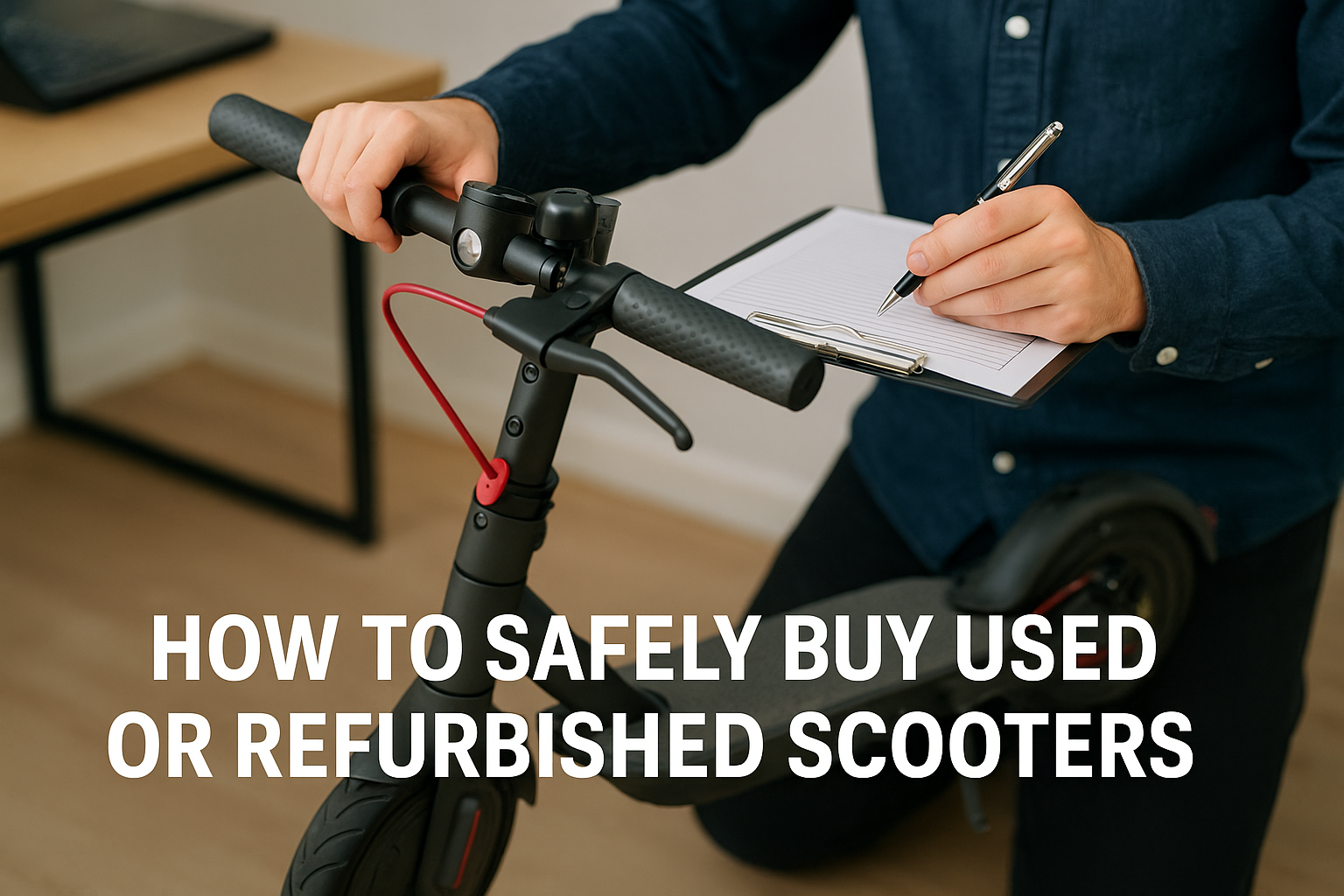
Quick note: Buying a used or refurbished electric scooter can be a smart way to save money. However, it also comes with risks. Therefore, learning how to check condition, test the battery, evaluate prices, and avoid scams is essential. In this complete guide, we walk you through each step so you can make a safe and confident purchase.
Contents
- Why buy used or refurbished?
- Pros and cons of used scooters
- Where to buy safely
- How to inspect a used scooter
- Battery checks and lifespan
- The importance of a test ride
- Evaluating price and value
- Common scams to avoid
- Buying refurbished scooters
- Negotiating safely
- After-purchase steps
- Quick buyer’s checklist
- FAQ
Why buy used or refurbished?
Electric scooters continue to grow in popularity as affordable, eco-friendly transport. However, brand-new models can cost anywhere from $500 to $2,000 or more. Because of this, many riders turn to the second-hand market. A used scooter might cost 30–60% less than a new one, making it attractive for commuters and students who need mobility without breaking the bank.
Refurbished scooters, on the other hand, are not exactly “used” in the same way. Instead, they are returned or traded-in units that have been inspected, repaired, and sometimes upgraded by professionals. In many cases, they also come with a short warranty. As a result, refurbished scooters combine lower cost with added peace of mind.
Nevertheless, while both options are appealing, they require caution. A scooter may look fine in photos but hide serious issues. Therefore, doing your homework before buying is essential.
Pros and cons of used scooters
Pros
- Lower cost compared to new scooters
- Potential to get a higher-end model for the price of a new budget model
- Immediate availability—no waiting for shipping or backorders
- Opportunity to negotiate price with the seller
Cons
- No warranty in most private sales
- Unknown history of maintenance, crashes, or misuse
- Battery may already be near the end of its life
- Hidden defects may only appear after purchase
Pro tip: If you value peace of mind, refurbished scooters are often better than random used ones because they are tested and sold by trusted sellers.
Where to buy safely
Where you buy matters as much as what you buy. Because scams are common online, choose reliable sources whenever possible.
- Authorized brand retailers: Many brands offer certified refurbished scooters with a limited warranty. This is the safest option.
- Specialized refurbishers: Independent shops that repair and resell scooters, often with warranties on parts.
- Local repair shops: Some scooter mechanics also sell used scooters they have serviced. In addition, you can trust their technical expertise.
- Online marketplaces: Platforms like eBay, Craigslist, or Facebook Marketplace have the widest selection. However, they also carry the most risk. Inspect in person before paying.
- Community groups: Local scooter clubs or online forums often have buy-and-sell sections where members trade gear at fair prices.
Tip: If you buy from a private seller, always meet in a safe public space during daylight hours.
How to inspect a used scooter
A thorough inspection helps uncover hidden problems. Since photos can be misleading, always insist on an in-person inspection before paying.
Frame and body
- Check the deck, stem, and handlebar for cracks, dents, or bends.
- Look for rust on bolts and joints, especially if the scooter has been used in wet climates.
- Examine the folding mechanism. It should lock securely without wobbling.
Wheels and tires
- Inspect tire tread. Bald or cracked tires reduce grip and increase risk of accidents.
- Check air-filled tires for leaks or bulges.
- Spin the wheels to ensure they rotate smoothly and do not wobble.
Brakes
- Test both front and rear brakes.
- Listen for grinding or squeaking, which may mean worn pads.
- Ensure electronic brakes engage properly when pressing the lever.
Lights and electronics
- Turn on the display and check if all functions work.
- Test headlights, tail lights, and turn signals (if available).
- Press buttons for speed modes or cruise control to confirm they function.
Suspension and ride comfort
- Press down on the deck to test the suspension.
- Ride slowly over bumps to check for strange noises.
- Excessive rattling may mean worn or loose parts.
Battery checks and lifespan
The battery is usually the most expensive component. Because of this, it’s the part you should check most carefully.
- Ask how old the scooter is and how often it was charged. Most batteries last 500–800 charge cycles.
- During the test ride, watch if the battery percentage drops quickly.
- Ask to see the scooter charge from empty to full, if possible.
- A swollen or leaking battery is a deal-breaker.
Tip: If the scooter has a removable battery, inspect it separately for wear, cracks, or corrosion on the connectors.
The importance of a test ride
Never buy a scooter without riding it first. A short test ride often reveals problems that are invisible during inspection.
- Accelerate to check throttle response. It should feel smooth, not jerky.
- Brake suddenly at low speed. The scooter should stop quickly without pulling to one side.
- Listen for rattling, squeaks, or grinding sounds.
- Check stability. The scooter should not wobble excessively at normal speeds.
Tip: Test the scooter on both flat and slightly uphill roads to see how it handles under strain.
Evaluating price and value
Determining fair value is essential. Because used prices vary, research before making an offer.
Factors affecting price
- Age: Scooters older than three years usually need a lower price due to battery wear.
- Condition: Visible damage, scratches, or missing parts lower the value.
- Brand and model: Popular brands like Segway or NIU hold value better than unknown brands.
- Battery health: A nearly dead battery can cost hundreds to replace.
- Warranty: If the scooter is refurbished with warranty, it can be priced higher.
Pro tip: If a used scooter costs more than 70% of the new price and has no warranty, it is rarely worth it.
Common scams to avoid
Scammers often take advantage of eager buyers. Therefore, learn to spot warning signs.
- Unrealistically low prices designed to bait buyers.
- Sellers refusing to meet in person or insisting on shipping only.
- Requests for wire transfers, gift cards, or crypto payments.
- Fake receipts or missing serial numbers.
- Stock photos used instead of real scooter pictures.
Tip: Always verify the scooter’s serial number and confirm it has not been reported stolen.
Buying refurbished scooters
Refurbished scooters are often the safest choice in the second-hand market. They are tested, repaired, and usually come with a limited warranty. Furthermore, refurbishers often replace parts such as batteries, tires, and brakes, meaning you get a scooter that feels nearly new at a lower price.
Tip: Always ask what was replaced or repaired. In addition, request warranty details before purchase.
Negotiating safely
Most sellers expect some negotiation. However, do it respectfully and based on facts.
- Point out wear on tires or brakes as reasons for a discount.
- Offer a fair price based on your research, not a random lowball.
- Bring cash only if you are certain you will buy. Otherwise, use a secure payment method.
- Always meet in public during daylight.
Pro tip: Take a friend with you. This ensures safety and gives you another set of eyes to spot issues.
After-purchase steps
Once you buy a used scooter, don’t just ride off without preparation. Because you don’t know its full history, perform some basic maintenance first.
- Do a full clean and check for loose bolts.
- Charge the battery fully, then test the range.
- Replace worn tires, pads, or grips if needed.
- Update the firmware if your scooter has a companion app.
Tip: Keep records of your purchase, including receipts, photos, and serial numbers. This helps if you ever sell it later.
Quick buyer’s checklist
- ☑ Inspect frame, tires, brakes, and folding system
- ☑ Test lights, throttle, and electronics
- ☑ Check battery age, charge cycles, and health
- ☑ Take a test ride to confirm smooth handling
- ☑ Compare price with current new and refurbished prices
- ☑ Verify serial number and ownership
- ☑ Avoid sellers who refuse inspection or use unsafe payments
FAQ (People Also Ask)
Is it safe to buy a used electric scooter?
Yes, if you inspect carefully. Check the frame, brakes, and battery, and always test ride before paying.
How long do scooter batteries last?
Most lithium-ion packs last 500–800 charge cycles, which equals about 2–4 years for most riders.
Are refurbished scooters worth it?
Yes. They are serviced, tested, and usually include a warranty, making them safer than buying directly from private sellers.
What is the biggest risk with used scooters?
The battery. Replacements are expensive and can cost half the price of a new scooter.
How do I avoid scams when buying online?
Meet in person, test ride the scooter, avoid wire transfers, and check the serial number against theft databases.
Final word: Buying a used or refurbished scooter is a smart way to save money. Because risks exist, always inspect, test ride, and verify before purchase. With patience and the right knowledge, you can find a scooter that is safe, reliable, and affordable.