

If you’re shopping for a simple, commuter-friendly electric scooter that keeps things practical, the Roinside UP12 sits squarely in that lane. This Roinside UP12 review looks at real-world usability first: ride feel, stopping confidence, daily reliability, and the small design choices that matter when you roll out every morning. For quick context, here’s one comparable single-motor commuter we’ve covered before—Roinside UP12—so you can gauge where the UP12 lands in the pack.
Key Specifications
Notes: Roinside sells the UP12 line in two common trims seen on retail listings: an 8.5-inch tire version with a 350W class hub and a 10-inch tire version with a 500W class hub. Top-speed and range figures below are stated by vendors and can vary with rider weight, temperature, slope, and tire condition. Where the manufacturer doesn’t publish a figure, we mark it “Not specified.”
| Block | Item | Roinside UP12 (summary) |
|---|---|---|
| General | Model | Roinside UP12 (also seen as “UP12/UP12 Plus” on some retail listings) |
| Intended Use | Urban/commuter, adult rider | |
| Wheel/Tire | 10 in solid rubber (≈ 254 mm) on the 500W trim; some listings show 8.5 in (≈ 216 mm) on the 350W trim | |
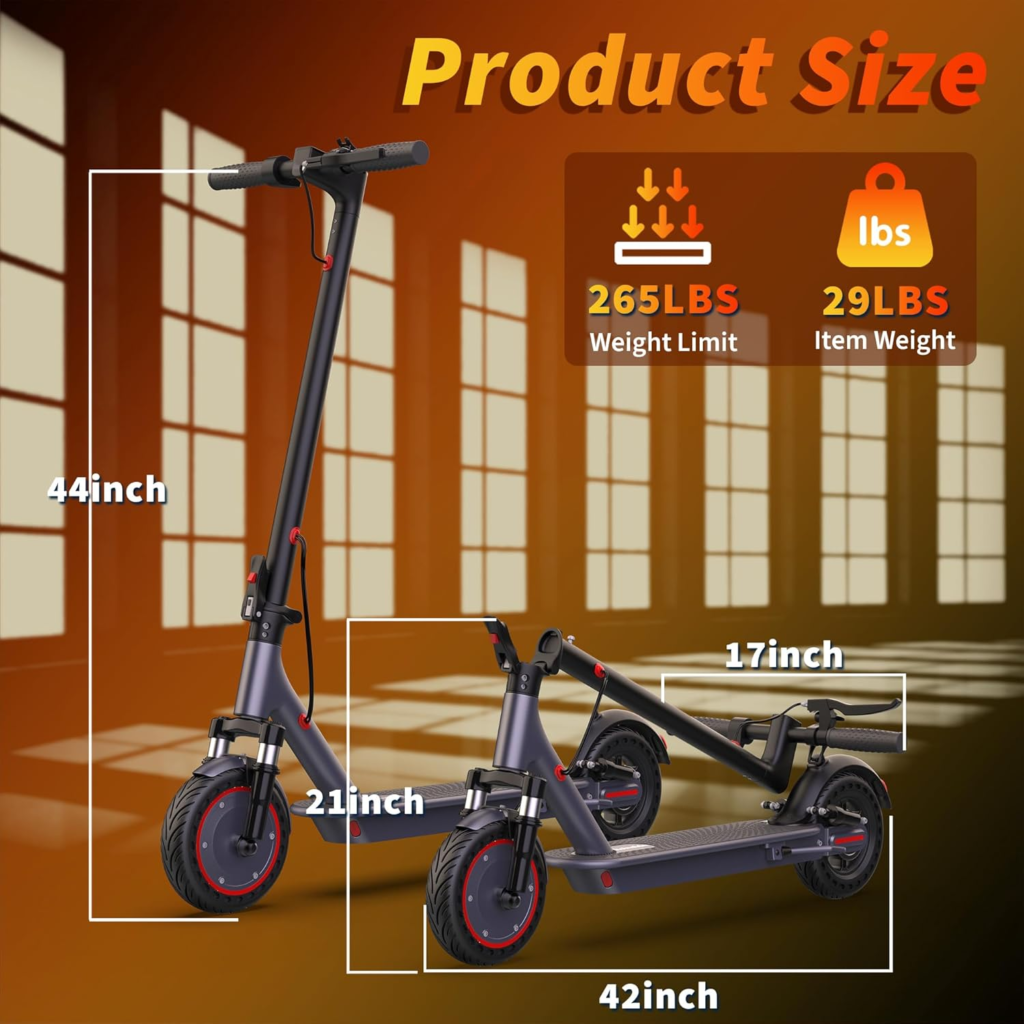
| Max Rider Weight | 265 lb (≈ 120 kg) stated | |
| Frame | Aluminum alloy deck and stem, folding latch at stem base | |
| Smartphone App | Bluetooth app with lock, mode selection, speed settings, and cruise toggle | |
| Water Resistance | Not specified | |
| Performance & Power | Motor | Single rear-hub, 350W or 500W nominal depending on trim |
| Stated Top Speed | Up to 22 mph (≈ 35 km/h) on 500W; up to 19 mph (≈ 30 km/h) on 350W | |
| Riding Modes | Eco / Drive / Sport (speed-limited tiers) | |
| Drive | Rear-wheel drive | |
| Cruise Control | App-enabled (hold steady throttle; can be toggled in the app) | |
| Charging & Electrical | Battery | 36V-class lithium pack (capacity not consistently published for UP12) |
| Stated Range | Up to 24 mi (≈ 39 km) on select trims; 21–24 mi range claims are common | |
| Charging Time | About 4–5 hours (varies by charger amperage and battery trim) | |
| Charger | Standard e-scooter wall charger (barrel plug), included | |
| Build & Dimensions | Unfolded Dimensions | Not specified |
| Folded Dimensions | Not specified (stem folds down to rear fender latch) | |
| Scooter Weight | Not specified | |
| Deck | Flat deck with rubberized grip; width adequate for parallel stance | |
| Safety & Control | Brakes | Rear disc + electronic regenerative (E-ABS) |
| Lighting | Front headlight; rear light that brightens when braking | |
| Bell/Kickstand | Bell on handlebar; side kickstand | |
| Features & Extras | Display | Handlebar LCD for speed, mode, battery |
| App & Security | Bluetooth app with lock; cruise control toggle; ride data | |
| Convenience | Quick-fold stem; easy carry for stairs/commute transfers | |
| Warranty & Compliance | Warranty | 1-year limited warranty commonly stated by vendors |
| Compliance | No formal public UL listing for UP12 found; not specified by maker |
Design & Build Quality
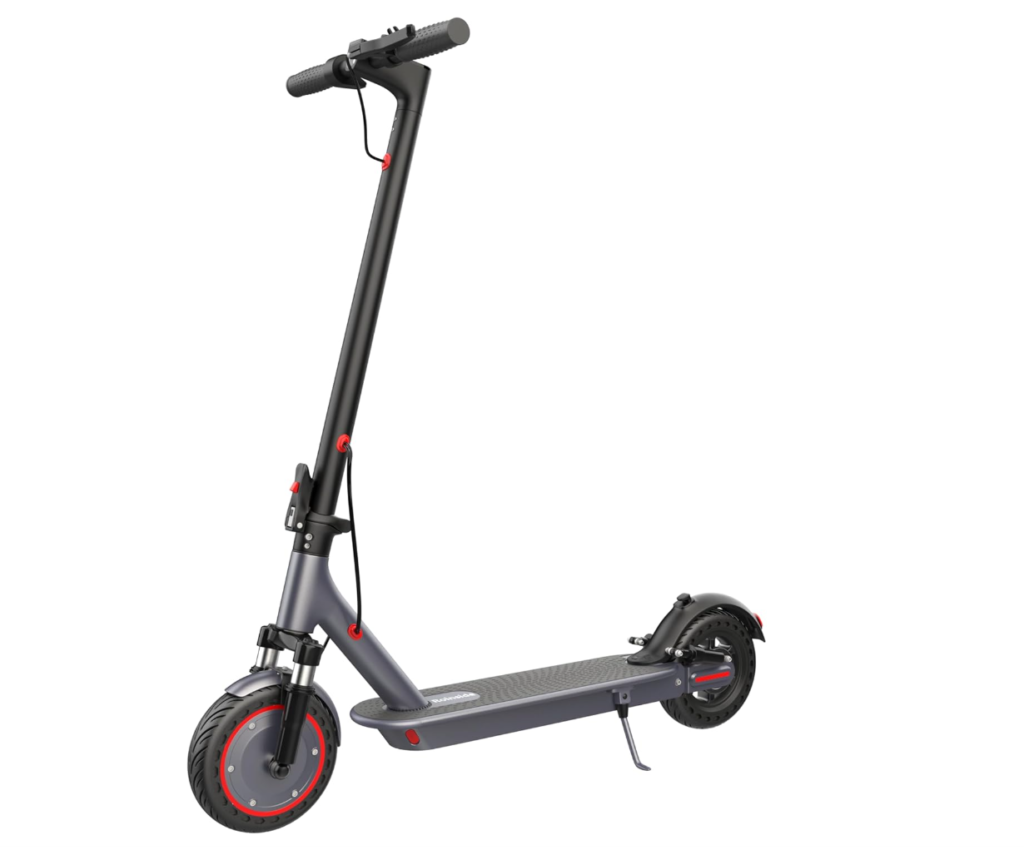
Roinside leans on a classic commuter formula: a simple folding stem, a clean deck without awkward protrusions, and solid tires that eliminate punctures. The UP12 keeps that recipe intact, but it feels a bit more planted than entry-level scooters with 8.5-inch tires. If you choose the 10-inch trim, you get a touch more rollover comfort over cracks and expansion joints, which matters when your city’s “smooth” pavement is more wish than reality.
The paint, welds, and cable routing are utilitarian. Nothing screams boutique, yet the scooter avoids the flimsy look that often shows up in off-brand frames. The deck rubber grips well with typical commuter shoes. The latch at the stem base is predictable: push down hard to seat it, then verify the safety clip. It isn’t a fancy dual-stage lever, but it stays shut as long as you snap it home.
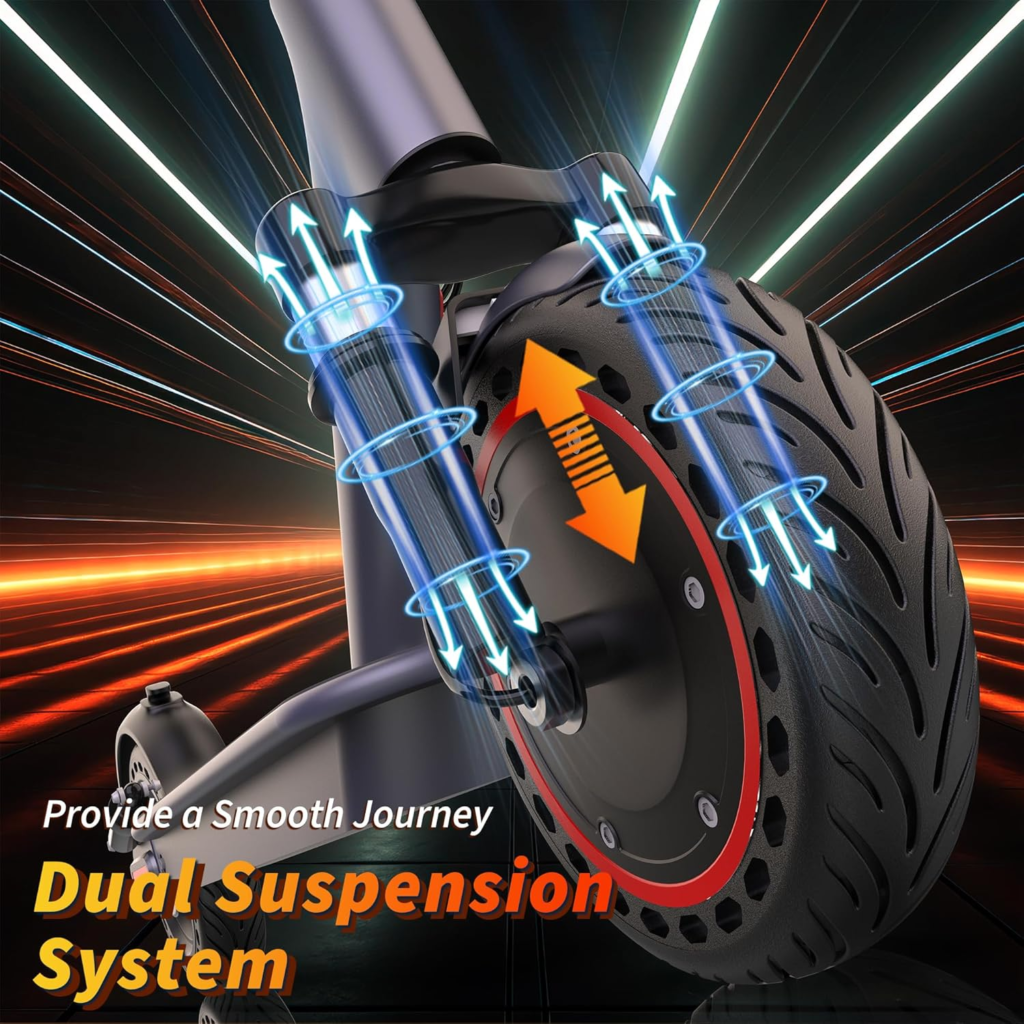
Cabling along the stem remains tidy and doesn’t snag when you fold. The charging port is easy to access and sits high enough to avoid splash zones during routine hose cleaning. There’s no visible suspension hardware, so ride comfort comes from tire volume, deck stability, and how compliant the stem feels under load. At jogging speeds the chassis tracks straight, and the stem shimmy that plagues some budget scooters is minimal here when the clamp is tight.
Overall, the UP12 looks like something you won’t mind leaning against a café table or office wall. It’s not a design statement, but it blends in, which commuters often prefer.
Motor, Power & Acceleration
With the 500W trim, low-speed torque is modest off the line, then builds smoothly through the middle of the throttle. You won’t get yanked forward like on a performance scooter, yet city starts feel predictable. On flat roads, Sport mode holds speed without hunting, and the throttle ramp avoids the on/off jumpiness that makes newer riders nervous.
On the 350W trim, starts are gentler, and the scooter is happier in Drive mode around neighborhood speeds. Expect a small pause before the controller wakes the motor if you’ve been coasting; that’s common in commuter controllers designed to sip energy rather than gulp it.
On short punchy hills you’ll feel speed taper. Moderate slopes—around 7–8%—are still doable with a single push to help the hub keep momentum. For longer climbs, plan to drop into a lower mode and accept a steadier, slower ascent. Rear-hub drive helps with traction on gritty surfaces, and the motor sound is a soft whirr, not a high-pitched whine.
Cruise control works as you’d expect: hold a steady throttle for several seconds, and it locks. Tap the brake or blip the throttle and it releases. If you commute along long waterfront paths or light-traffic boulevards, that reduces wrist strain. If you ride in stop-and-go traffic, leave cruise off and lean on the thumb throttle’s precise middle feel instead.
Battery, Range & Efficiency
Roinside’s range claims for the UP12 hover in the low-20-mile bracket. That tracks with what we see in many 36V commuter scooters running solid tires and a single-motor setup. On mixed urban routes with several starts, a few hills, and temps in the 60s–70s °F (15–25 °C), expect a conservative real-world range. Heavier riders will likely land under stated numbers, while lighter riders cruising in Eco mode can stretch things.
The pack sits low in the deck, which helps stability and keeps cable runs short. Typical chargers for this class output around 2A. A full charge from near empty takes an afternoon or the evening after work. Best practice is topping up after rides and avoiding deep discharges when you can. The app’s battery readout is useful for sanity checks because bar-style indicators can feel vague.
Solid tires swap puncture anxiety for higher rolling losses and a firmer ride. That trade pays off in reliability and predictable energy use week to week. If you live somewhere with broken glass or goathead thorns, solid rubber is peace of mind.
Ride Quality, Handling & Comfort
The UP12 is a classic “tire-as-suspension” commuter. With 10-inch solids you get the best version of that approach. Expansion joints transmit a quick tap rather than a thud. Brick paths are acceptable in short stretches; long runs will buzz your feet. A wide deck helps you shift stance and soften impacts with knees and ankles. In curves at neighborhood speeds, the chassis feels neutral. The rear-hub’s gentle push encourages a natural lean, and the deck grip holds your shoes as you roll across bumps mid-turn.
At higher urban cruise, the UP12 remains composed as long as tire condition is good and the stem latch is snug. The handlebar height suits average riders; very tall commuters may wish for an extra centimeter or two, but the stance remains workable. Hands don’t go numb quickly thanks to the steady throttle mapping and a bar that doesn’t vibrate much.
Windy days don’t push it around as much as lighter, shorter-wheelbase scooters. That inspires confidence when crossing bridges or open boulevards. The headlight is adequate for “be seen” duties and short, well-lit commutes. For dark multi-use paths, add a brighter handlebar light and a helmet light to paint the road ahead.
Braking & Safety Features
The rear disc plus electronic brake pairing is the commuter standard for a reason. The lever feel is light, and the initial bite is easy to modulate. The regenerative component smooths deceleration and feeds a trickle back to the pack. From neighborhood speeds you can stop quickly without locking the wheel if you keep your weight low and back.
On wet mornings, give yourself extra room. Solid tires don’t telegraph grip the way pneumatics do, so learn the threshold in a safe area before you mix with traffic. The rear light brightens under braking and the front light is mounted high enough to grab attention from parked cars about to pull out. The bell is audible, but not shrill; pedestrians will hear it on shared paths if you ring early.
As always, ride with gloves, a proper bicycle-style helmet at minimum, and reflective elements on jacket or backpack. The app’s lock function is a deterrent, not a guarantee—use a U-lock through the deck or stem if you must leave the scooter outside.
Portability & Daily Usability
The fold is quick and secure. The stem hooks onto the rear fender to form a carry loop, which helps when you climb a flight of stairs or shuffle onto a tram. While official weight isn’t published for the UP12, it carries like a mid-30-pound commuter. Short carries are fine; longer indoor walks call for switching hands or rolling it by the stem.
The deck clearance clears most curb cuts without scraping. The kickstand swings down cleanly and supports the scooter on slightly sloped sidewalks. For apartment life, the footprint is small enough to lean behind a door or under a desk. Keep a mat by the entryway if you ride in rain, since the solid tires bring in less water but still track grit.
The display gives you the essentials—speed, battery bars, mode. Large numerals help quick glances; you don’t need to stare. Button presses to toggle modes and lights are responsive and consistent.
Features, App & Extras
The app rounds out the UP12’s commuter toolbox. You can toggle cruise control, select riding modes, lock the scooter, and check battery level. The lock feature adds a little alarm-style resistance to rolling and cuts throttle response. It does not replace a physical lock, but it’s handy in a café line.
Cruise control reduces wrist fatigue on long park paths. The app also lets you set “glide start” or similar settings that change how quickly the scooter responds from a stop. If you share the scooter with a teen in a driveway or cul-de-sac, capping speed in Eco mode helps them get comfortable.
The headlight is bar-mounted and points roughly where you look. The rear light integrates with the brake signal. The handlebar bell and kickstand are simple but durable. There’s room on the bar for a phone mount if you prefer app telemetry in view.
Charging Experience & Maintenance
Charging is straightforward. Open the rubber plug, insert the barrel connector, and wait for the indicator to flip to green. Charge in a cool, dry room and avoid leaving the pack at 0% for storage. If you’ll park the scooter for weeks, leave it at roughly half charge and top it monthly.
Maintenance is light with solid tires. Check the brake cable tension every couple of weeks, especially after the first hundred miles as the housing settles. Keep the folding latch clean; a quick wipe and a drop of light lube on pivot points prevent squeaks. Tighten stem clamp hardware at regular intervals with a proper hex key. Give the deck rubber a wipe so grip stays consistent in wet shoes.
Because the UP12 uses common commuter standards, finding basic wear parts such as brake pads is not a headache. Solid tires last longer than pneumatics, but examine them for flats spots if you brake hard often.
Roinside UP12 Review: Who It’s For
If your commute is a mix of neighborhood streets, bike lanes, and multi-use paths, and you value simplicity over flash, the UP12 makes sense. It’s for riders who want low-maintenance tires, predictable controls, a useful app lock, and a fold that becomes muscle memory in a day. If your route includes frequent 7–8% hills or you need high-20s mph cruise, you’ll want a stronger dual-motor or a higher-voltage single.
If you’re cross-shopping within the brand, the Roinside UP8 offers a smaller, lighter alternative. Comparing where it excels—tighter storage spaces and shorter carries—can help you decide which model better fits your route and priorities.
Apartment dwellers will appreciate the compact fold, and students will like the set-and-forget tires. Beginners get a forgiving throttle curve, while experienced commuters can lock in cruise and float to work. If you ride in deep pothole country and prize plush comfort, a scooter with pneumatic tires or actual suspension will be a better fit.
Value for Money & Verdict
The UP12 lives in the heart of the single-motor commuter segment. It doesn’t try to do everything. Instead, it focuses on painless daily use: solid tires that end flats, a quiet rear-hub that minds its energy budget, and a brake setup you can trust after a week of practice stops. In that context, it feels like a sensible purchase for practical riders.
As a verdict, this review finds the UP12 strongest where commuters care most: reliability, straightforward controls, and predictability. It’s not a hill-crusher, and it won’t chase speed records, yet it earns its keep with low drama and minimal upkeep. Choose the 500W/10-inch trim if your roads are rough and you want a bit more shove; choose the 350W/8.5-inch trim if your routes are flat and you favor lighter carry-feels.
Pros & Cons
Pros
- Solid-tire convenience eliminates flats and weekly pressure checks
- Predictable throttle and rear-hub traction for urban starts
- App lock, cruise control, and mode toggles cover daily needs
- Rear disc + E-ABS pairing offers balanced, controllable stops
- Quick, tidy fold with secure latch for train or office carry
- Simple display with big numerals and easy light control
- Stable tracking at neighborhood and path speeds
- Low routine maintenance for year-round commuters
Cons
- No dedicated suspension; rough pavement rides firm
- Real-world range falls below optimistic marketing claims
- Hill performance is limited on longer or steeper grades
- Official weight, folded size, and water-resistance rating not published
- Headlight is adequate but not a true night-path solution
- Handlebar height may feel average for very tall riders
- Solid tires transmit more vibration than pneumatics
Price
FAQs
Does the Roinside UP12 have cruise control?
Yes. Hold a steady throttle, and cruise will engage. Tap the brake or throttle to disengage. You can toggle the feature in the app.
How far can the UP12 go on a charge?
Stated figures hover around the low-20-mile mark. Actual range depends on rider weight, speed, temperature, elevation, and tire condition.
Can I ride the UP12 in the rain?
Light splashes and damp roads are common in commuter life, but the maker doesn’t publish a formal water-resistance rating for the UP12. Avoid deep puddles and power-washing. Dry the scooter before storage.
What tire size is best—8.5 inches or 10 inches?
The 10-inch version rolls over cracks and curbs more smoothly and rides a bit softer. The 8.5-inch version feels more compact for tight storage and very short carries.
Is the brake strong enough for city traffic?
For neighborhood speeds, yes—after you practice. The rear disc and electronic brake combination offers steady deceleration. In wet conditions, increase following distance and practice threshold braking.
What should I know before buying a used UP12?
Check the stem latch for play, verify the brake lever bite point, and scroll the app to confirm cruise, lock, and modes work. Inspect tires for flat spots and the deck for dings.
Where can I find a Roinside UP12 review focused on commuters?
You’re reading it. This Roinside UP12 review prioritizes daily usability—how it starts, stops, folds, and feels on real streets.