- Home
- Scooters
- Electric Scooters
- Razor RX200 Jeep
Razor RX200 Jeep


- Battery Range: 8 mi (13 km) or ~40 min
- Top Speed: 12 mph (19 km/h)
- Motor Power: 200 W
- Weight Capacity: 154 lb (70 kg)
- Charging Time: ~12 h
- Scooter Weight: 38.7 lb (17.6 kg)
PROS
- Jeep styling with off-road tires
- Predictable rear disc braking
- Stable low-deck, neutral steering
- Simple, durable chain-drive system
- Great value teen off-road look
CONS
- SLA battery is heavier and slower to charge
- No built-in headlight/taillight
- Non-folding steel frame is bulkier
- Range varies with hills and stop–go riding

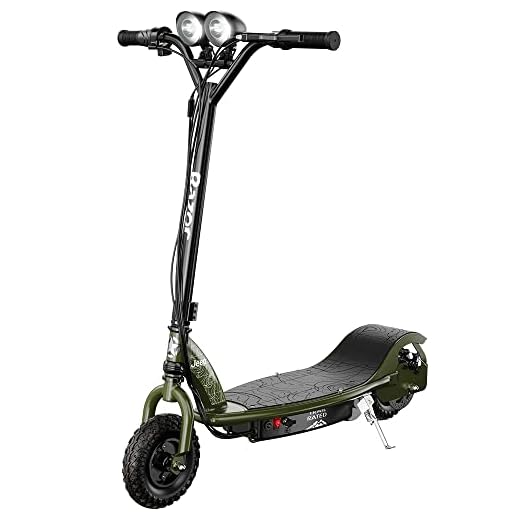
Table of contents
- What Is the Razor RX200 Jeep?
- How the Razor RX200 Jeep Works
- Key Specifications (clean table)
- Design & Build Quality
- Performance Fundamentals
- Battery, Range & Efficiency
- Ride Quality & Comfort
- Braking & Safety Features
- Portability & Daily Usability
- Maintenance & Care
- Weather & Seasonal Considerations
- Razor RX200 Jeep vs Alternatives
- Who the Razor RX200 Jeep Is (and Isn’t) For
- FAQs
- Glossary
- Final Thoughts
The Razor RX200 Jeep is a rugged, youth-friendly electric scooter that borrows visual cues from classic trail machines and blends them with simple, durable hardware. It’s built for backyard paths, park loops, and light off-road shortcuts rather than high-speed street rides. As a result, it suits teens and smaller riders who prefer dirt and grass over long commutes. Moreover, it delivers approachable power and an easy learning curve that encourages confident practice—see the dedicated product page here: Razor RX200 Jeep.
What Is the Razor RX200 Jeep?
At its core, the Razor RX200 Jeep is a Jeep-licensed twist on Razor’s off-road youth platform. It sports knobby, air-filled tires, a steel frame, and a straightforward drivetrain. Consequently, the scooter emphasizes control over raw speed so new riders gain confidence quickly. The stance is relaxed, the deck is wide enough for two feet, and the throttle is predictable. Therefore, the scooter fits schoolyard shortcuts, campground loops, and neighborhood adventures on firm dirt or packed grass.
Unlike many adult commuter models, the RX200 Jeep uses a proven brushed motor and a 24-volt sealed lead-acid battery pack. This choice keeps the learning curve low and maintenance simple. Additionally, the rear disc brake is mechanical, so you feel instant bite through the lever. The package is intentionally minimalist, which means fewer gadgets to distract beginners. In turn, the riding experience stays consistent day after day.
How the Razor RX200 Jeep Works
The Razor RX200 Jeep is designed around five simple systems that work together. Collectively, they create steady power, reliable control, and predictable braking.
Motor (brushed, chain drive).
A compact brushed motor drives the rear wheel through a chain and sprocket. Think of it like a bicycle’s drivetrain, but the motor turns the chain instead of your legs. Because the system is direct and mechanical, power delivery is predictable and slightly “grippy,” which helps on loose surfaces. Furthermore, chain drive tolerates dust and trail grit better than many belt systems.
Controller (the scooter’s brain).
A small electronic module interprets throttle input and meters current to the motor. When you twist the throttle, the controller increases power smoothly. Consequently, starts feel progressive rather than lurchy. In addition, the mapping favors traction, so the scooter hooks up rather than spinning the tire.
Battery (24V SLA pack).
Two 12-volt sealed lead-acid batteries wired in series provide 24 volts. This chemistry favors robustness and stable output over ultra-light weight. Also, it tolerates casual use well, provided you keep it charged and avoid deep storage discharge. Even so, good charging habits make a noticeable difference in real-world runtime.
Throttle (twist-grip).
The twist throttle sends a clear on-demand signal: twist more to go faster, twist less to slow down. Because it’s analog and linear, the rider quickly learns fine control around obstacles and on uneven ground. Likewise, the steady spring return helps prevent accidental wide-open inputs.
Brakes (rear mechanical disc).
A cable-actuated disc clamps the rear rotor. You modulate it with your left hand. The lever gives distinct feedback, and, after the first half-pull, the pad bite firms up. On dirt, that feel lets you feather traction rather than lock up. Therefore, riders learn safe stopping habits quickly.
Together these parts create a rugged, low-drama ride. You get steady torque down low, firm braking, and a chassis that prefers traction and balance over flashy speed numbers. Meanwhile, the straightforward layout keeps maintenance simple for families.
Key Specifications (clean table)
Note: The values below describe the typical RX200-class setup and what owners can expect from the Jeep-themed edition in normal use. Always follow local rules and manufacturer guidance.
| Block | Details |
|---|---|
| General | Jeep-licensed off-road youth scooter; steel frame; wide standing deck; knobby pneumatic tires; kickstand; non-folding design. |
| Performance & Power | Brushed rear motor (~200W class); chain drive; approachable top speed for teens; steady low-end torque for grass and packed dirt; single-speed operation. |
| Battery, Charging & Electrical | 24V sealed lead-acid pack (two 12V batteries in series); standard wall charger included; typical full charge overnight; on-deck charge port with cap. |
| Build & Dimensions | All-steel chassis; riser handlebar; BMX-style grips; 8-inch knobby air tires; folded dimensions: not applicable (non-folding). |
| Safety & Control | Rear mechanical disc brake; twist-grip throttle; predictable controller mapping; reflectors where required; grip-tape deck. |
| Features & Extras | Jeep styling and graphics; kickstand; chainguard; simple battery indicator (where equipped); Cruise Control: not included. |
| Warranty & Compliance | Standard limited warranty per manufacturer; age and rider-weight guidance intended for teens and smaller riders; follow regional regulations. |
Design & Build Quality
The Razor RX200 Jeep uses an all-steel frame that favors toughness and alignment stability. The welds are straightforward, and the geometry sits slightly taller than many sidewalk scooters. As a result, riders get a calm stance and leverage over the front end. The deck is full-length and grippy. Because the battery pack sits inside the chassis, weight stays low and centered. That placement improves balance on loose surfaces. Additionally, the chainguard keeps clothing away from the sprocket.
The cockpit mirrors BMX simplicity. You get a riser bar with soft grips and a left-hand brake lever. The twist-grip throttle lives on the right. Everything feels purposeful and uncluttered. Meanwhile, the kickstand tucks out of the way when riding, and the cable routing reduces snags. Fit-and-finish is purposeful rather than fancy. Paint holds up to trail dust, and the Jeep branding looks at home on the olive-green palette.
Fasteners are common sizes, which makes checks and adjustments easy. The disc caliper mounts rigidly, so alignment stays true after bumps. Furthermore, the compact stem and steel construction keep flex modest under braking and cornering. While there are no integrated lights or app interfaces, the simplicity is a feature here. Consequently, riders spend more time riding and less time fiddling.
Performance Fundamentals
Acceleration feel.
Off the line, the Razor RX200 Jeep steps forward smoothly. Because the throttle mapping is progressive, riders can roll on power without sudden surges. On firm dirt, it hooks up with a light chirp from the knobbies. On grass, the torque is still useful, yet you will feel some spin if you twist too quickly. In short, the takeoff is approachable and repeatable. Moreover, the single-speed gearing eliminates shift shock entirely.
Cruising stability.
Once at speed, the chassis tracks straight. The riser bar adds leverage, which helps correct small slides in loose gravel. The 8-inch pneumatic tires round off chatter that would rattle a solid-tire scooter. Therefore, cruising a park path or a campground loop feels planted, not twitchy. Additionally, the deck length lets you shift your stance for balance over small ruts.
Hill-climb behavior (≈7–10% grades).
On mild hills, the motor settles into a steady pull. Because it’s a single-speed brushed setup, the scooter won’t sprint up steep inclines, yet it keeps moving with a determined hum. On 7% grades, lighter riders can often maintain momentum with a small rolling start. On 10% grades, you may help with a kick or two at the base. The key is smooth throttle and consistent line choice. Furthermore, keeping tires at proper pressure helps reduce rolling resistance.
Top-end character.
The speed ceiling is tuned for youth safety. That said, the scooter holds its pace well on hardpack and short grass. Because the motor delivers steady current, you don’t get big fluctuations unless the surface changes dramatically. The steering remains calm near the top end, with no headshake when tires are properly inflated. Even so, riders should leave extra space for braking on loose surfaces.
Battery, Range & Efficiency
Sealed lead-acid batteries reward routine. Charge promptly after rides, avoid deep storage discharge, and keep the pack topped up during long breaks. If you do that, the Razor RX200 Jeep delivers consistent session lengths. Additionally, storing in a cool, dry place helps preserve capacity.
Rated vs real-world range.
Manufacturers often quote continuous run time. In practice, real rides mix starts, stops, small hills, and variable surfaces. Consequently, range depends on rider weight, tire pressure, and terrain. On smooth paths and firm dirt, the scooter stretches its time. On thick grass or sandy patches, it will draw more current and finish sooner. Therefore, plan loops with a margin.
Rider weight and terrain.
Heavier riders ask more from the motor. Grass adds rolling resistance, and hills demand torque. Therefore, expect shorter sessions on challenging ground. To extend runtime, choose packed paths and maintain proper pressure.
Temperature effects.
Lead-acid packs lose punch in the cold. Below freezing, voltage sag arrives sooner, and the scooter feels slower. Heat, by contrast, can accelerate wear if you store the pack discharged. Thus, keep batteries charged and out of direct sun when parked. Moreover, allow the pack to cool after demanding rides before recharging.
Charging best practices.
- Charge after each session.
- If storing for more than a week, top up periodically.
- Use the included charger and allow a full cycle.
- Do not run the pack to zero; stop when you feel clear power fade.
These habits extend runtime and keep performance predictable over the season. Likewise, replacing both batteries together maintains balance within the pack.
Ride Quality & Comfort
Tires.
The knobby, air-filled tires are the star of the RX200 platform. Because they deform over rocks and roots, they provide grip where solid tires would chatter. On pavement, they hum and feel compliant. On grass, they bite into the top layer and track straight. Additionally, proper pressure improves steering precision and reduces flats.
Suspension.
There is no traditional fork or shock. However, the tire volume and deck structure soak up small chatter. For a youth scooter in light off-road use, that’s usually enough. If you run lower tire pressure for comfort, stay within safe limits to avoid pinch flats. Meanwhile, periodic tire inspection keeps the knobs in good condition.
Ergonomics.
The riser bar and neutral deck stance reduce wrist fatigue. Because the throttle is progressive, you can cruise mid-twist rather than full-on. The brake lever reach suits medium hands and can be adjusted by moving the clamp slightly. Stem flex is minimal thanks to the steel build and compact height. Consequently, riders feel in control rather than perched.
Noise & feel.
Chain drive adds a satisfying mechanical whir. It’s never silent, yet it’s not harsh either. The disc brake engages with a small “shhh” as pads meet the rotor. Altogether, the soundscape helps new riders sense what the scooter is doing. Furthermore, mild drivetrain noise can serve as a cue for chain lubrication.
Braking & Safety Features
The Razor RX200 Jeep relies on a rear mechanical disc for stopping. Because it’s cable-actuated, you feel bite increase as you pull. On pavement, you can lift the rear slightly if you yank too hard; on dirt, the tire will skid before you risk a stoppie. Therefore, coach riders to squeeze, stage, and then add pressure.
Braking technique.
- Stage the lever until pads contact.
- Add pressure smoothly to keep traction.
- Shift your weight rearward on loose surfaces.
- Release slightly if the tire chirps.
Lighting & reflectors.
The scooter does not ship with integrated lights. It may include reflectors where required. If your rides approach dusk, consider visible apparel and follow local rules. Because youth riders often explore variable surfaces, clear communication and hand signals also help. Additionally, ride in familiar areas to reduce surprises.
Ingress protection.
An official IP rating is not advertised. Consequently, avoid puddles, heavy rain, and hoses. Wipe down the scooter after dusty sessions and keep electrical connectors dry. Furthermore, a soft brush works well around the charge port cap.
Portability & Daily Usability
This model does not fold. That design improves rigidity on rough surfaces. However, it changes how you carry and store it.
Carrying.
Use both hands—one at the stem and one beneath the deck near the rear. Because the batteries add mass, keep lifts short and controlled. For stairs, climb slowly and take landings as rest points. Moreover, plan storage spots close to your entry to minimize hauling distance.
Storage.
Park on the kickstand on a level surface. Store indoors or in a covered area to protect the chain and wiring from moisture. If you keep it in a garage, place it away from car doors and tools to prevent tip-overs. Additionally, keep a trickle-charge routine during long breaks.
Security habits.
When parked briefly, keep it in sight. For longer stops, bring it indoors. Because youth scooters attract attention, clear rules about where and when to ride improve safety and reduce risk. Also, engrave or label the chassis discreetly for identification.
Daily rhythm.
Plug in after rides, check tire pressure weekly, and squeeze the brake before each session to confirm bite. These two-minute habits keep the scooter feeling fresh every time. As a bonus, quick checks teach riders mechanical awareness.
Maintenance & Care
A simple schedule keeps performance consistent and extends component life.
Before each ride
- Squeeze the brake lever; confirm firm bite.
- Scan tires for low pressure or embedded debris.
- Do a quick bolt check on bar clamps and axle nuts.
- Verify the chainguard is secure.
Weekly
- Set tire pressure to the recommended range for your surface.
- Wipe the chain area and sprocket; remove packed dirt.
- Inspect the brake cable for fray and adjust pad clearance if needed.
- Spin the rear wheel and listen for rotor rub; center the caliper if necessary.
Monthly
- Check chain tension; modest slack keeps noise down and reduces wear.
- Inspect rotor for glazing; light sanding on pads can restore feel.
- Clean contacts around the charge port with a soft, dry brush.
- Re-grease the kickstand pivot to prevent squeaks.
Seasonally
- Test the charger output and clean cooling slots.
- Evaluate battery health; if runtime drops sharply despite care, replace the pack as a set.
- Refresh grips and brake pads when they feel hard or slick.
- Replace tubes or tires showing sidewall cracks or torn knobs.
Because the Razor RX200 Jeep uses common fasteners, basic hand tools cover most jobs. Keep a small kit with a 4/5/6 mm hex set, a Phillips screwdriver, an adjustable wrench, and a tire gauge. Additionally, a simple chain lube keeps noise down and reduces sprocket wear.
Weather & Seasonal Considerations
Rain.
Wet dirt turns slick fast, and puddles can hide ruts. Since there’s no advertised IP rating, ride conservatively if you’re caught out and avoid standing water. Afterward, towel the chain area and let the scooter dry indoors. Then, re-lube the chain lightly to prevent squeak and surface rust.
Heat.
High temperatures reduce lead-acid longevity if the battery sits discharged. Therefore, charge soon after riding and park out of direct sun. On very hot days, give the scooter a few cool-down minutes between hill repeats. Additionally, check tire pressure, as heat can raise it above your target.
Cold.
Below freezing, the pack sags earlier. Expect a softer launch and shorter sessions. Because knobbed tires harden in the cold, traction drops on frozen ground. Lower pressure slightly within safe limits to gain grip, then reinflate when temperatures rise. Meanwhile, allow the charger to operate at room temperature for best results.
Dust & grit.
Trail dust accumulates around the chain and caliper. Brush it off after rides. Because grit shortens pad life, periodic cleaning pays off in quieter, stronger braking. Furthermore, store rags and a soft brush near your charger to make cleanup automatic.
Razor RX200 Jeep vs Alternatives
Compared with sidewalk/entry commuters.
The Razor RX200 Jeep trades top speed and long range for traction and stability on mixed surfaces. Sidewalk-oriented models often use smaller, harder tires and fold for transit. If your rides are strictly smooth pavement and bus stops, a dedicated commuter might fit better. However, if your route includes grass medians or park shortcuts, the Jeep-style setup shines. Additionally, the non-folding frame adds durability that occasional curbs and bumps can’t easily rattle.
Compared with performance scooters.
High-performance adult scooters deliver serious speed, hydraulic brakes, and suspension. They also weigh more, cost more, and demand stricter maintenance. For teens and smaller riders learning control, the RX200 Jeep is calmer and easier to manage. Moreover, its simpler parts list keeps upkeep predictable.
Compared with larger off-road rigs.
Bigger off-road scooters add wide tires, big motors, and long-travel suspension. They float over rocks but require strength and skill. The Razor RX200 Jeep offers an approachable taste of trail riding without the commitment. It’s the right flavor for modest loops, not backcountry expeditions. In addition, its manageable size suits shared family use.
Who the Razor RX200 Jeep Is (and Isn’t) For
Great for:
- Teens and smaller riders who want light off-road fun.
- Families with backyard paths, park loops, or campground roads.
- New riders who value predictable controls and easy upkeep.
- Short neighborhood sessions with dirt, grass, and packed gravel.
Less ideal for:
- Long daily commutes that demand higher speed or folding portability.
- Riders who need integrated lights, apps, or advanced dashboards.
- Very steep neighborhoods where single-speed drives struggle.
- Wet-weather riders who must brave puddles and rain regularly.
If you match the first group, the Razor RX200 Jeep keeps riding simple and fun. If you match the second, a commuter-focused or full-suspension alternative will fit your goals better. Ultimately, pick the scooter that aligns with your surfaces, distances, and storage options.
FAQs
1) What makes the Razor RX200 Jeep different from a basic sidewalk scooter?
It’s tuned for light off-road use. Because it has knobby, air-filled tires and a steady, low-end pull, it handles grass and firm dirt better than small, hard-tire models. Additionally, the steel frame resists twist on rough ground.
2) Does the Razor RX200 Jeep fold for transit?
No. The chassis is non-folding to keep the frame rigid on rough ground. Therefore, you carry it with two hands and store it indoors or in a covered spot. Even so, the kickstand makes quick parking easy.
3) How should I care for the batteries on the Razor RX200 Jeep?
Charge after each session, avoid deep discharge, and top up during storage. Consequently, you’ll keep performance steady and extend pack life. Moreover, store at moderate temperatures for best results.
4) Can the Razor RX200 Jeep climb hills?
Yes, within reason. On 7–10% grades, lighter riders do best with a small rolling start. Because it’s a single-speed brushed drive, very steep or long climbs will slow it. Nevertheless, proper tire pressure helps maintain momentum.
5) What is the best tire pressure for mixed surfaces?
Use the recommended range and adjust slightly for comfort and grip. Lower pressure adds traction on dirt but increases pinch-flat risk, so stay within safe limits. Additionally, re-check pressure after big temperature swings.
6) Is the Razor RX200 Jeep overview accurate for older units too?
Yes, in broad strokes. The platform’s fundamentals—steel frame, knobby tires, brushed motor, and rear disc brake—remain consistent. However, always check your specific unit. Furthermore, wear items like pads and tubes vary by age.
7) Does the Razor RX200 Jeep have cruise control or an app?
No. The design prioritizes simplicity: twist-grip throttle, mechanical disc brake, and a basic controller. As a result, it’s easy to learn and maintain. Likewise, fewer electronics mean fewer distractions for new riders.
Glossary
Ah (amp-hour) – A measure of how much charge a battery can deliver over time. Higher Ah often extends runtime, all else equal.
Wh (watt-hour) – Battery energy capacity (volts × amp-hours). More Wh usually means longer rides.
Brushed motor – A simple DC motor using brushes to switch current. It’s durable and predictable, though not the lightest.
Controller – The electronic module that meters power from the battery to the motor based on throttle input.
Chain drive – A mechanical link from motor sprocket to wheel sprocket. It adds durability and a familiar service routine.
Twist-grip throttle – A rotating hand control that increases or decreases power smoothly.
Mechanical disc brake – A cable-actuated caliper that clamps a rotor to slow the wheel. It delivers firm lever feel.
Regen (regenerative braking) – Electronic braking that recovers energy to the battery. Not present here; the RX200 Jeep uses a mechanical disc.
Stem flex – The small, sometimes unwanted bending of the handlebar stem under load. A compact steel stem keeps this minimal.
IP rating – A standardized ingress protection code for dust and water. Not officially advertised for this model.
Rolling resistance – The energy lost as tires deform on the ground. Knobby tires increase grip but raise resistance on pavement.
Voltage sag – Temporary drop in battery voltage under load, more noticeable in cold weather or near low charge.
Pad glazing – A shiny, hardened brake pad surface that reduces friction; a light scuff can restore bite.
Pinch flat – A tube puncture caused by compressing the tire against the rim at low pressure.
Single-speed – A drivetrain with one gear ratio. It simplifies operation but limits hill-climb range.
Torque – Rotational force from the motor that provides acceleration and climbing power.
Final Thoughts
The Razor RX200 Jeep focuses on what matters for youth riders who love dirt and grass: traction, stability, and simple controls. Because the platform is rugged and easy to maintain, families can share it confidently and keep it running with basic tools. It won’t replace a fast commuter, and it isn’t built for rain or big mountain climbs. Nevertheless, it delivers durable fun and steady learning in the places young riders actually explore. Ultimately, if that matches your terrain and goals, the Razor RX200 Jeep deserves a spot on your shortlist.
Specifications
General
| Model The Model specifies the exact version or name of the scooter. It helps identify its unique design, features, and specifications within the manufacturer’s product line. Knowing the model makes it easier to compare options, find compatible accessories, or look up support information. | RX200 Jeep |
| Brand The Brand identifies the manufacturer or company that designs and produces the scooter. A trusted brand is a sign of quality, reliability, and good customer support. Well-known brands often have higher standards for safety, performance, and after-sales service, giving you more confidence in your purchase. | Razor |
| Release Date The Release Date indicates when the scooter model was officially launched on the market. This helps you know how current the design, technology, and features are. A newer release date often means updated components, improved performance, and the latest safety or smart features. | 27 November 2025 |
| Recommended Age Recommended Age indicates the minimum age range that the scooter is designed for, based on safety, size, and ease of use. Following the recommended age helps ensure that riders can handle the scooter’s speed, weight, and controls comfortably and safely. Always check local laws and use protective gear, especially for younger riders. | Recommended 13+ |
Performance & Power
| Motor Power (Wattage) What it means: The motor power, measured in watts (W), shows how strong the scooter’s electric motor is. Why it matters: Higher wattage usually means better acceleration, more torque, and improved performance on hills or rough terrain. For example, a 250W motor is good for flat city roads and light riders, while a 500W or 1000W motor provides more power for faster speeds or climbing steep inclines. | 200 W high-torque, chain drive |
| Top Speed The Top Speed indicates the maximum speed that the scooter can reach under optimal conditions. It’s usually measured on level ground with a fully charged battery and an average rider weight. A higher top speed allows you to travel longer distances faster, but always ensure you ride within legal speed limits and your personal comfort zone for safety. | 12 mph (19 km/h) |
| Battery Capacity Battery Capacity refers to the total amount of energy the scooter’s battery can store, usually measured in ampere-hours (Ah) or watt-hours (Wh). A higher battery capacity means you can ride longer distances on a single charge, reducing the need for frequent recharging. Keep in mind that actual range can vary depending on rider weight, terrain, speed, and weather conditions. | 24 V 7 Ah (SLA) |
| Estimated Range per Charge The Estimated Range per Charge indicates the average distance the scooter can travel on a single full battery charge. This range is calculated under optimal conditions, such as flat terrain, moderate speed, and average rider weight. Real-world range may vary depending on riding style, terrain, weather, and load. A longer range means fewer recharges and greater freedom for longer trips. | Up to 8 mi (13 km) / ~40 min |
| Hill Climb Ability Hill Climb Ability describes the maximum incline or slope that the scooter can handle while maintaining stable performance. It’s typically expressed as a percentage or in degrees. A higher hill climb rating means the scooter can tackle steeper hills without losing too much speed or power. Actual climbing performance may vary based on rider weight, battery charge, and terrain conditions. | Gentle to moderate slopes |
| Drive System The Drive System refers to how power from the motor is delivered to the wheels. Electric scooters typically use either a hub motor (directly integrated into the wheel) or a chain/belt drive system. A high-quality drive system ensures smooth acceleration, efficient power transfer, and low maintenance. The choice of drive system affects performance, noise level, and overall ride experience. | Rear chain-drive (RWD) |
Charging & Electrical
| Charging Time Charging Time indicates how long it takes to fully recharge the scooter’s battery from empty to 100% using the standard charger provided. Faster charging means less downtime and more time on the road. Actual charging time may vary slightly depending on battery capacity, charger output, and environmental conditions. | Approx. 12 hours |
| Battery Type Battery Type refers to the specific technology used in the scooter’s battery, which affects performance, lifespan, weight, and charging time. Most modern electric scooters use high-quality lithium-ion (Li-ion) batteries because they offer a good balance of energy density, durability, and low maintenance. A reliable battery type ensures consistent power delivery and longer riding ranges. | Sealed lead-acid (SLA) |
| Removable Battery A Removable Battery means the battery pack can be easily detached from the scooter for convenient charging and replacement. This feature allows you to charge the battery separately, swap it with a spare for extended range, or securely store it indoors in extreme weather. Removable batteries add flexibility and make it easier to keep your scooter powered up wherever you are. | No external fast charge |
| Regenerative Braking Regenerative Braking is an energy-saving feature that converts some of the energy normally lost during braking back into battery power. When you slow down or brake, the motor works in reverse to generate electricity, which helps extend the scooter’s range and improves overall efficiency. This system also reduces wear on traditional brake components, leading to lower maintenance over time. | Rear mechanical disc (no regen) |
| Lighting Lighting refers to the built-in front and rear lights that enhance visibility and safety when riding in low-light conditions or at night. Good lighting helps you see the road ahead and ensures that other road users can see you. Many scooters include LED headlights, taillights, and sometimes brake lights or side reflectors for added safety and compliance with local traffic regulations. | Reflectors (add-on lights recommended) |
Build & Dimensions
| Scooter Weight Scooter Weight refers to the total weight of the scooter when fully assembled, including the battery. This affects how easy it is to carry, lift, and store the scooter when not in use. A lighter scooter is more portable and convenient for commuting, especially if you need to carry it upstairs or onto public transport. Keep in mind that a sturdy frame and quality components may add to the weight but also contribute to better durability and ride stability. | 38.7 lb (17.6 kg) |
| Maximum Rider Weight Maximum Rider Weight indicates the highest rider weight that the scooter is designed to safely support while maintaining optimal performance and stability. Staying within this limit helps ensure reliable acceleration, braking, and climbing ability, and it protects the frame, suspension, and motor from excessive strain. Exceeding the recommended limit may reduce performance and increase wear on components. | 154 lb (70 kg) |
| Deck Size Deck Size refers to the dimensions of the scooter’s standing platform. A wider and longer deck provides more foot space, allowing you to stand comfortably and adjust your stance while riding. A well-sized deck improves balance and stability, especially on longer rides or at higher speeds. Compact decks, on the other hand, help keep the scooter lightweight and portable. | Low deck; off-road stance |
| Handlebar Height Handlebar Height refers to the distance from the deck to the handlebars, which affects your riding posture and comfort. An appropriate handlebar height helps you maintain good balance, reduces strain on your back and arms, and makes steering more comfortable. Some scooters have adjustable handlebars to fit riders of different heights, while others have a fixed height for a streamlined design. | Teen-friendly bar height |
| Folding Mechanism The Folding Mechanism describes how easily and securely the scooter can be folded for carrying and storage. A well-designed folding system lets you quickly collapse the scooter into a compact size, making it convenient to transport on public transit, store under a desk, or fit into a car trunk. Look for sturdy latches and safety locks to ensure the scooter stays firmly in place when folded or unfolded. | Non-folding steel frame |
| Dimensions Folded Dimensions indicate the size of the scooter when it’s fully folded. This measurement shows how much space the scooter will take up when stored or carried, making it easier to check if it will fit in your car trunk, under a desk, or in a closet. Compact folded dimensions are ideal for commuters who need to bring their scooter on public transport or store it in tight spaces. | Non-folding; compact storage footprint |
| Material Material refers to the primary construction materials used for the scooter’s frame and key components. High-quality materials like aircraft-grade aluminum, reinforced steel, or durable composites provide strength, stability, and a lighter overall weight. A sturdy material ensures the scooter can handle daily wear and tear while maintaining safety and performance. | Steel frame with alloy components |
Safety & Control
| Brake Type(s) Brake Type(s) describe the braking systems the scooter uses to help you slow down or stop safely. Common brake types include mechanical brakes (like drum or disc brakes), electronic brakes, and foot brakes. Many scooters combine multiple braking systems for added safety and shorter stopping distances. The type and quality of brakes affect your control, especially when riding at higher speeds or on slopes. | Rear disc (mechanical) |
| Suspension Suspension refers to the system that absorbs shocks and vibrations while riding, providing a smoother and more comfortable ride over uneven or rough surfaces. Scooters may have front suspension, rear suspension, or dual suspension for better shock absorption and stability. Good suspension helps reduce rider fatigue and improves control, especially when riding on bumpy roads or off-road paths. | None |
| Tire Type Tire Type refers to the kind of tires the scooter uses, which directly affects ride comfort, traction, and maintenance. Common types include solid (airless) tires, pneumatic (air-filled) tires, or hybrid options. Pneumatic tires offer better shock absorption and a smoother ride on rough surfaces, while solid tires are puncture-proof and require less upkeep. The right tire type helps ensure safe handling and a comfortable ride in different conditions. | Knobby pneumatic off-road |
| Tire Size Tire Size indicates the diameter and width of the scooter’s tires, which affect ride comfort, stability, and how well the scooter handles different terrains. Larger tires generally offer better shock absorption and a smoother ride over bumps and rough surfaces, while smaller tires keep the scooter lighter and more portable. Choosing the right tire size helps ensure a balance between agility and comfort. | 8-inch |
| Kickstand The Kickstand is a built-in stand that allows you to park your scooter upright when it’s not in use. A sturdy kickstand keeps the scooter stable and prevents it from tipping over, protecting it from scratches and damage. It also makes storing and accessing your scooter more convenient, whether you’re at home, work, or on the go. | Side kickstand |
| Water Resistance Rating Water Resistance Rating indicates how well the scooter is protected against water and moisture, usually shown as an IP (Ingress Protection) rating. This rating helps you understand whether the scooter can handle light rain, splashes, or wet roads without damage. While most scooters are not fully waterproof, a good water resistance rating adds peace of mind when riding in changing weather conditions. Always avoid deep puddles or submerging the scooter to protect its electrical components. | IPX4 body |
Features & Extras
| Display/Console The Display (or Console) shows important real-time information about your ride, helping you monitor your scooter’s status at a glance. Typical displays show speed, battery level, distance traveled, and riding mode. Some models also include additional features like Bluetooth connectivity, app integration, or backlighting for better visibility at night. A clear and easy-to-read display enhances safety and convenience on every trip. | Basic LED battery indicator |
| Ride Modes Ride Modes refer to the different speed and power settings you can choose to match your riding style or road conditions. Common modes include eco for maximum range and energy efficiency, standard for everyday balance, and sport or turbo for higher speed and stronger acceleration. Switching between ride modes allows you to customize performance, conserve battery, and ride safely in various environments. | Standard (single-speed) |
| Smart App Connectivity Smart App Connectivity lets you pair your scooter with a dedicated mobile app via Bluetooth. Using the app, you can monitor real-time ride stats like speed, battery level, and range, adjust settings such as ride modes or cruise control, lock the scooter for added security, and sometimes receive firmware updates. This feature adds convenience and allows you to personalize your riding experience right from your smartphone. | App-free basic operation |
| Anti-Theft System The Anti-Theft System helps protect your scooter from unauthorized use or theft. This feature can include built-in alarms, electronic motor locks, GPS tracking, or remote locking through a mobile app. A good anti-theft system provides peace of mind when parking your scooter in public spaces, adding an extra layer of security to safeguard your investment. | N/A |
| Cruise Control Cruise Control allows you to maintain a steady speed without continuously holding the throttle. This feature makes longer rides more comfortable by reducing hand fatigue and providing a smoother, more relaxed riding experience — especially on flat, open roads or bike lanes. For safety, cruise control can usually be easily activated or deactivated while riding. | No (rider technique only) |
| Accessories Included Accessories Included lists the additional items that come with the scooter to enhance your riding experience and convenience. Common accessories may include a charger, kickstand, bell, lights, phone holder, or carrying strap. These extras add value by making your scooter safer, easier to use, and ready to ride straight out of the box. | Tools, reflectors, charger |
Warranty & Compliance
| Warranty Period The Warranty Period indicates how long the manufacturer guarantees the scooter against defects in materials and workmanship under normal use. A good warranty provides peace of mind, showing the brand’s confidence in its product quality. Always check what parts are covered, such as the frame, battery, and motor, and follow the maintenance guidelines to keep your warranty valid. | 12 months typical (region-dependent) |
| Certifications Certifications confirm that the scooter meets specific safety, quality, and environmental standards set by recognized organizations or regulatory bodies. Common certifications may include CE, RoHS, UL, or other local compliance marks, depending on your region. These certifications ensure that the scooter is manufactured to high standards and is safe and legal to use in your country. | Local e-scooter compliance |
Price Comparison