
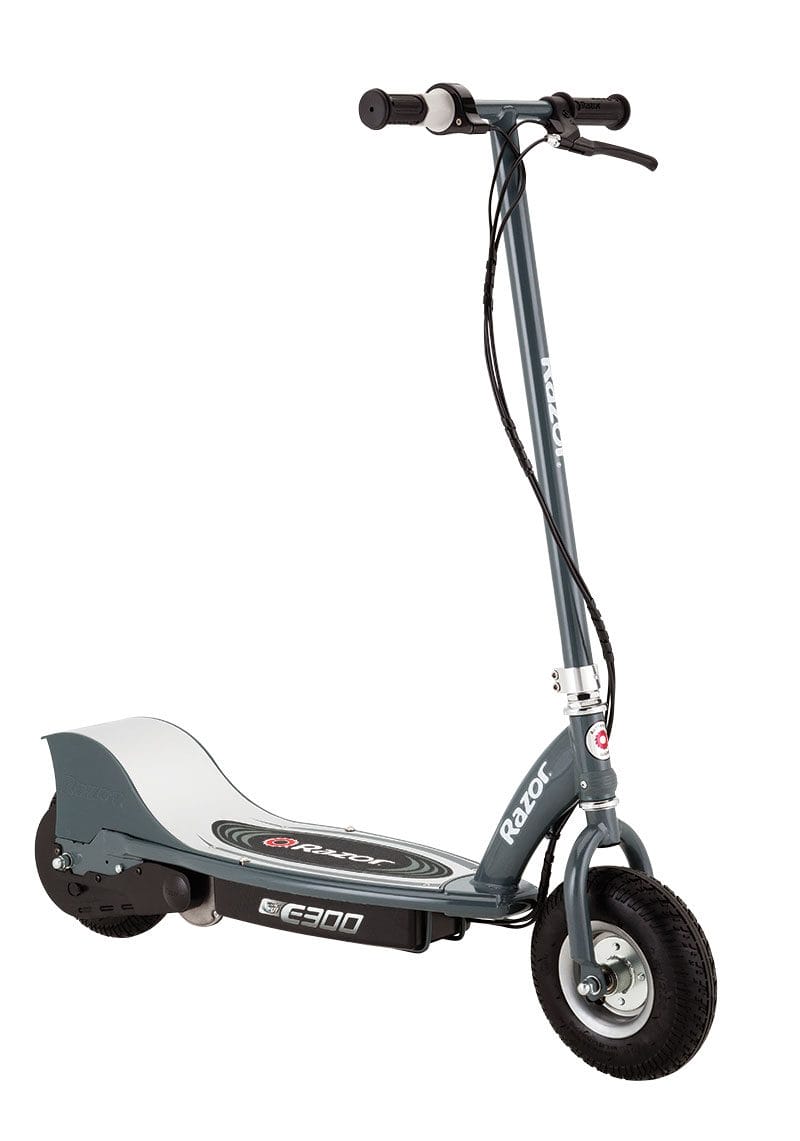
Looking for a simple, tough, and affordable electric scooter that just works? The Razor E300 has been that pick for years. It’s a chunky, steel-framed throwback with big pneumatic tires, a twist throttle, and a hand brake—no app, no Bluetooth, and no drama. Because of that, many riders still choose it as a first scooter, a campus cruiser, or a fun weekend ride for teens and light adults. In this deep-dive 2025 review, I’ll cover how it rides, how long it lasts on a charge, where it shines, and where it doesn’t. I’ll also explain realistic expectations on speed, hills, and maintenance, since those three make or break the E300 experience.
If you already know it’s your style and want specs, color options, and current availability, you can check the product page here: Razor E300.
Who the Razor E300 Is For
The E300 is made for riders who value simplicity over smart features. If you want to hop on, twist, and go—without pairing an app, tweaking ride modes, or worrying about firmware updates—this scooter fits. It suits:
- Beginners who want a friendly learning curve and predictable controls.
- Teens who need a sturdy neighborhood ride with real tires and a real brake.
- Casual adult riders (within the manufacturer’s weight guidance) who prefer short trips and low maintenance costs.
- Campus and neighborhood riders who travel flat to gently rolling terrain at relaxed speeds.
If you expect to commute daily over long distances, climb steep hills, or carry the scooter up three flights of stairs, you should keep reading—because the E300 can still work, but it has trade-offs you must accept.
Design & Build: Steel, Simple, and Surprisingly Robust
The E300’s build feels “old school” in a good way. You get a steel frame, a wide deck, and big 9-inch pneumatic tires. That combination is the heart of its appeal. Many budget scooters cut corners with hard urethane wheels or thin frames; the E300 doesn’t. As a result, it’s sturdy and confidence-inspiring.
A few design notes stand out:
- Non-folding stem: The bar doesn’t fold. That adds rigidity and reduces wobble, yet it hurts portability. For transport, most owners toss it in a trunk or garage rather than fold it under a desk.
- Clean cockpit: A basic twist throttle on the right and a hand brake on the left. No screen. No speed modes. You look ahead, not down.
- Wide deck: Foot placement feels natural. There’s room to adjust stance as road conditions change.
- Kickstand: Simple and effective. It keeps the scooter upright without hunting for a wall.
Because everything is straightforward, it’s easy to live with. There isn’t much to adjust beyond tire pressure, chain tension, and brake cable slack.
Motor & Speed: Calm, Predictable, and Plenty for Short Rides
The E300 uses a chain-driven motor tuned for friendly acceleration and a top speed that feels quick enough for paths and quiet streets. Riders coming from kick scooters notice the difference immediately: you twist and glide. Importantly, the throttle response is linear rather than aggressive, which boosts confidence for newer riders.
- Acceleration: Smooth and steady. It won’t rocket forward, and that’s the point—you get control.
- Top speed: In real-world use, it’s fast enough to keep a steady pace on neighborhood routes.
- Noise: Chain drive adds a soft mechanical whir. It’s not silent like belt or hub motors, yet the sound is part of its character and makes it easy for pedestrians to notice you approaching.
Because of the chain drive, you may occasionally adjust tension as the scooter breaks in. It’s a five-minute job once you’ve done it once, and it helps maintain snappy response.

Hill Climbing: Choose Your Terrain Wisely
The E300 handles gentle inclines best. Short, mild hills are manageable; however, long or steep climbs will slow it down. As with any budget scooter, matching the route to the scooter matters. If your daily ride features significant climbs, you’ll want either a more powerful motor or a different gearing approach. But for parks, paths, and typical suburban streets, the E300 remains practical and fun.
Range & Battery: Realistic Expectations Pay Off
The E300 uses a 24V sealed lead-acid (SLA) battery system. That choice keeps the price down and the design simple. Nevertheless, it affects use patterns in ways you should plan for:
- Runtime: Expect short, fun sessions rather than marathon rides. Many users treat it like a “ride after school” or “quick errand” scooter.
- Charging: Plan overnight charging on days you ride. SLA batteries prefer full charges and do best when you avoid deep discharges.
- Cold weather: All batteries lose performance in the cold, and SLA is no exception. Range and punch feel flatter as temperatures drop.
You can extend battery life by charging promptly after rides and storing the scooter in a moderate-temperature location. If you need long daily range, consider a lithium-powered model. But if you mainly want compact neighborhood trips, the E300 battery fits the brief.
Ride Quality: Those Big Tires Matter
The E300 doesn’t have suspension, and yet the ride feels comfortable for a budget scooter thanks to its 9-inch pneumatic tires. Air-filled tires absorb cracks, seams, and small debris much better than solid wheels. Consequently, you feel more stable on mixed pavement than you might expect. The deck height and weight distribution also help: you stand low and centered, which makes carving gentle turns easy.
- Cornering: Predictable and stable.
- Vibration: Noticeably reduced compared with small solid tires.
- Surface choice: Still best on pavement or smooth packed paths; avoid pothole-ridden routes and slick surfaces.
Braking & Safety: Simple Hardware, Real Stopping Power
The E300 relies on a hand-operated rear brake. It’s mechanical and direct. With proper cable tension, the brake gives a firm lever feel and consistent stopping. Always do a quick pre-ride squeeze check; if the lever pulls in too far, adjust the barrel or cable anchor until bite point returns.
Safety-wise, remember:
- Helmet first: The E300’s friendly speed still warrants protection.
- Visibility: Because there are no integrated lights, add a front light, rear light, and reflectors.
- Bell or horn: A simple alert makes path etiquette much easier.
- Tire care: Proper pressure preserves grip and braking distance.
These small add-ons make a big difference in daily confidence.
Controls & Usability: Twist, Brake, Repeat
Simplicity is the user experience. There’s no app or display to distract you. The twist throttle is easy to learn, and the brake lever mirrors a bicycle. Because there’s no screen, you judge speed by feel and surroundings, which encourages eyes-up riding.
Notably, the scooter does not fold. That’s the biggest usability compromise. If you must carry it regularly, measure your storage spots ahead of time.
Portability: Heavy for Its Class, Best for Garages and Trunks
The E300 is hefty compared to many modern commuter scooters. The steel frame and lead-acid batteries add weight, and the non-folding design makes it awkward to carry. If you live in a walk-up apartment or rely on public transit, you’ll feel that weight quickly. If, however, you have a garage or a ground-floor storage area—and you drive it to parks or paths—the E300’s size isn’t a problem. Many owners simply roll it to a trunk, lift the front wheel in first, and pivot the rear end in.

Durability & Maintenance: Easy, Inexpensive, and DIY-Friendly
Because the E300 is mechanical rather than digital, most upkeep is straightforward:
- Chain tension: Check occasionally; adjust with basic tools.
- Brake cable: Inspect for slack; retension or replace as needed.
- Tires/tubes: Keep them inflated and replace tubes when punctured.
- Battery: Charge after rides, avoid deep drains, and replace when capacity fades.
Parts availability is a bright spot. Over many years, the E300 family built a large community and a healthy supply of affordable spares—tires, tubes, chains, sprockets, brake cables, and batteries. If you like hands-on gear, you’ll appreciate how serviceable this scooter is compared to app-locked models.
Weather & Water: Play It Safe
The E300 is happiest on dry pavement. Avoid riding in heavy rain or through deep puddles. Besides traction concerns, you don’t want water pooling around electrical connectors or seeping into the battery compartment. If you’re caught in a light drizzle, ride slowly, brake early, and dry the scooter afterward.
Noise: A Soft Mechanical Whir
Hub motors are whisper-quiet; chain drives are not. The E300 produces a gentle whirring sound that grows with speed. Some riders like the audible feedback; others prefer silence. On shared paths, a bit of sound can even be a plus, since pedestrians notice you sooner.
Assembly & Setup: Fast and Simple
Out of the box, setup typically involves mounting the handlebar, checking the brake and tire pressure, and fully charging the battery before the first ride. Because the platform is simple, you won’t spend time updating firmware or pairing devices. A careful once-over with basic tools is all you need.
Cost of Ownership: Predictable and Manageable
Two factors dominate costs over time: tubes/tires and battery. Tubes are inexpensive; you’ll replace them occasionally if you ride on debris-strewn roads. The SLA battery pack is also budget-friendly compared with lithium packs, and replacement is well-documented. Because labor is simple, many owners do it themselves and save money.
If you ride often, set aside a small annual budget for tubes, a spare tire, brake pads/cable, and—eventually—a new battery. The total remains modest compared with many premium scooters that require proprietary parts.
Parent Perspective: Age Guidance, Supervision, and Fit
Razor markets the E300 to older kids/teens and smaller adults, but parental supervision is always wise. Make sure riders wear helmets, learn braking in a safe area, and follow local rules. Because the scooter is heavier than toy-grade models, help with initial setup and basic maintenance. Moreover, do quick pre-ride checks together so new riders build habits that carry over to bikes and future scooters.
Accessories That Improve the Experience
Because the E300 is a blank canvas, a few budget accessories transform it:
- Front and rear lights for dusk rides.
- Bell for shared paths.
- Mirror for street awareness.
- Mini frame bag for tools and a tube.
- Upgraded grips for comfort.
- Seat kit (E300S variant) if you prefer a seated ride.
These add-ons keep things safe and convenient without changing the scooter’s core character.
Real-World Use Cases
Campus Cruiser: You roll from dorm to class, cut through quiet streets, and park in front of the library. The E300’s predictable speed and wide deck make it easy to ride in mixed foot traffic—especially with a bell and lights.
Neighborhood Errands: Need a quick trip to a nearby shop? The scooter’s steady pace and friendly handling turn a chore into a short outdoor break.
Weekend Fun: For teens, it’s a perfect “meet you at the park” machine. Because maintenance is simple, you spend more time riding and less time wrenching.
Pros & Cons
Pros
- Big, 9-inch pneumatic tires for comfortable ride quality.
- Steel frame feels solid and inspires confidence.
- Simple controls with a twist throttle and hand brake—easy to learn.
- Low maintenance with widely available, inexpensive parts.
- Great value for short rides and casual fun.
Cons
- Non-folding design hurts portability.
- Heavier than many modern commuter scooters.
- Lead-acid battery means shorter range, longer charge times, and noticeable cold-weather impact.
- Chain drive adds mild noise and occasional tension adjustments.
- No integrated lights; you’ll want to add your own.
Alternatives to Consider
If you love the E300’s simplicity yet want longer range, look at lithium-powered entry scooters. If you need better hill performance, consider a model with a higher-torque motor or dual-motor setup. And if portability matters most, a folding commuter scooter with a lighter frame will save your back. Those options often cost more, but they target different daily needs.
Ownership Tips: Keep Your E300 Running Strong
- Charge promptly: After rides, top the battery up. SLA packs prefer frequent, full charges.
- Store warm and dry: Avoid freezing garages or damp sheds.
- Set tire pressure right: Proper inflation preserves range and ride quality.
- Check chain tension: A quick check before big rides keeps power delivery snappy.
- Adjust brakes early: Don’t wait for a spongy lever; tune cable tension as soon as you feel slack.
- Carry a mini tool kit: Include hex keys, a small wrench, a patch kit or spare tube, and tire levers.
Troubleshooting Guide
- Scooter feels sluggish: Check tire pressure, charge the battery fully, and verify chain tension.
- Brake lever travels too far: Adjust the barrel adjuster or cable anchor; inspect pads for wear.
- Unusual chain noise: Re-tension the chain and ensure the rear wheel is aligned.
- Short runtime: Batteries age. If charging habits are good and runtime drops, consider a replacement pack.
- Shaky ride: Inspect tires for damage, confirm axle nuts are tight, and check deck hardware.
Frequently Asked Questions
Does the Razor E300 fold?
No. The non-folding design contributes to stability but sacrifices portability.
Is it suitable for daily commuting?
For short, flat trips, yes. For long commutes with hills or frequent carrying, you’ll likely prefer a lighter, folding scooter with a lithium battery.
How fast is it?
Its real-world pace suits neighborhood and path riding. It feels brisk without being intimidating, which is ideal for newer riders.
Can it climb hills?
It handles gentle grades best. Long or steep climbs will slow it down, especially as the battery depletes.
How long does the battery last?
Expect short sessions per charge. Treat it like a casual ride scooter rather than an all-day commuter.
Is it water-resistant?
Ride on dry pavement whenever possible. Avoid heavy rain, puddles, and wet surfaces.
What maintenance is required?
Occasional chain tensioning, brake cable adjustments, tire inflation, and, eventually, a battery replacement.
Who Should Skip the E300?
- Riders who must carry a scooter daily or climb stairs often.
- Commuters who need long range and fast charging.
- People who require steep-hill capability.
- Anyone who insists on app features and a digital dashboard.
If those describe your life, you’ll be happier with a lightweight folding commuter scooter.
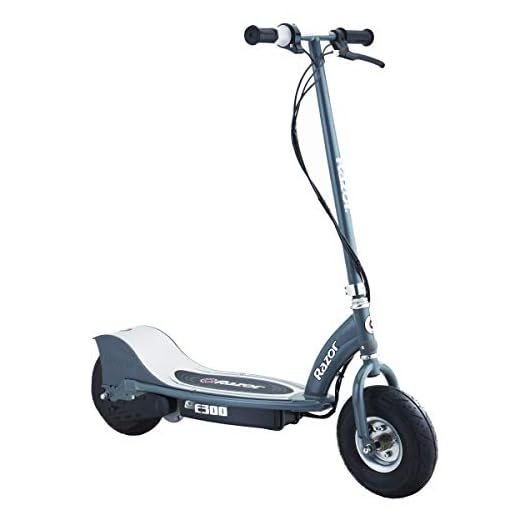
Razor 13113614 E300 Electric Scooter - Matte Gray 41 x 17 x 42-Inch
Final Verdict: A Friendly, Durable Classic That Still Makes Sense
The Razor E300 remains a refreshingly honest machine. It doesn’t pretend to be an app-enabled commuter or a hill-climbing rocket. Instead, it offers a stable frame, big tires, a reliable brake, and simple controls you can trust. For short rides, campus trips, parks, and weekend fun, it’s still a terrific value—especially for riders who want to learn safely and maintain their own gear.
Yes, it’s heavy. Yes, it lacks a folding stem and integrated lights. And yes, the lead-acid battery means shorter runtime and longer charging. Even so, the E300 endures because it nails the basics that matter day to day: confidence, comfort, and simplicity.
If that matches your needs, the E300 is easy to recommend. For availability and details, see the product page: Razor E300.