
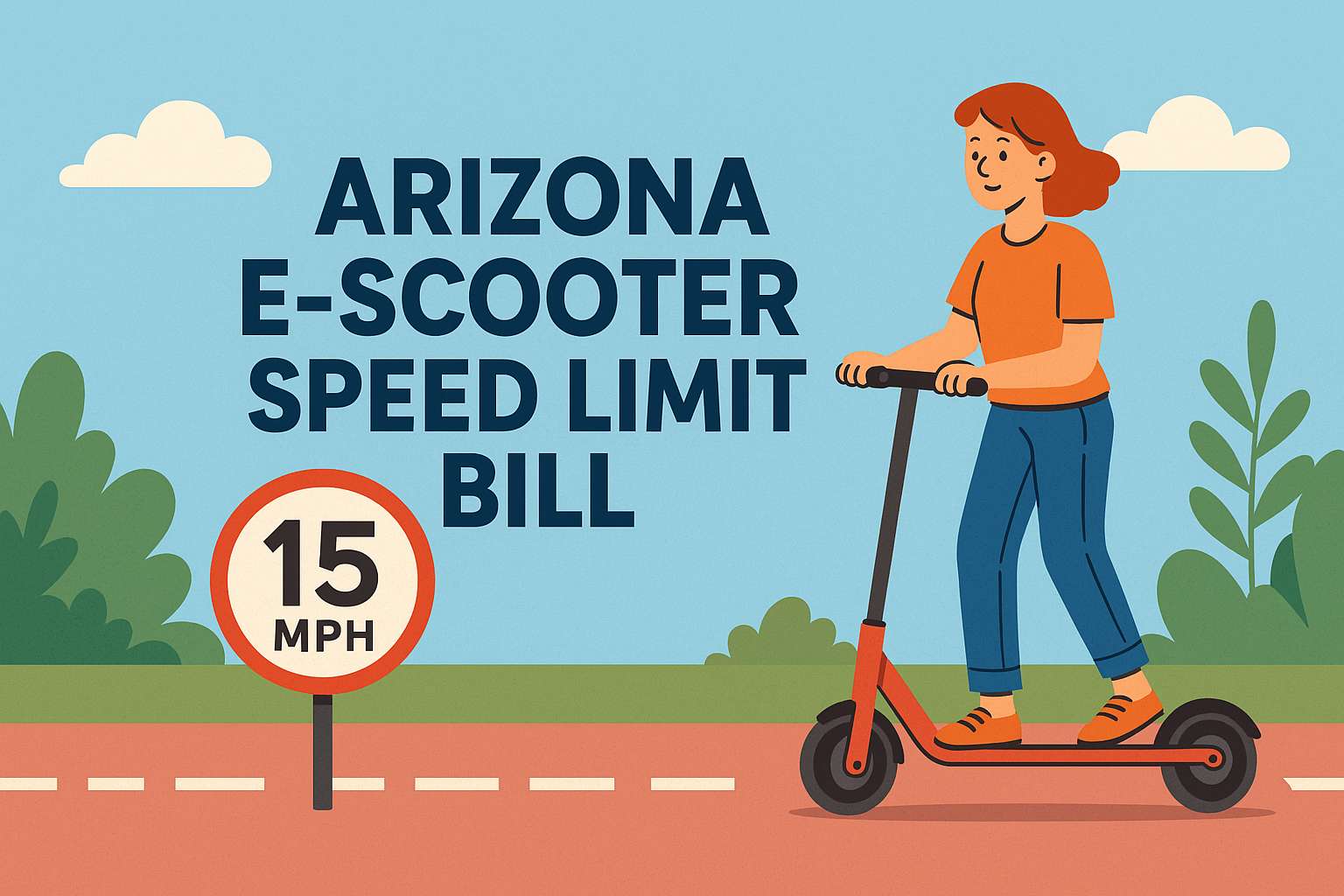
Arizona lawmakers are looking hard at how fast people ride e-bikes, e-scooters, and regular bikes on shared paths.
State senator John Kavanagh has proposed Senate Bill 1008, a measure that would put clear speed limits on bike and multiuse paths across the state.
He says the goal is not to ruin anyone’s fun, but to cut down on close calls and nasty crashes where riders and people on foot mix in the same space.
Why Arizona Wants Slower Scooters And Bikes On Paths
If you spend time on popular paths in Phoenix, Scottsdale, Tempe, or along the canals, you already see the change.
More e-bikes, more stand-up scooters, more kids and teens on fast electric gear. A lot of those devices reach 20 to 28 mph straight out of the box. Some high-powered models go well past that.
Emergency rooms feel that change.
Trauma doctors in Arizona now see more crashes where the injuries look closer to motorcycle cases than to simple bike falls.
Broken ribs, head injuries, and serious fractures show up more often. One reported e-bike crash left a rider with 23 broken ribs, which says a lot about the force involved when a heavy frame hits the ground.
Weight plays a big role.
Many e-bikes and e-scooters weigh between 60 and 100 pounds. When that much mass moves at high speed on a narrow path next to families, runners, and older adults, small mistakes turn into big impacts.
For lawmakers, that mix of higher speed, heavier devices, and crowded paths raises a simple question. How fast is safe when you share space with people on foot?
What SB 1008 Actually Says
SB 1008 focuses on bicycle and multiuse paths. These are the off-street paths you see in parks, along canals, and next to major roads.
The bill sets two main limits for bicycles on those paths:
- A rider on a bike on a bike or multiuse path must stay at or under 15 mph when the path ahead is clear
- That same rider must slow to 5 mph while passing another person on the path
The same speed limits would apply to several electric and motorized devices:
- Electric bicycles
- Electric stand-up scooters
- Electric miniature scooters
- Electric personal assistive mobility devices
- Motorized skateboards
So if you ride any of these on a bike or multiuse path, you stay under 15 mph on open stretches and drop to 5 mph when you pass someone.
Regular kick scooters and non-electric skateboards do not fall under this new part of the law and stay covered by older rules.
Local control still matters.
Cities, towns, counties, and state agencies that manage a path can set lower speed limits if they think a specific trail needs stricter rules.
SB 1008 creates a statewide ceiling, not a floor.
Violations count as civil traffic issues.
That means:
- No points on a driver license
- No report to the motor vehicle department
- No effect on auto insurance rates
You would still get a ticket, but it would not follow you in the same way as a speeding ticket in a car.
For a deeper breakdown of how this works in practice, you can check this detailed guide to Arizona’s 15 mph bike and e-scooter proposal.
What This Means For Your Daily Ride
If you ride a bike or e-scooter to work or school, a lot of your routine stays the same.
On an empty stretch of path, many people already ride in the 10 to 15 mph range. You still cruise, just with a clearer idea of the limit.
The big change comes when you pass others.
Dropping to 5 mph around walkers, runners, kids on small bikes, or people with strollers turns every pass into a slow, controlled move. It shortens stopping distance and gives everyone more time to react if someone steps sideways or a dog pulls on a leash.
The bill does not touch street speed limits, traffic lights, or how cities design bike lanes on the road.
It lives in that shared middle space where wheels and feet use the same strip of asphalt.
Enforcement will raise questions.
Many e-scooters and e-bikes have digital displays that show speed, so checking those is straightforward.
Standard bikes do not. In those cases, officers will rely on training and, on some routes, portable speed devices.
What Happens Next
City staff, rider groups, and safety advocates across Arizona now follow SB 1008 closely.
Some local officials like the idea of a simple statewide rule that still lets them post lower limits near schools, senior centers, and very busy park sections.
Some riders worry about selective enforcement and ask for more protected bike lanes on streets, so faster riders can leave the sidewalks and family paths to slower traffic.
Hearings in the 2026 legislative session will show how much support the bill really has.
If it passes, Arizona will join a growing group of places that set clear speed caps for micromobility devices on shared paths.
For now, one message already helps.
If you ride something fast on a path full of people, slow down a bit.
You still reach your destination, and you give everyone around you a safer, calmer trip.