


Electric scooters already help cut city pollution at street level. Still, another part of the story is getting more attention now. The materials used to build the scooter itself. That is why the Ather Redux concept feels fresh and useful at the same time.
First, Redux is not only about battery or motor upgrades. Instead, it tests a different body material strategy. Parts that usually rely on plastic can be replaced, at least in part, with flax fiber composites. Next, this idea opens a practical question for riders and brands alike. Can a scooter feel premium, stay durable, and lower material impact all at once?
Right now, many buyers are asking exactly that.
Why flax composites matter in real life
Plastic body panels are common for a reason. They are cheap, familiar, and easy to produce at scale. But there is a trade-off. Most plastics used in vehicle panels start from fossil-based inputs.
Flax composites shift that starting point. The fiber comes from a plant source, and the panel can still look and feel modern. In practice, that can help cut the footprint of the bodywork side of the scooter.
For riders, the benefits are easy to understand.
- First, weight can drop in selected panel areas.
- Then, lower mass can help urban handling, especially in traffic.
- Next, reduced mass can support energy efficiency in daily stop-and-go riding.
- At the same time, the woven finish gives the scooter a distinct look that does not feel generic.
So the value is not only technical. It is visual and emotional too.
Redux feels like a test lab, not a photo prop
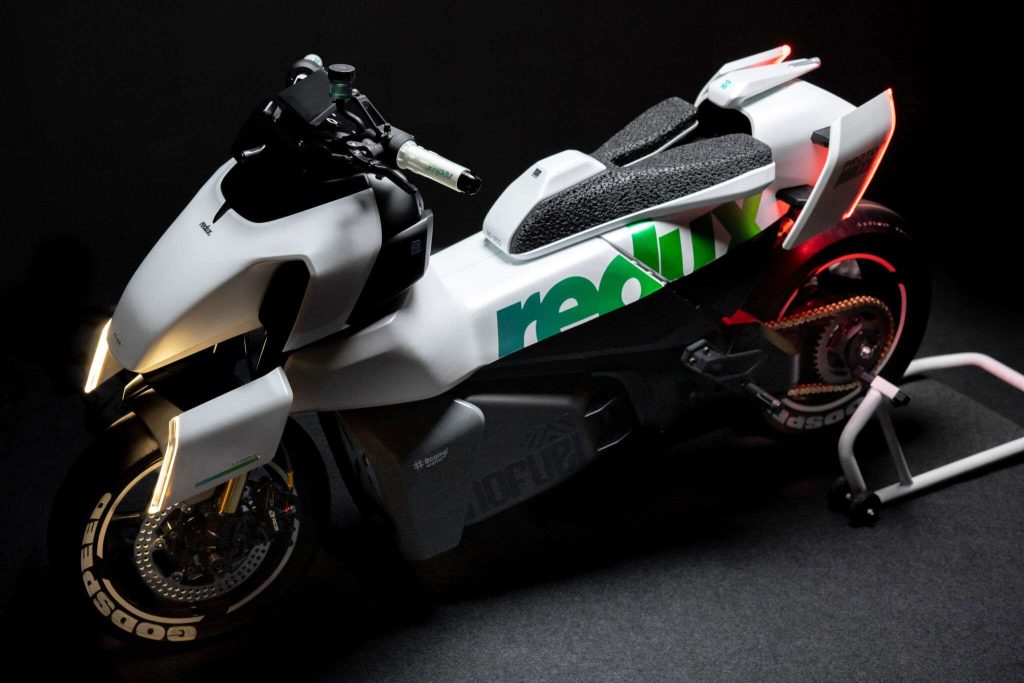
Some concept vehicles look great on launch day, then disappear. Redux gives a different impression. It looks like a rolling test platform where material, fit, and production methods can be checked under real constraints.
For example, engineers can inspect surface aging, heat behavior, moisture response, and repair workflows. Then product teams can map actual costs, not only slide-deck estimates. After that, suppliers can decide what is realistic for higher volumes.
That step-by-step path matters. Without it, sustainability claims stay abstract. With it, brands can move from concept language to parts that appear in retail models.
This trend matches what buyers now search
Search behavior has changed, and it keeps changing fast. People still check range, charge time, and top speed first. Yet many shoppers now ask one more thing. What is this scooter made of, and how clean is that material chain?
That is why related topics keep growing:
- eco-friendly electric scooter materials
- natural fiber composite body panels
- plastic alternatives in EV design
- low-impact scooter manufacturing
- sustainable urban mobility products
If you want a practical explainer on this broader topic, this straight-talk guide on electric scooter environmental impact is a strong companion read.
Can flax replace every plastic part today
Short answer, no. And that is fine.
Some components face tough heat loads, repeated impacts, or tight clip geometries. In those zones, other materials may still perform better right now. So the realistic near-term path is mixed construction. Flax composites where they perform well, and alternate materials where duty cycles are harsher.
Still, this mixed approach can bring clear progress. Even partial replacement across high-volume models can cut total plastic demand in a meaningful way. Then each new model year can add more validated use cases.
What riders should track before buying next-gen models
New material stories sound great in a launch video. Yet smart buyers look deeper. A good checklist helps separate hype from value.
1) Heat and weather durability
First, check how panels hold up in sun, rain, and daily dust exposure.
2) Service and repair cost
Next, confirm local workshops can source replacement panels without long delays.
3) Surface aging over time
Then, look for real-world signs of fading, scratches, and edge wear after months of use.
4) Supply stability
After that, track whether the brand can keep quality stable at scale, not only in early batches.
5) End-of-life plan
Finally, check what happens once the panel reaches end-of-life. Clear recovery routes are a good sign.
This checklist is simple, but it works.
Why Redux could influence the wider two-wheeler market
Electric scooter competition is intense. Brands push fast update cycles, and buyers compare details carefully. In that environment, any idea that improves performance, design identity, and material footprint has a real chance to spread.
First, one concept proves feasibility. Next, a limited run tests service networks and customer response. Then mainstream trims adopt selected parts where cost and durability align.
And this effect may not stop at scooters. Light electric motorcycles and urban cargo two-wheelers share similar panel challenges. So one successful material playbook can move across segments faster than expected.
The bigger point for sustainable mobility
Clean transport is not only about what comes out of the tailpipe. In fact, for EVs, tailpipe emissions are already near zero during use. The next frontier sits upstream. Raw materials, production methods, and end-of-life handling.
Redux puts that frontier in plain view. It says design teams can chase style and responsibility at the same time. It also tells buyers that material quality now belongs in the buying decision, right beside range and price.
That is a healthy shift.
Final take
Ather Redux does not claim to solve every sustainability issue in one shot. Yet it does something more useful. It makes the material conversation practical, visible, and testable.
First, it challenges plastic-heavy defaults in scooter bodywork. Next, it gives engineers a real platform for durability and cost learning. Then, it gives riders a reason to expect better materials in daily mobility products.
So yes, this is a concept. But it is the type of concept that can shape production thinking. And if that momentum continues, the next generation of electric scooters could feel cleaner not only on the road, but from panel to panel as well.