

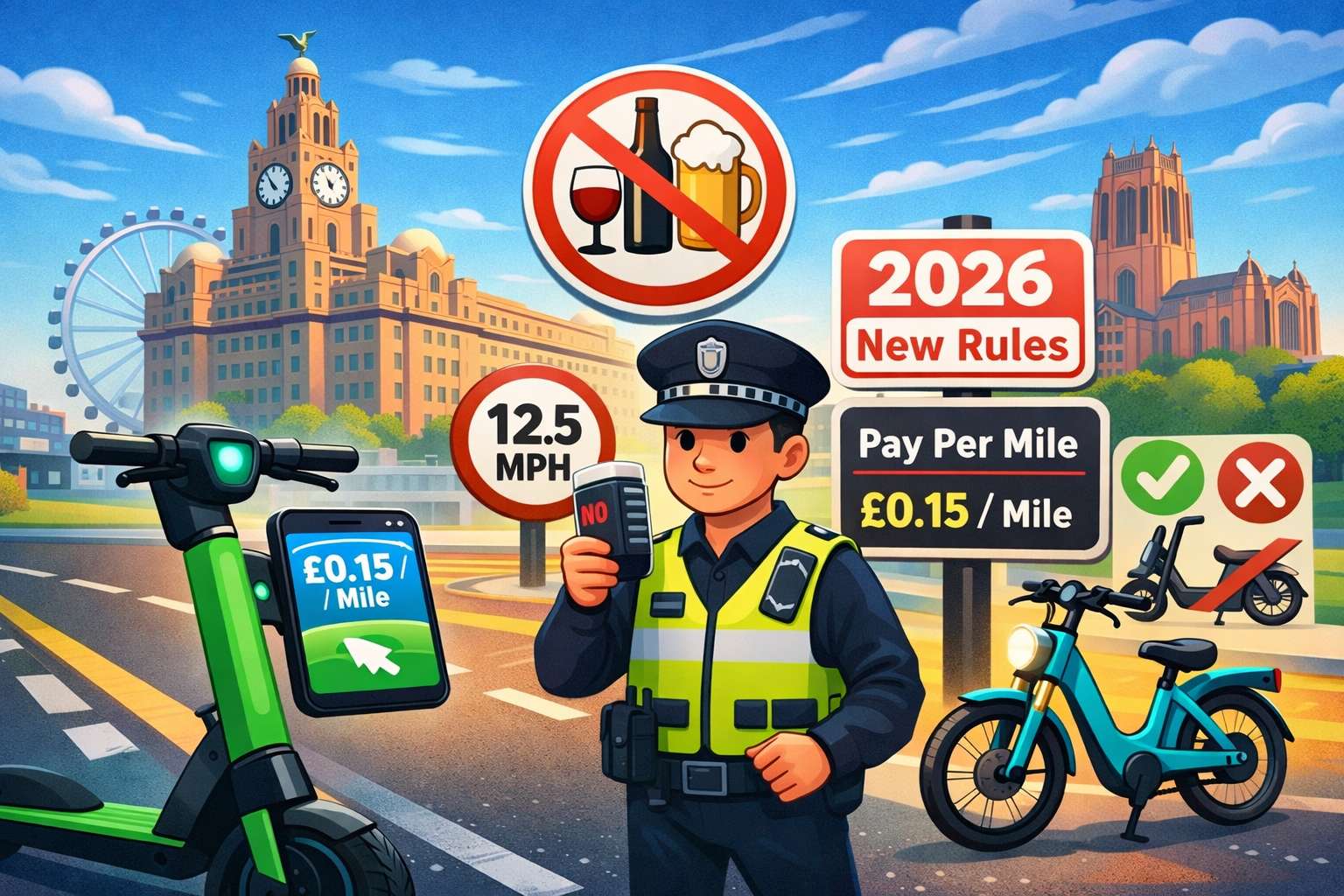
Liverpool has entered a new phase for short city travel, and the changes are bigger than a simple operator swap. On 1 February 2026, Bolt launched 2,000 shared e-scooters and 150 shared e-bikes across the city. The service now runs day and night, every day, and it reaches the full city area, with first-time access in Speke and Garston. So, for many residents, this is the first time a shared micromobility option feels citywide, not central-only.
What changed on launch day
First, Liverpool moved from Voi to Bolt after a tender process. Next, the fleet size and service coverage expanded at the same time. Then, the policy focus shifted from simple fleet rollout to rider behavior, parking quality, and safety checks in the app. The city and operator now describe this as part of a wider transport plan that targets lower car dependency and cleaner urban movement.
At street level, the model is practical. Riders unlock, ride, and park with app controls that now carry stronger compliance checks. At policy level, the city links this move to climate and congestion goals, and officials state that almost two thirds of city journeys still happen by car, with large yearly CO2 output. So the launch message is clear. This is a transport program, not a gadget story.
Road pricing now rewards distance, not just speed
Road pricing is one of the biggest upgrades in this rollout. The trip can still include unlock and time-based charging, and now Bolt adds distance-based pricing so riders can pay per mile. That sounds like a small billing tweak, but it changes rider incentives in real traffic.
With pure per-minute pricing, riders often feel pressure to rush at junctions or end trips fast in awkward spots. With per-mile pricing available, the cost signal shifts toward steady riding and cleaner trip endings. So this part of the launch is not only about price choice. It is a safety and street-order tool as well.
Drink-riding restrictions moved from warning text to active checks
Next, drink-riding controls became more direct. Liverpool’s official FAQ states that Bolt uses an in-app cognitive reaction test to prevent drunk riding. Then parking control adds AI photo validation and geofencing, so the app checks where and how a trip ends. Improper parking can trigger penalties in operator terms.
Speed policy now has two layers. National rental guidance sets a 15.5 mph ceiling for rental e-scooters, and local operators can set lower caps. In Liverpool, the published Bolt FAQ lists a 12.5 mph maximum for its scooters. So riders should read local in-app terms every time, not just national headlines.
UK law in 2026 still splits rental scooters and private scooters
If you search electric scooter laws UK 2026, the key point stays the same. Rental trial scooters are legal only inside official trial rules and zones. Private e-scooters remain illegal on public land, including roads, pavements, cycle lanes, and parks. Penalties can include fines, licence points, and scooter impound.
Then there is licence and insurance status for rentals. GOV.UK says rental users need a provisional or full UK driving licence with category Q entitlement. The operator provides third-party motor insurance. GOV.UK guidance then states riders must not use rental scooters when drunk or intoxicated, and drink or drug driving laws can apply.
The trial timeline has moved again, so legal context is still temporary. The Department for Transport records that trials started in July 2020, were extended five times, and are now due to run to May 2028. The same page states a second national evaluation is underway and due to conclude in 2026.
E-bike rules are simpler, if the bike meets EAPC limits
E-bike rules follow a different lane, and this part often gets mixed up online. In the UK, an electrically assisted pedal cycle that meets EAPC limits does not need registration, tax, insurance, or a driving licence. The core limits include 250W maximum continuous rated power and motor assistance cut-off at 15.5 mph. Riders must be age 14 or older.
Then, if a bike exceeds those limits or lacks compliant pedal function, it can fall under moped or motorcycle rules. That switch changes legal duties fast, including registration, insurance, licence, and approved helmet use. So buyers should check compliance labels before purchase, not after an incident.
Safety data explains the tougher compliance stack
The latest national casualty data shows why cities and operators keep tightening controls. For 2024 in Great Britain, DfT reports 1,312 collisions involving e-scooters and 1,390 casualties. It reports 6 deaths in collisions involving e-scooters, and an adjusted estimate of 444 serious injuries plus 940 slight injuries. These are not tiny numbers, so policy keeps moving toward stricter app checks and clearer enforcement language.
What riders should do now before each trip
First, verify that you are in a live trial area and use only legal rental vehicles. Next, confirm your licence status in the app account flow. Then, check the live pricing mode before you unlock, so you know if time or distance billing applies. After your ride, park carefully and submit a clear end-trip photo.
If you want a practical city-to-city comparison for search terms like scooter rental rules and local ride costs, read this guide on Albuquerque e-scooter rentals in 2026. It gives useful contrast on how local policy design changes rider experience.
What this launch means for the rest of 2026
Liverpool’s 2026 rollout sets a clear template. Expand fleet access, widen service hours, add distance-aware pricing, and put drink-riding plus parking controls inside the ride flow, not hidden in terms pages. So the big story is not only new scooters and bikes. The bigger story is policy moving closer to real street behavior.
For riders, this is good news if you want more coverage and better service hours. It is strict news if you ignore local rules. And for cities watching this model, Liverpool now looks like a live case study for safer shared micromobility at scale.