
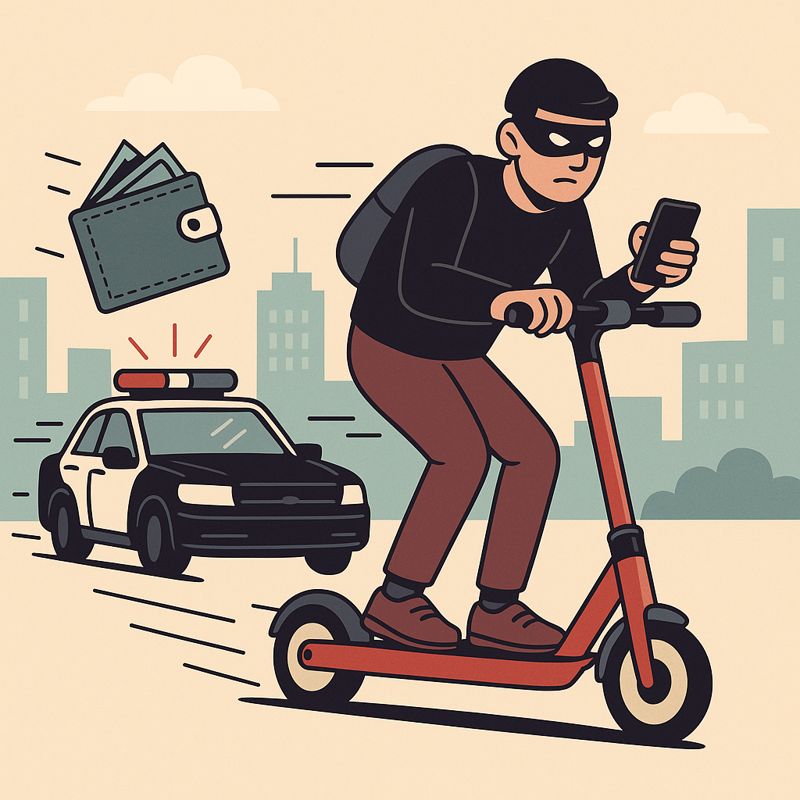
E-scooters keep spreading in big cities, and most rides stay normal. People use them for short trips, errands, and quick hops to the bus or metro. Yet there is a new, uncomfortable twist. E-scooters as getaway vehicles now show up in crime talk, policing plans, and city rule changes.
A recent academic study looked at Chicago’s 2019 rental e-scooter rollout and linked scooter access to higher crime in nearby areas. The jump sat around 18%, and the rise clustered around theft-related reports such as car break-ins. So the argument is simple. Easy access to quick transport can shift the risk for fast, low-effort street crime.
At the same time, parts of the scooter industry push back. They say the data reflects an early stage of the market. They point to the same core issue too. The study shows a link, not a clean, direct cause for every incident. Still, the concern keeps growing, and city leaders now face pressure to act.
Why scooters fit the “quick escape” pattern
E-scooters solve a clear problem. They move a rider through dense streets fast. They park almost anywhere. They blend into daily traffic. So the same traits that help commuters can help offenders in some cases.
Three details matter most.
First, speed in the first minute after a theft. A scooter can create distance fast. That early gap often decides if someone gets caught.
Next, low-friction access. Shared scooters sit near transit stops, shopping streets, and busy corners. A person can start moving in seconds.
Then, visual confusion. A person on a scooter looks like any other rider. That makes it harder for victims and bystanders to track someone in a crowd.
This does not mean scooters create crime. It means they can lower the effort for crimes that already exist in a city.
Policing shifts from warnings to seizures
Police messaging has changed. It used to focus on sidewalk riding and bad parking. Now it often talks about theft and intimidation too.
London is a clear example. In 2025, police reported large-scale seizures of illegal e-bikes and e-scooters during targeted operations linked to street theft concerns. So the tone has become sharper. The message is less about “please ride safely” and more about “we will take the vehicle.”
Elsewhere, some forces have leaned into public warnings ahead of holiday shopping. The logic is direct. People buy scooters as gifts. Then they ride them in the wrong places. Then the scooter gets seized, and the gift becomes a bad surprise.
That enforcement style can reduce street misuse, but it can raise tension too. Riders often feel confused about what is legal and what is not. So clear, plain-language rules matter.
For a quick example of how detailed that topic gets, this explainer helps a lot: Japan e-scooter user consent and police data rules in plain words.
City rules shift too, and that changes behavior
Some cities focus on theft risk. Others focus on street safety. Both paths shape how scooters get used, and both can affect getaway use.
Speed limits are one lever. A lower cap can cut the advantage of a fast escape. It can cut crash risk too, which is a separate problem that still fuels public anger.
Parking controls matter as well. Scooter “stacks” at the same corner can turn into instant launch points. So cities now push for designated parking bays, no-park zones, and tighter enforcement on cluttered sidewalks.
Then there is street design. Protected lanes and calmer streets can reduce conflict. At the same time, a dense lane network can create more routes for someone trying to disappear fast. So city planners now weigh tradeoffs in a more serious way.
What scooter companies can change fast
Operators sit in a tough spot. They want rides to feel easy for honest users. Yet they need stronger barriers that make misuse harder.
A few steps show up in city talks again and again.
Stronger account controls. Better sign-up checks can reduce repeat abuse. It can cut the number of “burner” accounts too.
Faster response to police requests. Clear and lawful data workflows can help in serious cases. That can shorten investigations.
Zone rules that match local risk. Slow zones near crowded areas can reduce reckless riding. It can cut the value of a scooter as a quick escape as well.
Parking rules that remove “instant launch” points. If certain corners stop serving as scooter piles, offenders lose a tool that sits ready at street level.
None of this fixes the problem alone. Still, layered controls can raise the cost of misuse without punishing everyday riders who follow the rules.
The next months will shape the public story
E-scooters still bring real value for short trips and car-free errands. People like that convenience, and cities like the lower car traffic. Yet the getaway vehicle story keeps building, and it pushes leaders toward stricter rules.
So the real test is not one policy announcement. The test is daily enforcement, better fleet controls, and simple rules riders can follow without guesswork. If cities get that mix right, scooters stay useful. If they get it wrong, public support drops fast.