

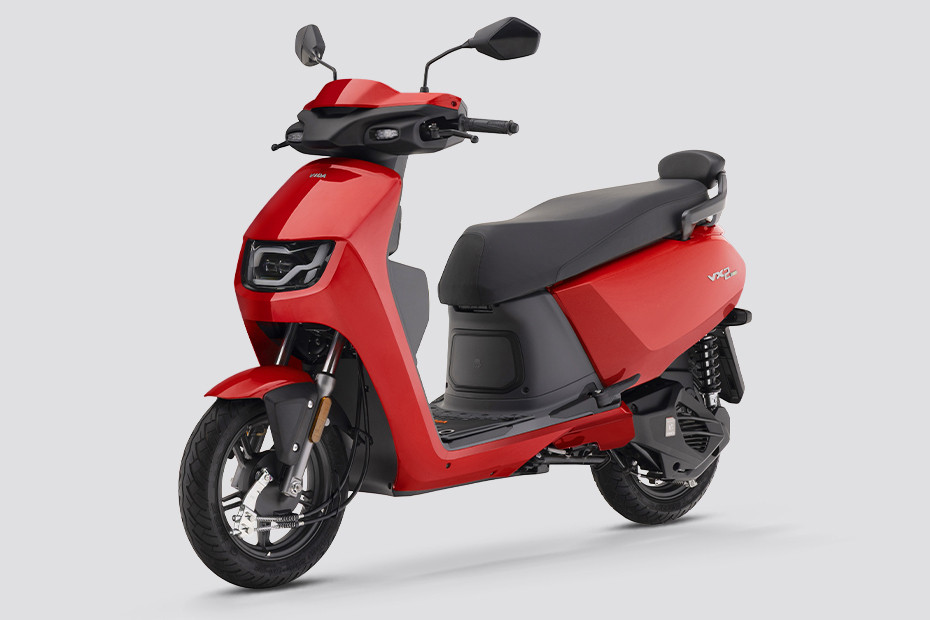
Hero MotoCorp has added a new Vida VX2 Go 3.4 kWh variant to its electric scooter lineup. This update matters because it gives buyers a longer-range option without pushing them straight to the VX2 Plus. For many city riders, that makes the range more practical and the lineup easier to understand.
The new version keeps the same family-friendly focus of the VX2 range, but it fixes one big question buyers had with the smaller Go model. It now gets a much larger battery pack, stronger certified range, and a setup that should suit daily commuting better.
If you are searching for the latest Hero Vida VX2 Go 3.4 kWh price, range, battery size, VX2 Plus price, or Vida battery cost, here is the simple breakdown.
What is new in the Vida VX2 Go 3.4 kWh
The biggest change is the battery. The regular Vida VX2 Go launched with a 2.2 kWh battery and a 92 km IDC claimed range. The new VX2 Go 3.4 kWh moves up to a 142 km IDC claimed range. That is a major jump on paper, and it puts this version much closer to the VX2 Plus in everyday appeal.
Hero says the scooter uses a dual removable battery setup. It also claims 6 kW peak power, 26 Nm of torque, and a top speed of 70 km/h. The scooter gets Eco and Ride modes, which shows where Hero wants to place it. This is not the sporty version of the VX2 family. It is the practical one.
Hero also says the VX2 Go 3.4 kWh can sprint from 0 to 40 km/h in 4.2 seconds. That should feel quick enough in city traffic, even if performance is not the main selling point here.
What is the range of the Vida VX2 3.4 kWh
The official IDC certified range for the Vida VX2 Go 3.4 kWh is 142 km. That is the headline number most buyers will see first, and it is the official answer to the question many people ask.
Still, real riding rarely matches lab-style figures. Hero also says the scooter can deliver up to 100 km of real-world range per charge. That is the more useful number for most riders. It gives a clearer picture of what this scooter may do in traffic, with stops, mixed speeds, and normal daily use.
So the short answer is simple. The Vida VX2 Go 3.4 kWh has a 142 km IDC claimed range, and Hero says riders can expect up to 100 km in real use.
Hero Vida VX2 Go 3.4 kWh price
Price is where things get a little tricky, because Vida uses location-based pricing and also promotes its Battery as a Service model. Hero announced the VX2 Go 3.4 kWh at ₹1,02,000 effective ex-showroom in Delhi at launch, before the final local picture settles with subsidies and offers.
Hero also said the Battery as a Service entry point for this model started at ₹60,000, with a running charge of ₹0.90 per kilometre. That makes the scooter look more affordable at the start, but buyers still need to understand the payment structure clearly before they commit.
On Vida’s own current product pages, the displayed price has appeared lower in some places. Current official pricing snapshots show the VX2 Go 3.4 kWh at ₹84,800. Since Vida pricing changes by location and offer, buyers should treat that number as a starting point, not a final on-road figure for every city.
What is the price of the Vida VX2 Plus 3.4 kWh
The Vida VX2 Plus also uses a 3.4 kWh battery. At launch in July 2025, Hero listed the VX2 Plus at ₹1,09,990 without Battery as a Service. With BaaS, Hero announced it at ₹64,990.
More recent official pricing material has shown the VX2 Plus at ₹94,800 in effective price form, again depending on location and current offers. Vida’s BaaS page has also shown the VX2 Plus starting at ₹70,000 with the same ₹0.90 per kilometre structure.
So if you are asking what the price of the Vida VX2 Plus 3.4 kWh is, the clean answer is this. Hero launched it at ₹1,09,990 without BaaS, but current effective prices shown by Vida can be lower.
Which electric scooter has a battery capacity of 3.4 kWh
Within the Vida range, the 3.4 kWh battery appears on the Vida VX2 Go 3.4 kWh and the Vida VX2 Plus. Vida has also offered a 3.4 kWh battery on the V2 Plus. So if your search is about a Vida electric scooter with a 3.4 kWh battery, these are the main official matches.
That matters because buyers often search by battery size, not just by model name. A 3.4 kWh battery now signals one of Vida’s more serious range-focused options.
What is the cost of the Vida battery
This is the part where the public information gets less clear. Vida and Hero explain the Battery as a Service plan, the pay-per-kilometre charge, and the ownership structure. But the official material reviewed does not clearly list a standalone replacement price for a Vida VX2 battery pack.
I cannot confirm this.
What Vida does explain is that under its BaaS setup, the customer owns both the vehicle and the battery. The company frames the plan as a financing structure, not as a battery lease. That is useful, but it still does not answer the most direct question many buyers ask, which is the retail replacement cost of the battery itself.
So for now, the practical answer is this. Vida clearly states BaaS pricing, but it does not clearly publish the standalone battery replacement cost in the official material reviewed.
Charging time, storage and daily usability
The VX2 Go 3.4 kWh looks stronger not only because of the range. Hero says the scooter supports fast charging to 80 percent in 62 minutes. It also says AC charging to 80 percent takes about 4 hours 15 minutes. For a commuter scooter, those figures look usable.
Vida also gives this model a flat floorboard, a large seat, and 27.2 litres of underseat storage. Those details may sound small, but they matter more than flashy specs in daily use. Riders want enough room for regular errands, a comfortable seat, and easy charging. This scooter seems built around those basics.
The brand’s charging network also adds some value. Hero had said the company had 4,600 plus charging points and 700 plus service touchpoints across India. More recent Vida messaging has pointed to 5,000 plus public fast charging stations. That should help reduce range anxiety for urban buyers.
VX2 Go 3.4 kWh vs VX2 Plus
The choice between these two scooters is not hard once you know what you want. The VX2 Go 3.4 kWh is the better pick for riders who care most about range, practical use, removable batteries, and a lower entry point. It looks like the sensible commuter choice.
The VX2 Plus is the better fit for buyers who want more punch. Vida rates it at 80 km/h, and it claims 0 to 40 km/h in 3.1 seconds. It also gets an extra Sport mode. Both scooters carry the same 142 km certified range figure, so the real split comes down to performance, not headline distance.
If you also follow the wider electric scooter market, you can see how brands keep moving toward bigger batteries and more daily usability. That trend is not slowing down, and even outside India we are seeing fresh launches like the VMAX drops 3 new electric scooters and the VX6 claims 50 mph.
Final verdict
The Hero Vida VX2 Go 3.4 kWh looks like a smart and useful upgrade. It does not try to turn the VX2 Go into a performance scooter. Instead, it fixes the part many buyers care about most, which is range.
With a 142 km IDC claimed range, up to 100 km real-world promise, removable dual batteries, practical charging times, and a lower step-in point than the VX2 Plus, this new model fills an important gap. For buyers comparing Hero Vida VX2 price, Vida VX2 range, VX2 Plus price, and Vida battery cost, the new Go 3.4 kWh now stands out as the practical long-range option in the lineup.