

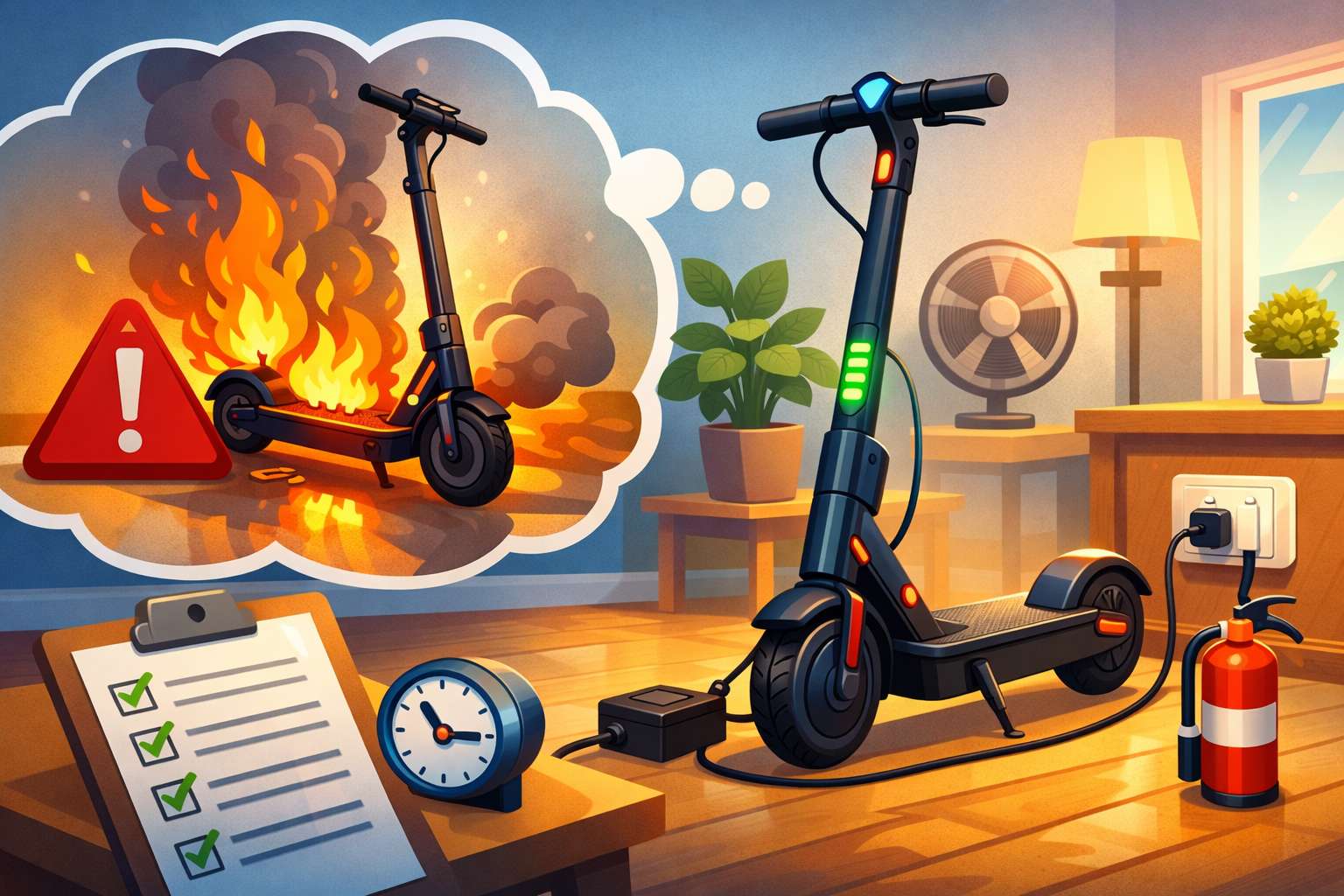
Electric scooters are easy to live with. You ride them, fold them, plug them in, and most of the time that is it. Still, charging safety deserves more attention than many riders give it.
Most e scooters use lithium ion batteries. They are efficient, compact, and powerful, but they also need proper care. If a battery is damaged, poorly repaired, exposed to water, or charged the wrong way, it can overheat and become dangerous. That is why safe charging matters whether you keep your scooter in a small apartment, a shared office, or a family home.
A lot of riders ask the same things. Is it safe to charge an electric scooter overnight? Is charging at home risky in an apartment? Can e scooters catch fire even when they are not charging? The honest answer is that risk is usually low when the scooter is in good condition and used properly, but the risk is not zero. A few smart habits can make a big difference.
Why electric scooter batteries need more care than people think
An electric scooter battery is not just one simple unit. It is a pack made of many cells, plus wiring, connectors, sensors, and a battery management system. When everything works as it should, charging is straightforward. But if one part fails, heat can build quickly and spread through the pack.
This is why battery problems can escalate fast. A damaged cell may create heat, then nearby cells get hotter, and then the problem grows. In real life, this can mean smoke, fire, or even small explosions from the pack. It sounds dramatic, and honestly, it kind of is.
That does not mean every scooter is unsafe. It means the battery is the most important part of the scooter to treat with care. In many cases, battery fires are linked to damage, water exposure, wrong chargers, poor quality replacement batteries, or repairs done without the right parts.
Can an e scooter catch fire when it is not charging?
Yes, it can.
Charging is one common time for problems to show up because the battery is active and producing heat. But a scooter battery can also fail while the scooter is just sitting there unplugged. If the battery was damaged in a crash, exposed to water, stored in extreme heat, or repaired badly, it may become unstable and fail later.
So unplugged does not always mean safe. That is an important point people sometimes miss.
If your scooter has been dropped hard, left in heavy rain, or hit by a car, be cautious even if it still powers on. The same goes for scooters that smell odd, feel unusually hot while parked, or show swelling around the deck. Those are not little quirks. They are warning signs.
Is it safe to charge an electric scooter overnight?
In general, overnight charging is not the safest habit.
Many newer scooters include systems that help manage charging and reduce overcharging risk. That is helpful, but it does not make overnight charging the best choice. If something goes wrong while you are asleep, you may not notice it until the situation is already serious.
A better routine is to charge the scooter while you are awake and at home. Plug it in during the evening, keep an eye on it now and then, and unplug it once it is fully charged. It is a simple habit, but it lowers risk.
It also helps to let the scooter cool down before charging. If you just finished a long ride, especially in warm weather, give the battery some time to rest. Charging a hot battery right away is not ideal.
Safe electric scooter charging in an apartment
Apartment charging needs a bit more thought because space is tighter and exits matter more. A lot of people park scooters near the front door, in a hallway, or next to furniture. That may feel convenient, but it can create a real problem if the battery fails.
Try to charge your scooter in a spot that is:
- On a hard, flat surface
- Away from beds, sofas, curtains, rugs, and paper
- Away from your main exit path
- Dry and well ventilated
- Easy to check while charging
The biggest mistake in apartments is charging near the only way out. If smoke or flames block the door, the situation gets dangerous very fast. Even in a small flat, it is worth taking a minute to think about where the scooter sits while charging.
You should also avoid overloading one corner with other battery devices. If your scooter, e bike battery, power bank, laptop, and phone chargers are all crowded together, that setup is just asking for trouble.
Charging an electric scooter at work
Office charging has its own risks because more people share the same space. A scooter under a desk may look neat, but it is often surrounded by paper, chair fabric, bags, boxes, and cables. That is not a great mix if a battery overheats.
If your workplace allows scooter charging, use a dedicated area when possible. The best spot is open, easy to monitor, and away from emergency exits and flammable materials. Hard flooring is better than carpet, and direct wall outlets are better than messy extension cord setups.
It is also wise not to leave a scooter charging after everyone has gone home unless the company has a proper policy and a safe area for it. In a shared workspace, good rules really matter. One careless charging setup can affect a lot of people, not just the scooter owner.
Use the right charger. It matters a lot
This part is simple, but people still get it wrong. Always use the charger made for your scooter model, or one officially approved by the manufacturer.
A charger that seems close enough is not necessarily safe. Even if the plug fits, the voltage or charging profile may be wrong. That can stress the battery, damage the system, or create overheating risk over time.
You should also inspect the charger itself from time to time. Stop using it if you notice:
- Frayed cables
- Cracks in the charger case
- Bent or loose connectors
- Burn marks
- Strange buzzing
- Sharp chemical smells
- Excessive heat
Warm is one thing. Very hot is another.
Signs your scooter battery may not be safe to charge
Scooter batteries often give warnings before a serious failure. The trick is not ignoring them.
Stop charging and stop riding the scooter if you notice any of these:
- Swelling around the deck or battery area
- Hissing, crackling, or popping sounds
- Smoke or vapor
- A sweet, metallic, or chemical smell
- The scooter getting unusually hot
- Charging that starts and stops for no clear reason
- Sudden battery drain
- Random shutoffs
- Melted plastic or visible corrosion
If you see any of those signs, do not keep testing the scooter to see if it still works. That is where people get themselves into trouble. Move away, keep others back, and deal with it carefully.
Water damage and crash damage are bigger problems than they look
A scooter does not need to look destroyed to have battery damage. Sometimes the outside seems fine, but the battery inside has already been compromised.
If the scooter has been in heavy rain, a deep puddle, flood water, or a crash, do not plug it in right away. Let it dry in a safe place and have it checked if you can. Water and batteries are a bad combination, and the damage may not show up immediately.
The same applies after DIY repairs. If the deck was opened, wires were moved, or the battery was disconnected, treat the next charge with extra caution. A pinched wire or poor reconnection can create problems that were not there before.
Storage safety matters too
Charging gets most of the attention, but storage matters as well. Scooters spend more time parked than plugged in.
Store the scooter in a cool, dry place. Avoid leaving it in direct sun, inside a very hot car, or in freezing conditions for long periods. High heat can damage the battery, and charging a battery that is still extremely cold is not a good idea either.
If you will not use the scooter for a while, do not leave it sitting fully drained for months. Do not leave it at full charge forever either. A moderate charge level is usually better for battery health during storage.
What to do if a scooter battery starts smoking or burning
If the battery starts smoking, hissing, or burning, the priority is people, not the scooter.
If it is safe to unplug the charger, do that. If it is not safe, leave it alone and get out. Do not try to carry a smoking scooter through your home or office. That can spread fire and smoke into the very path you need to escape.
Call emergency services and keep others away. Battery fires can flare up again even after they seem to calm down, so do not assume it is over just because the flames look smaller.
A few extra habits that make daily scooter use safer
Charging safety is one part of the bigger picture. Good maintenance helps too. If your scooter already has warning lights, app connection issues, or electrical faults, do not ignore them and hope for the best.
If you ride a Ninebot, this Segway Ninebot error codes guide can help you understand what the scooter is trying to tell you. If you use Xiaomi and keep running into app pairing problems, this guide on why a Xiaomi scooter won’t connect to the Xiaomi Home app is also worth checking. Small electrical issues do not always mean battery danger, but they should never be brushed off.
Final thoughts
Electric scooter charging is usually safe when the scooter is in good condition and the setup is sensible. Still, safe does not mean careless. The best approach is pretty simple. Use the right charger, charge on a hard surface, keep the scooter away from exits and flammable items, and avoid making overnight charging your normal routine.
And yes, e scooters can catch fire when they are not charging. That is why battery condition matters all the time, not just when the charger is plugged in.
A little caution goes a long way here. It is not about being paranoid. It is just about building better habits, and sticking with them.