

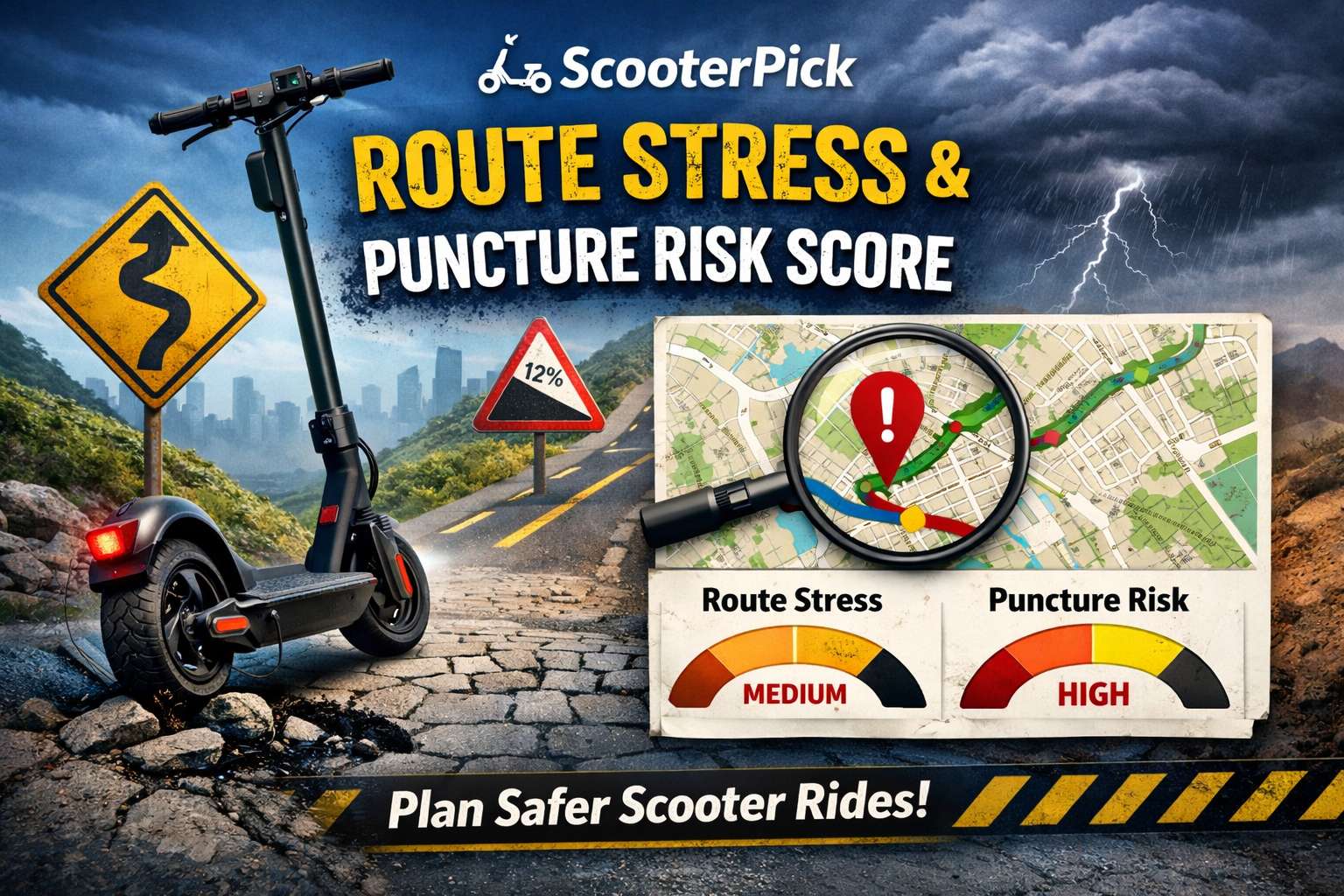
Plan safer, smoother scooter rides in seconds.
This tool estimates how stressful a route may feel and how likely you are to face puncture-related problems, based on route type, surface, slope, weather, and tire setup.
Use it before every ride, especially if you commute daily or test new routes.
Route Stress + Puncture Risk Score
Plan a safer scooter ride before you leave. Enter start and destination, then get two scores from 0 to 100.
Why use this tool
Most route plans only show distance and time.
However, those numbers do not tell you if a road is rough, steep, exposed to wind, or likely to damage tires.
This tool adds practical risk signals so you can make better choices before you leave:
- Avoid rough segments when possible
- Reduce puncture exposure on poor surfaces
- Pick routes that feel less tiring
- Ride with better confidence in changing weather
- Compare your options quickly
What the scores mean
You get two separate scores from 0 to 100:
Route Stress Score
This score estimates how demanding a route may feel physically and mentally.
A higher score usually means:
- More uncomfortable surfaces
- More difficult road types
- Steeper segments
- Weather that can increase ride effort
Puncture Risk Score
This score estimates your tire risk on the selected route.
A higher score usually means:
- More debris-prone or rough surfaces
- Route types that increase tire exposure
- Weather conditions that can worsen grip and impact
- Tire type that is more vulnerable to punctures
How to use the tool
- Enter your start point and destination.
- Select your tire type, tubed, tubeless, or solid.
- Run analysis.
- Check both scores and risk labels.
- Compare route options and choose the best balance between comfort and safety.
Tip. If two routes have similar travel time, choose the one with lower stress and puncture risk.
How to read your result labels
- Low: generally manageable for most everyday rides
- Medium: some caution advised, route may include rough or exposed sections
- High: route can be tiring or risky for tires, consider alternatives
These labels are practical guidance, not guarantees.
What affects your score
Your results change based on several factors:
- Road surface quality
- Way type and traffic context
- Elevation and slope intensity
- Wind and precipitation
- Chosen tire type
Because of that, the same route can produce different scores on different days.
Real-world riding note
No tool can see every pothole, loose object, parked vehicle, or temporary roadwork.
So always combine the score with your own judgment while riding.
Ride defensively, keep safe braking distance, and slow down on unfamiliar surfaces.
Who this tool is for
This tool is useful if you are:
- A daily commuter
- A new scooter rider learning safer route choices
- A rider testing new neighborhoods
- A delivery rider trying to reduce downtime
- A rider with frequent puncture issues
Frequently Asked Questions
Is this a legal route checker
No. This tool focuses on stress and puncture risk. It does not provide legal advice.
Does a low score mean zero risk
No. It means lower estimated risk, not zero risk.
Why did my score change from yesterday
Weather and route conditions can change. That directly affects results.
Which tire type should I select
Pick your real setup. Tubed, tubeless, or solid. Correct input gives better estimates.
Can I use this on mobile
Yes. It is built for quick use on desktop and mobile.
Does this replace on-road caution
No. Use the score as planning support, then ride with normal safety judgment.
Can I share results
Yes. Use the share option from the tool result panel.
How often should I check
Check before unfamiliar rides, long commutes, and windy or wet conditions.
Related guides on ScooterPick
If you want deeper context, read these next:
- Electric scooter insurance guide for 2026
- Electric scooter environmental impact, sustainability vs e-bikes and cars
- UK mobility scooter and rule updates for 2026
Final reminder
Use this tool as a smart pre-ride assistant.
Then combine the result with local awareness, defensive riding habits, and regular scooter maintenance.
Safer planning usually means smoother rides, fewer surprises, and fewer tire problems.