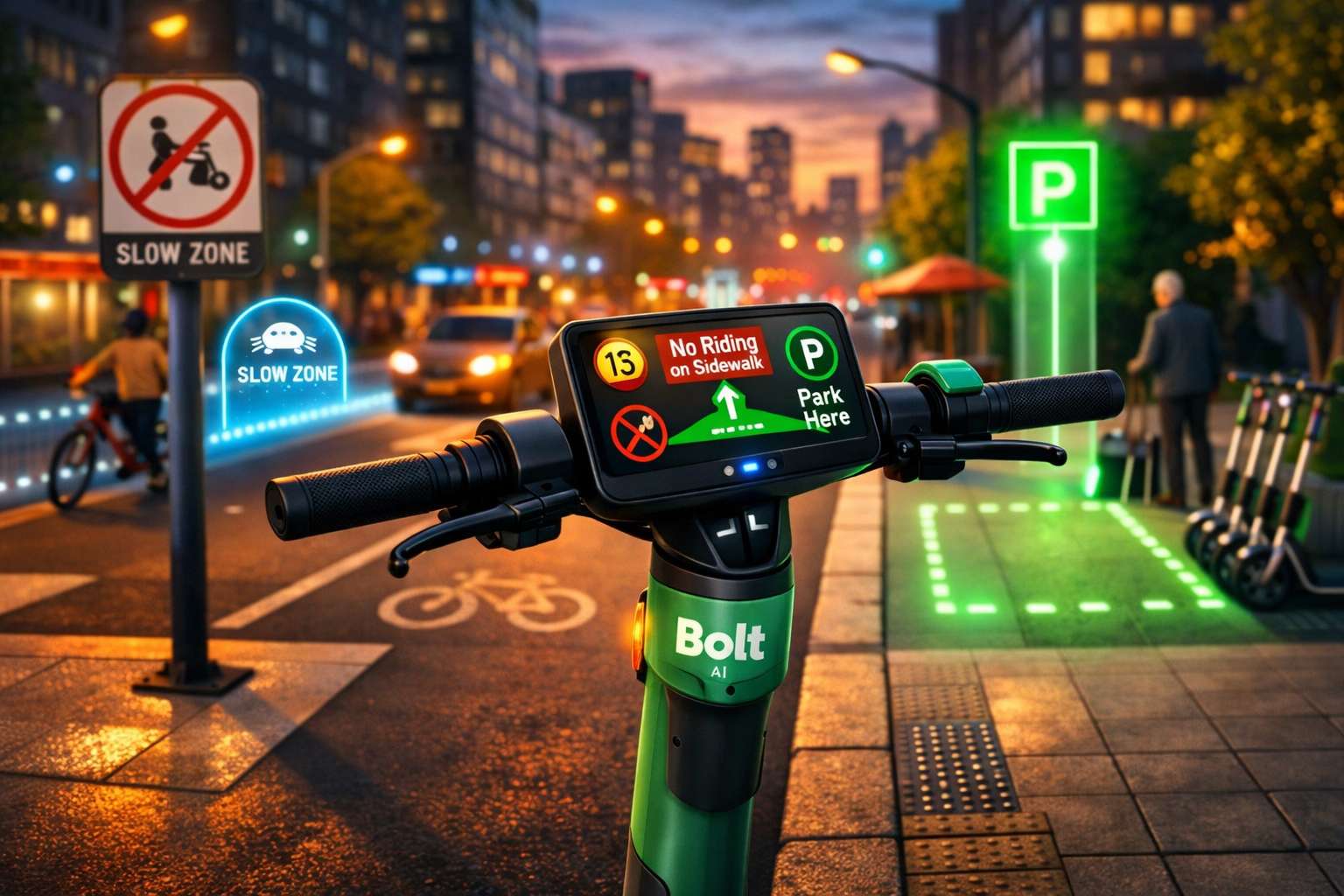
Bolt has rolled out a new shared e-scooter with a clear goal. It wants riders to follow the rules more often, with less guesswork on the street. The new model brings a screen on the handlebars, live ride alerts, smart parking help, and AI-based safety tools that react during the trip.
That last part matters most. Many shared scooters still rely on app prompts, geofencing, and fines after the ride ends. Bolt is taking a different path. Its new scooter tries to guide riders at the moment they make a mistake. That means less confusion for first-time users, fewer blocked sidewalks, and fewer bad parking jobs at the end of a trip.
Shared e-scooters now sit at a tricky point in many cities. People like the speed and convenience. City officials want cleaner streets and safer riding. Residents want fewer scooters left in the wrong place. Riders want simple rules and a trip that feels easy from start to finish. Bolt’s new scooter tries to meet all of those needs in one package.
What Bolt changed on the new scooter
The first thing riders will notice is the built-in handlebar display. That is a big shift from the usual setup, where most key details live in the phone app. With the new screen, riders can see speed, ride status, navigation prompts, parking guidance, and local riding limits right in front of them.
That sounds simple, yet it solves a real problem. Many people unlock a shared scooter in a city they do not know well. Then they need to figure out where riding is allowed, where speed drops, and where parking is accepted. A small mistake can lead to a fine, a complaint, or a risky moment near pedestrians. Bolt wants to cut that friction.
The company has built the scooter around real-time feedback. So the machine does more than carry a rider from one block to the next. It gives instructions during the trip and pushes the rider back toward legal use.
How the AI side works in real life
The AI part is the feature that gives this launch its weight. Bolt says the scooter can detect sidewalk riding almost at once and warn the rider right away. If the rider keeps going, the scooter can reduce speed. That puts pressure on the rider to move back into the right space and stay there.
The scooter can react to other city rules too. It can spot low-speed areas, restricted zones, and no-parking spaces. Then it shows alerts on the display. It can direct riders toward better parking spots at the end of the ride. In some reports, the system can even recognize tactile paving used by blind and visually impaired pedestrians, then stop riders from parking there.
That is a smart step for a shared fleet. A lot of bad scooter behavior does not come from people trying to cause trouble. It comes from messy streets, weak signage, rushed trips, and riders who do not know the local rules. Bolt’s system tries to catch those moments before they turn into a problem.
Why cities care about this kind of tech
City leaders have heard the same complaints for years. Scooters get left across sidewalks. Riders use the pavement instead of the road or bike lane. People ride too fast in crowded areas. Residents get annoyed, and then city hall feels pressure to tighten the rules or shrink the fleet.
That is why this launch matters outside the scooter business. Bolt is not just selling a new ride to users. It is selling a cleaner operating model to cities. The company is telling local officials that its scooters can take a more active role in rule compliance.
That pitch may land well in places that still feel split on shared micromobility. A city may want the mobility benefit but not the street clutter. A city may want fewer car trips but not more complaints from pedestrians. Bolt’s answer is to put more control inside the scooter itself.
This kind of thinking fits the wider trend in urban transport. Vehicles now collect more data, react faster, and guide user behavior in real time. Shared scooters are joining that shift. They are no longer just simple rental machines with throttles and brakes. They are turning into connected vehicles with live safety logic.
What riders get from it
For riders, the benefit is pretty easy to understand. Less guesswork. Clearer directions. Fewer mistakes. A better chance of ending the trip without stress.
That matters a lot for newer users. Shared e-scooters look easy, yet many first rides feel awkward. A rider tries to watch traffic, follow map directions, avoid pedestrians, and learn the local rules all at once. That is a lot for a short urban trip. Bolt’s new setup reduces that mental load.
The system may help experienced riders too. Even regular users forget parking rules or drift into the wrong area during a fast commute. A warning on the scooter itself is much harder to miss than a note in an app. That makes the guidance feel more useful and more immediate.
Cities like Liverpool are already pushing ahead with bigger shared micromobility networks, which makes better rider guidance more important with every fleet expansion. Anyone tracking that trend should read this look at Liverpool’s new e-scooters and e-bikes in 2026. It shows how fast the street-level picture is changing.
Bolt has been building toward this for some time
This launch did not arrive out of nowhere. Bolt has already been working on features tied to safer riding and better parking. The company has spoken about pavement-riding detection, smart parking tools, tandem riding detection, and ride checks meant to reduce misuse. The new scooter brings more of that work into one visible product.
That matters for the business side too. Shared micromobility firms need strong city relationships. They need good rider retention. They need fewer repairs, fewer complaints, and fewer badly parked vehicles. So a scooter that guides users better is not just a safety play. It is a fleet management play too.
Reports on the new model point to stronger lighting, smoother braking feel, and a sturdier design built for heavy daily use. That gives the launch a broader value story. Bolt is not only talking about AI. It is talking about a better scooter at the same time.
What this means for shared e-scooters in 2026
This release says something important about where the market is heading. The next big gains in shared scooters may not come from raw speed or flashy design. They may come from control, safety, and better behavior on public streets.
That is what cities want. That is what many riders want too. People want a scooter that feels easy to use and hard to misuse. Operators want fewer headaches. Local officials want proof that fleets can improve. Bolt thinks AI can help close that gap.
It will take time to see how well the system works at scale. Real streets are messy. Riders do not always listen. Urban rules change from one block to the next. Still, the direction looks smart. Bolt is trying to solve the hardest part of shared riding. Not the ride itself. The behavior around it.
If the system works well, other operators will need an answer. Riders will start to expect better guidance. Cities will start to ask for better compliance tools. Then the bar for shared e-scooters will move again.
Bolt’s new AI-equipped scooter is not just another fleet refresh. It is a sign that shared micromobility is growing up. The hardware is getting smarter. The ride is getting more guided. The street rules are moving closer to the rider’s hands, right there on the bars.