


Ride or wait, the safest call in rain
Rain changes everything on a scooter. The grip drops, stopping takes longer, and you get hit with spray from every car that passes. In most cases, I would wait for dry roads. A lot of scooter manuals also warn against riding in rain or through standing water. If you still need to ride, treat it like a higher risk trip and keep it short.
Water resistant is not waterproof
Most electric scooters are water resistant, not waterproof. That sounds like marketing talk, but it matters. Water resistance usually means the scooter can handle light spray and small splashes. It does not mean you can ride through deep puddles or leave it outside during a storm.
You will often see an IP rating in specs. IP means Ingress Protection. The first digit covers dust and small solids. The second digit covers water.
Examples you will see a lot:
- IP54. It limits dust ingress and resists splashing water.
- IP55. It limits dust ingress and resists water jets.
Sometimes brands rate the whole scooter. Sometimes they rate only a part, like the deck or the display. So you should read the fine print in the manual and warranty terms, not just the product page.
Can IPX5 survive rain?
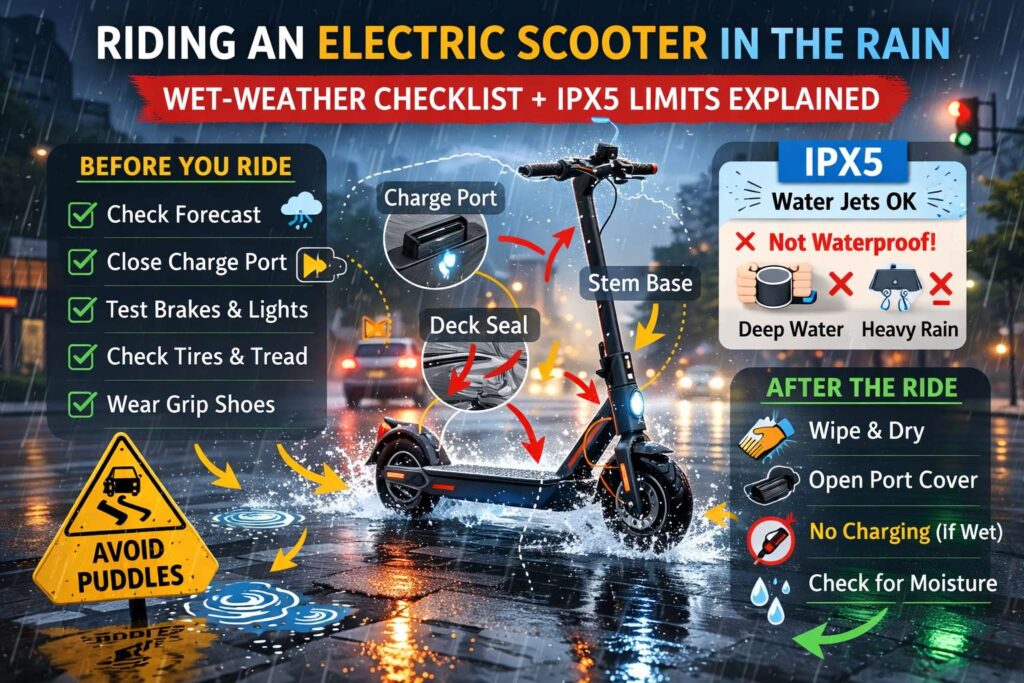
IPX5 means the scooter resists water jets from any direction in a controlled test. That sounds strong, and it usually helps with light rain and road spray. But it still does not mean the scooter is waterproof, and it does not mean it will survive every wet ride.
Here is the simple way to think about it. Lab tests use clean water, fixed angles, and short exposure times. Real rides add vibration, grit, long wet time, and sometimes partial immersion when you hit a puddle. So yes, IPX5 can survive rain in many normal cases, but it can still fail, especially with heavy rain, deep puddles, worn seals, or a loose charge port cover.
Are e scooters waterproof?
Most are not. True waterproofing would mean you can submerge the scooter and keep going. Most scooters do not claim that, and most do not test for that. If you want a scooter to last, you should assume water can get in over time.
That might sound strict, but it saves money and stress later.
The quick wet weather checklist most riders skip
This is the part people skip because they feel rushed. It only takes a couple of minutes, and it prevents a lot of wet road crashes and a lot of water damage.
Checklist:
- Check the forecast, then avoid storms and strong wind.
- Confirm you have enough battery, so you do not get stuck in rain.
- Close the charge port cover, and make sure it sits flat.
- Look for gaps at the deck seam and around the stem base.
- Test brakes at walking speed, then confirm smooth bite.
- Check tire pressure, and keep it inside the manual range.
- Inspect tread, and do not ride on bald or cracked tires.
- Confirm lights work, then wipe dirty lenses.
- Wipe the deck, so your shoes grip better.
- Wear shoes with real tread, not smooth soles.
- Pack a small dry cloth for grips and display.
If your scooter has a torn charge port cover or it does not seal tight, skip the ride. That tiny part causes a lot of water ingress.
What to wear, and how to stay visible
Rain makes drivers miss things. It also makes your hands and feet slip faster than you expect. So you need grip and you need visibility.
Gear that helps a lot:
- A helmet with a visor, or clear glasses to block spray.
- Thin gloves that keep grip when wet.
- A bright jacket, plus reflective details on a bag or clothing.
- A rear light or reflector if you ride near traffic.
If you ride with kids in wet season, keep it extra conservative. You can also share this practical age based safety guide with them and with other parents: kids scooter safety guide.
How to ride on wet pavement without scaring yourself
Wet roads punish sharp moves. You need smooth inputs, slower speed, and more space.
Use these habits:
- Start gently, then build speed in a straight line.
- Brake early, and squeeze progressively instead of grabbing.
- Turn wider, and lean less than you do on dry asphalt.
- Cross painted lines, metal plates, and manhole covers upright.
- Avoid wet leaves, because they get slick fast.
- Keep both hands on the bar, and keep knees soft.
One question comes up a lot. Should you ride fast to get it over with. No. Speed makes every mistake worse, and it reduces reaction time.
If your scooter uses strong regenerative braking, expect more rear wheel slip on slick roads. Lower regen if your scooter lets you. If it does not, brake earlier and stay smooth.
Puddles are the real problem
Light rain mostly sprays the outside of the scooter. Puddles can push water into places that spray might not reach. A puddle can also hide a pothole, a curb edge, or broken asphalt.
These parts often suffer first:
- The charge port and rubber plug.
- The deck seam where the top plate meets the base.
- Cable grommets where motor wires enter the deck.
- The stem base where wires and folding parts sit.
- The display, throttle, and lever cable entries.
- Hub motor bearings and the motor cable exit.
If you see standing water, go around it. If you cannot go around it, slow down and stay upright. If it looks deep, do not enter.
After rain care, the 15 minute routine that saves scooters
This is where most riders lose the plot. They ride home, park it, and plug it in. That can turn a small water issue into a bigger failure.
Do this instead:
- Power off the scooter, then wipe it down with a soft cloth.
- Dry around the charge port, then open the cover and check for moisture.
- If you see moisture in the port, dry it, then leave the cover open in a dry room for a while.
- Do not charge the scooter while the charge port, charger, or outlet is wet.
- Do not use a heat gun or hair dryer. High heat can damage plastics and seals.
- Do not spray the scooter with a hose, and never use a pressure washer.
- Let the scooter sit at room temperature, so trapped moisture can evaporate.
If you rode through dirty water, wipe the brake area too. Grit can reduce braking and wear pads faster.
Rainy season maintenance that actually matters
Wet season adds water, grit, and corrosion. So your routine should tighten up a bit. You do not need a full workshop setup. You just need consistency.
Weekly checks:
- Check tire pressure and tread.
- Check brake feel, then adjust if it feels weak.
- Check fenders for cracks and rubbing.
- Check the charge port cover fit and seal.
- Check for loose bolts, especially at the stem and folding latch.
Monthly checks:
- Inspect brake pads, then replace if thin.
- Clean the deck seam and stem base, then remove trapped grit.
- Inspect cables for cuts or crushed spots.
- Look for rust on fasteners, then clean and protect them.
- Check the folding latch so it locks with a solid feel.
If you ride in rain often, think about insurance too. Rules and coverage vary by place, but a clear overview helps you avoid bad surprises later: electric scooter insurance guide.
Signs of water ingress you should not ignore
If you see these signs, stop riding and take it seriously:
- The scooter will not power on, or it shuts off during the ride.
- The display fogs from the inside.
- You see error codes after a wet ride.
- The throttle feels sticky, or it responds in bursts.
- You smell a burnt odor from the deck area.
- You see moisture near the battery area or inside the charge port.
If this happens, power off the scooter and dry the outside. Do not charge it. Do not keep testing it by cycling power. Contact the maker or a qualified shop instead.
Bottom line
Rain riding stacks the odds against you, so the safest call is to wait for dry roads. If you must ride, treat IP ratings like a helpful clue, not a promise. Then ride slower, avoid puddles, and do the post ride drying routine every time. It sounds boring, but it keeps you safer and it keeps your scooter alive longer.