

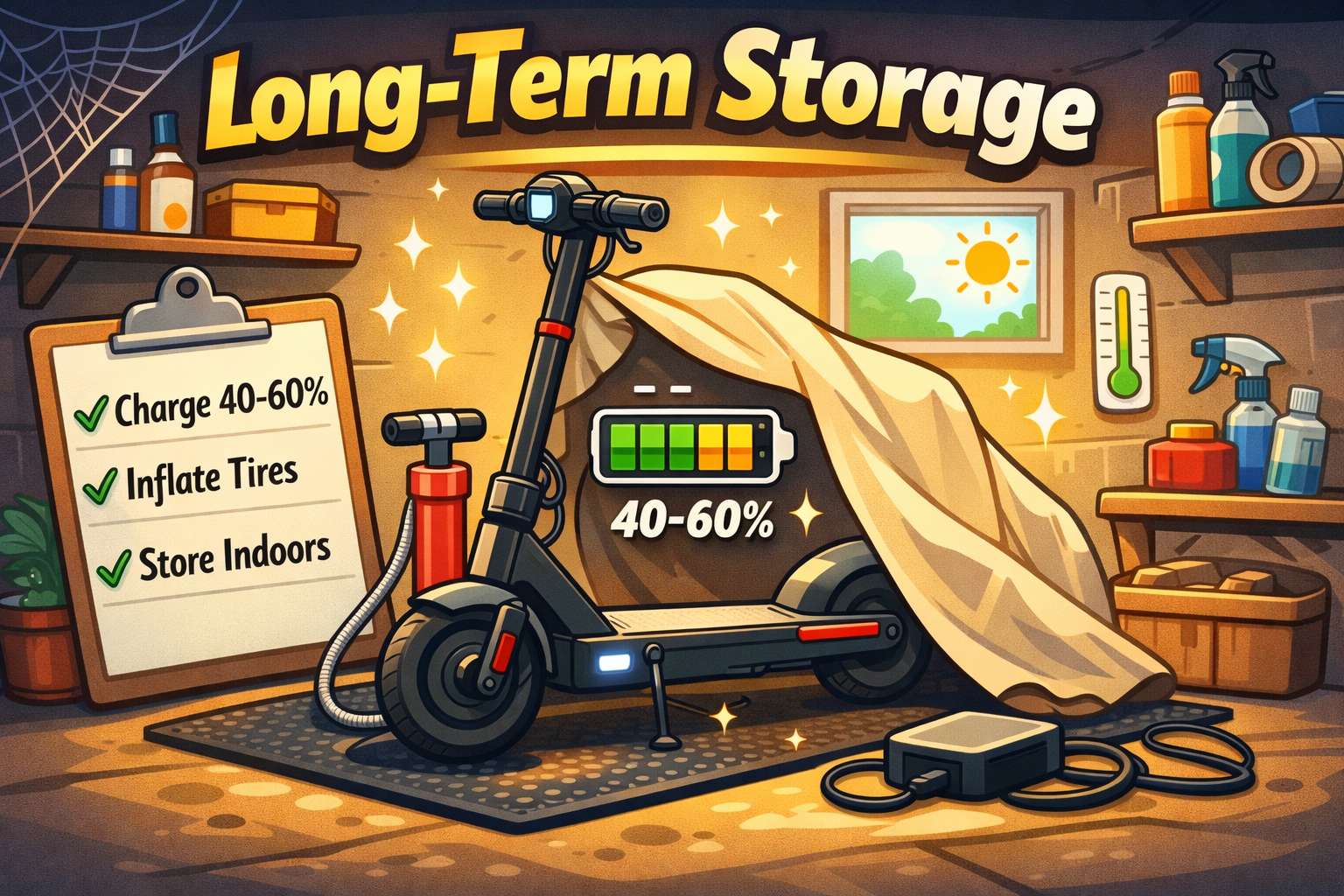
Storing an electric scooter for a long time sounds simple. You park it, fold it, and forget it.
But then spring arrives, and the scooter feels “dead.” The battery drops fast. The tires look flat. The brakes squeal. Sometimes the scooter even flashes an error and refuses to move.
So yes, long-term storage matters. The good news is that it does not take much effort. You just need the right habits in the right order.
This guide walks you through a safe, practical way to store your electric scooter for weeks or months. First, you’ll protect the battery. Then you’ll protect the tires, brakes, and frame. After that, you’ll bring it back without stress.
Long-Term Electric Scooter Storage Checklist (Fast Version)
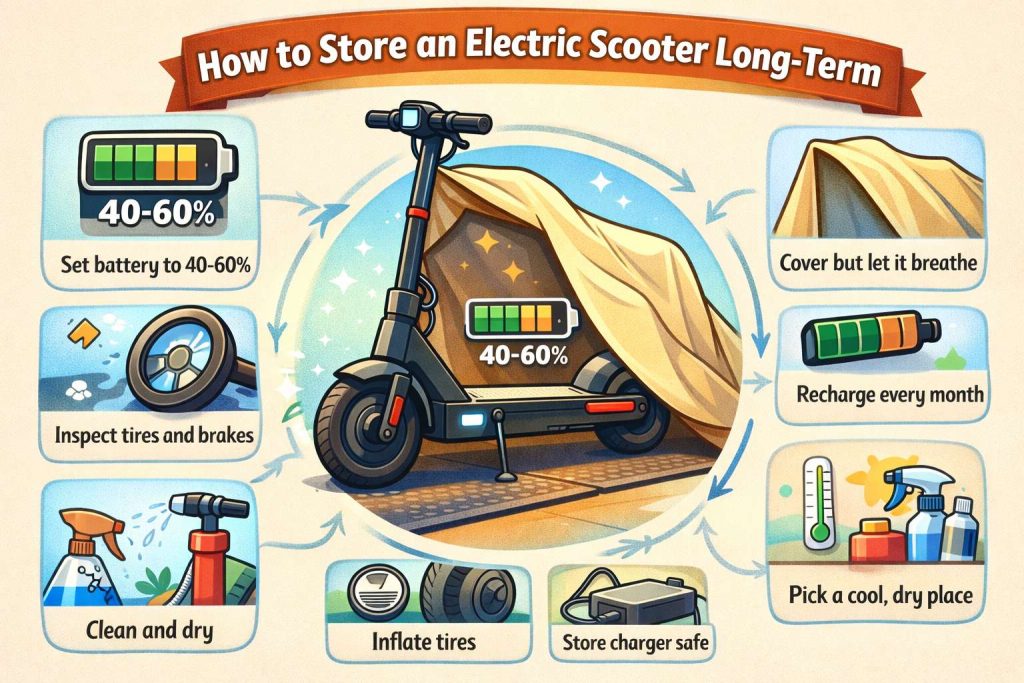
If you are short on time, use this list and you will already be ahead of most riders.
- Clean and fully dry the scooter
- Check tire pressure and inflate to the tire sidewall rating
- Inspect brakes, bolts, and the folding latch
- Set battery charge to 40% to 60%
- Store indoors in a cool, dry place
- Keep it off wet concrete floors
- Cover it with a breathable cover
- Check battery monthly and recharge back to 40% to 60%
Now let’s do it properly, step by step.
Step 1: Decide How Long the Scooter Will Sit
Before you store anything, pick a realistic timeline. That way, you won’t overthink the process.
Here are the common storage windows:
- 2 to 6 weeks: short break
- 2 to 6 months: winter storage
- 6 to 12 months: long pause, travel, or backup scooter
Short storage is forgiving. Long storage needs battery checkups. So, the longer it sits, the more you should plan for simple monthly checks.
Step 2: Do a Quick Safety Inspection First
This takes three minutes. Still, it can save you hours later.
Check these points:
- Tires: cracks, cuts, glass, or sharp debris
- Brakes: firm lever feel, no grinding noise
- Wheels: spin freely, no wobble
- Stem: no play, no clicking
- Folding mechanism: locks tight, no movement
- Lights: turn on and work
- Deck: no new cracks
If you notice anything odd, fix it now. A tiny brake rub can turn into a stuck caliper after months of sitting.
Plus, this is a good moment to confirm you are happy with your scooter overall. If you are not, use this quick guide before you buy your next one: Compare electric scooters in 10 minutes with a simple checklist.
Step 3: Clean the Scooter Without Forcing Water Inside
Dirt holds moisture. Moisture causes corrosion. So, cleaning is not just cosmetic. It is protection.
Start like this:
- Power off the scooter
- Unplug the charger
- Close the charge port cover
- Wipe the frame with a soft damp cloth
- Use a soft brush around hubs and brakes
- Dry everything with a clean towel
Avoid pressure washing. Avoid soaking the scooter. Water can slip into seals and sit there for weeks.
Focus on these trouble spots
Dry these areas carefully:
- Charge port and rubber cover
- Folding hinge
- Brake calipers
- Motor cable entry points
After that, let it sit for 10 minutes in a warm room. Then wipe it again. It sounds small, but it helps.
Step 4: Keep Rust Away From Bolts and Metal Parts
Many scooters use steel bolts. So even with an aluminum frame, small rust spots can show up.
Rust starts faster in places like:
- Humid basements
- Garages with snow melt
- Rooms with constant condensation
To lower the risk:
- Store the scooter on a rubber mat, cardboard, or a shelf
- Keep it away from wet concrete
- Wipe exposed bolts with a dry cloth before storage
Skip oily sprays near the wheels and brakes. Even a tiny bit on the rotors can ruin braking power later. So it is safer to keep things clean and dry instead.
Step 5: Set the Battery to the Best Storage Level
This part matters the most. A bad storage charge can shorten battery life fast.
Aim for 40% to 60% battery before long-term storage.
That range is the sweet spot. It reduces stress on the cells, yet it still leaves enough power to avoid deep discharge.
How to hit 40% to 60% in real life
Use these simple rules:
- Battery at 40% to 60% after a ride: store it
- Battery above 80%: ride 10 to 20 minutes, then recheck
- Battery under 30%: charge up into the 40% to 60% zone
Then let the scooter rest for 30 minutes. After that, check the level again. Battery gauges can bounce a little right after charging.
Avoid these two extremes
- 0% storage: risk of deep discharge and pack damage
- 100% storage for months: faster capacity aging
So, even if a full battery feels “ready,” it is not the best choice for long storage.
Step 6: Do a Simple Monthly Battery Check
Even when a scooter is off, it can still lose power slowly. That is normal. Still, it can surprise you.
So keep it easy:
- Check battery once per month
- Recharge back to 40% to 60%
That is it.
If you want a simple rhythm, pick one day a month. For example, check it on the first weekend.
Then you will never have that “uh-oh” moment later.
Step 7: Pick the Right Storage Location
Where you store the scooter can help it, or quietly ruin it.
Choose a place that is:
- Indoors
- Dry
- Out of direct sun
- Away from heaters and hot pipes
Stable temperature matters. Stable humidity matters too.
A practical temperature target
A safe range for most homes is 10°C to 25°C.
Avoid these spots:
- Hot attic
- Freezing shed
- Balcony storage
- Car trunk in summer
Cold storage needs extra care. So if the scooter sits in a chilly room, bring it to room temperature before charging.
Charging cold batteries is risky, and it can trigger problems.
Step 8: Protect Your Tires From Flat Spots
Tires hate long storage with low pressure. Over time, they can develop flat spots or cracks.
Before storage:
- Inflate tires to the pressure printed on the tire sidewall
- Spin both wheels and check for wobble
- Remove sharp debris from the tread
Then choose a storage method based on time.
Option A: Store on the ground (best for 1 to 3 months)
This works well if tires stay inflated.
Add two small habits:
- Put a rubber mat under the wheels
- Check pressure monthly
Option B: Reduce weight on one wheel (good for 3 to 6 months)
Support the deck lightly with a stable block.
This takes pressure off the rear tire, which usually carries more weight.
Option C: Lift both wheels slightly (best for 6+ months)
A stable stand prevents flat spots and slow leaks.
Skip risky DIY hanging tricks. A fall can crack plastics, bend brake rotors, or stress the folding joint. So keep it boring and solid.
Step 9: Keep Brakes Clean and Ready
Brakes can feel stiff after long storage, especially in damp areas. So give them a quick check before you put the scooter away.
Before storage:
- Squeeze both brake levers a few times
- Spin wheels and confirm free movement
- Wipe rotors with a clean, dry microfiber cloth
If your scooter has cable brakes:
- Check tension
- Confirm pads do not drag
If your scooter has hydraulic brakes:
- Look for fluid leakage
- Store the scooter upright
Then, once per month, spin the wheels. That little movement helps.
Step 10: Cover the Scooter Without Trapping Moisture
A cover is a good idea. Still, the wrong cover traps moisture and creates corrosion.
Good cover choices:
- Breathable scooter cover
- Cotton sheet
- Light fabric dust cover
Avoid:
- Airtight plastic wrap
- Trash bags
- Damp towels
Leave a bit of airflow. Dust is annoying, but trapped moisture is worse.
Step 11: Store the Charger the Right Way Too
The charger is part of the system, so store it safely.
Do this:
- Unplug the charger from the wall
- Coil the cable loosely
- Keep it dry and away from heavy objects
- Store it near the scooter
Then, when you pull the scooter out later, you won’t waste time hunting for the charger.
Step 12: A 5-Minute Monthly Storage Routine
This routine keeps your scooter ready without turning storage into a project.
Once per month:
- Check battery percentage
- Recharge back to 40% to 60%
- Check tire pressure
- Spin wheels for 10 seconds
- Look for rust spots and wipe them dry
- Turn it on and confirm it wakes up
Simple wins here. So keep it simple.
Bringing Your Scooter Back After Long Storage
This is where most people rush. So slow down for five minutes.
Step A: Let it warm up to room temperature
If it has been stored somewhere cold, bring it inside.
Then let it sit until it feels normal to the touch.
Step B: Charge fully once
For the first ride back:
- Charge to 100%
- Let it rest 20 to 30 minutes
- Turn it on and check the charge level
This can help the battery gauge feel “accurate” again.
Step C: Do a short test ride
Start close to home.
Test:
- Brakes at walking speed
- Throttle response
- Steering alignment
- Any odd sounds
Then recheck:
- Tire pressure
- Brake rub
- Folding latch tightness
After that, you are ready for normal riding again.
Common Storage Mistakes That Cause Most Problems
These mistakes show up every year. So avoid them and you will skip most issues.
Storing the scooter nearly empty
Low batteries can drop lower during storage. Deep discharge can damage the pack.
Storing the scooter fully charged for months
Full charge storage can age cells faster. So range can drop sooner.
Leaving the scooter outside under a cover
Outdoor storage brings humidity and temperature swings. Covers trap moisture too. So corrosion starts quietly.
Ignoring tire pressure
Low pressure can cause cracks and flat spots. Then your first ride back feels rough.
Putting it away wet
Water hides in hinges, brakes, and bolt heads. Then it sits and eats at metal parts.
Storing it near heat
Heat stresses batteries, dries rubber, and weakens plastics. So keep it away from hot rooms and heaters.
A Long-Term Storage Plan That Works Every Time
If you only remember three rules, use these:
- Store indoors in a cool, dry place
- Keep the battery at 40% to 60%
- Check it monthly and recharge back to that range
That plan is simple, repeatable, and realistic.
Plus, it keeps your battery healthier, which is the expensive part.
And one more smart thing to do before you ride again is to review your safety and coverage options. If you want a clear breakdown, use this guide: Electric scooter insurance guide 2026.