

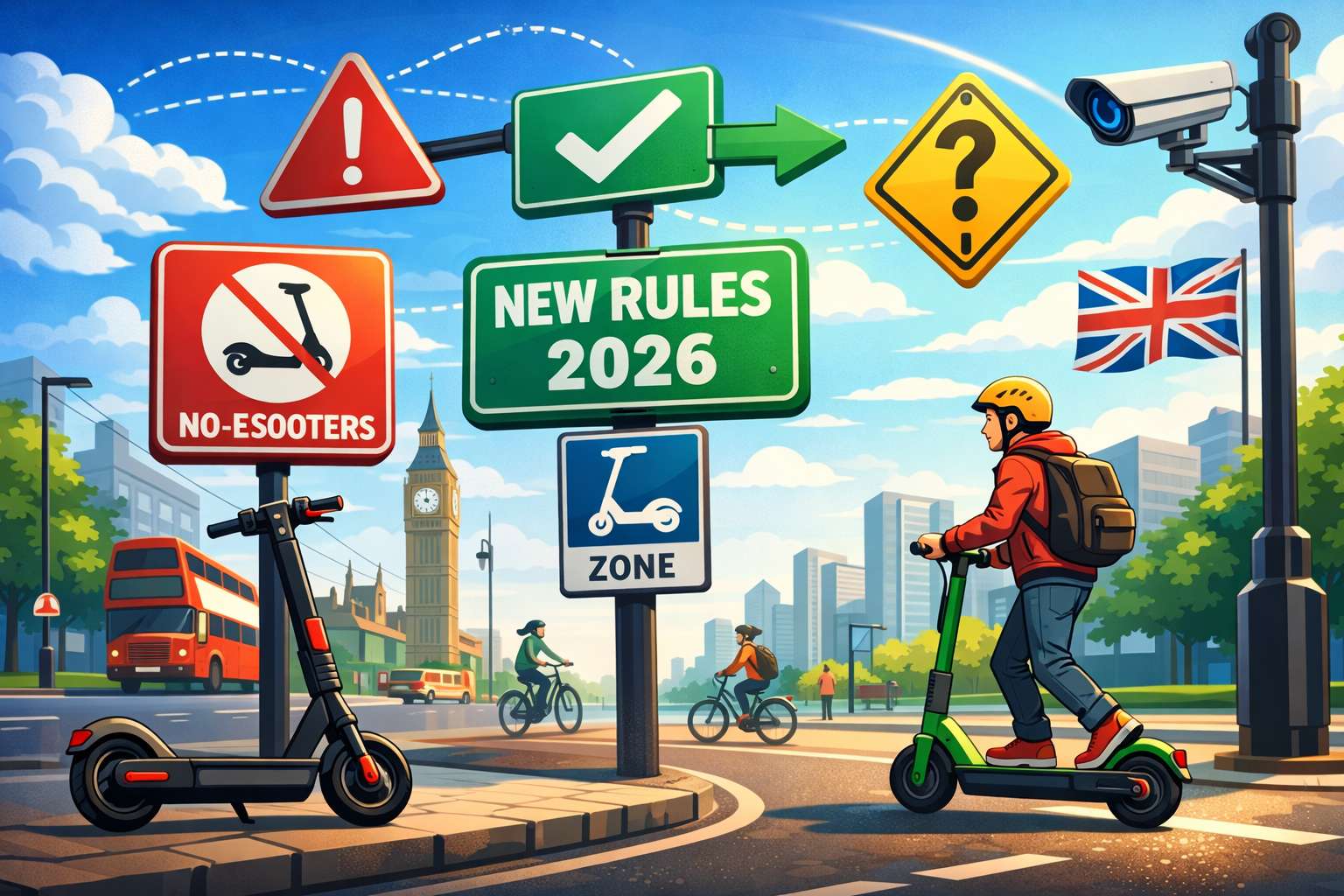
Electric scooter law in the UK still confuses a lot of people. You can buy a scooter with ease, but that does not mean you can ride it anywhere you like. Now a new law in England could shift part of that picture. It gives local transport authorities more control over shared micromobility services, and that may shape how shared e-scooter rules develop from one place to another in the years ahead.
That point matters. Many headlines make it sound like the whole UK is about to get one brand new e-scooter law. That is not what is happening right now. This change sits inside an England-focused bill. It does not make privately owned e-scooters legal on public roads, pavements, or cycle lanes today. It does, though, create a clearer path for local rule changes in areas that already deal with shared transport schemes.
What the new law changes
The biggest shift is local control. Under the new bill, local transport authorities in England can regulate shared micromobility services through a licensing system. Right now, that mainly covers shared cycle hire schemes. The structure was built in a way that could later include shared e-scooter services too, once wider vehicle laws catch up.
That means local authorities may get more say over how shared e-scooter schemes work in their own area. They may shape parking rules, fleet size, riding zones, speed limits, and links with buses or rail. So the future of shared e-scooters in England may look more local and less national.
For riders, that could mean different rules in different cities. A shared scooter scheme in London may not work the same way as one in Liverpool, Oxford, or Birmingham. That kind of local variation already exists to a degree, but this legal structure gives councils and regional transport bodies a firmer role.
What stays the same for private e-scooters
This is the part many riders still get wrong. Private electric scooters are still illegal on public roads and in other public spaces across the UK. That includes pavements, cycle lanes, and most streets. You can use a private e-scooter only on private land, and you need permission from the landowner.
So no, this new law does not make your own e-scooter road legal.
That matters for people searching terms like “are e-scooters legal in the UK” or “private electric scooter law UK.” The short answer is still no for private use in public. Police can issue fines, add penalty points in some cases, and seize the scooter.
Rental e-scooters sit in a different category. They can be used only in official trial areas and under the rules of those local schemes. That split between rental scooters and private scooters remains in place in 2026.
For a full breakdown of the current rules, penalties, and what riders can and cannot do, read our guide to UK private e-scooter laws in 2026.
Why local rule changes matter
This story is bigger than one bill. It shows where policy is heading. The government still wants more evidence from trial areas, and local authorities already play a large part in that work. Councils deal with parking, street clutter, speed control, and geofencing. They deal with public complaints too. So this law builds on work that was already happening on the ground.
That is why some parts of the UK may see visible changes sooner than others. Areas with active rental trials, strong transport planning, and dense urban centres are more likely to move first. Other places may take far longer, or may choose a stricter model.
So the phrase “some parts of the UK” is not just clickbait. It reflects the fact that shared e-scooter rules may become more local over time.
Broader reform still has not arrived
The government has made its direction fairly clear. It wants future reform for micromobility, and that includes e-scooters. But there is still no full legal green light for private scooters on public land. Rental trials have been extended again, and ministers have said they want more evidence before wider reform.
That tells us two things.
First, change is still on the table.
Second, riders should not assume that change is close enough to ignore the law now.
A lot of people see rental scooters in major cities and think private use must already be allowed too. That mistake can cost money and trouble. The law still treats those two things very differently.
Safety still drives the debate
Safety remains one of the main reasons the rules have not moved faster. Collision data and injury reports still weigh heavily in this debate. E-scooter crashes involve riders, pedestrians, cyclists, and drivers. That puts pressure on ministers to move slowly and to keep trials under close review.
Battery safety has added another layer. Fires linked to lithium-ion batteries in e-scooters and e-bikes have raised alarm across the UK. That means future law will not focus only on road use. It will likely cover product safety, charging risks, battery standards, and storage rules too.
So this is not just a question of where people can ride. It is a wider safety issue, and that keeps the pace of reform slow.
Police powers are getting tougher too
There is another side to this story. Even as future reform stays under discussion, enforcement is getting stronger. Police powers around antisocial vehicle use are tightening, and that can include e-scooters used in a dangerous or reckless way.
So the picture in 2026 is mixed. Shared schemes may get a clearer local structure in some English areas. Private scooters remain illegal on public land. And enforcement is not getting softer.
That is the part many headlines miss. The law may be opening one door for councils and shared operators, but it has not opened the door for private public-road use.
What riders should do now
The practical advice is simple.
Do not ride a private e-scooter on public roads, pavements, or cycle lanes. Use it only on private land with permission. Do not assume that a rental scooter in your city means your own scooter is legal there too. And check local trial rules every time you rent, since those details can change by area.
Keep an eye on local transport updates too. The next real shift in e-scooter rules is likely to happen city by city, not all at once across the whole country.
For now, the UK still has a split system. Rental trials continue in selected areas. Private use in public stays illegal. And this new law points to more local control, not a full legal rewrite.