
Queensland is preparing a major rule change
Queensland is moving toward much tougher e-bike and e-scooter rules. The change is not law yet, but the signal is strong. A Queensland Parliament committee handed down its e-mobility report in March 2026. The state government now has a set period to respond.
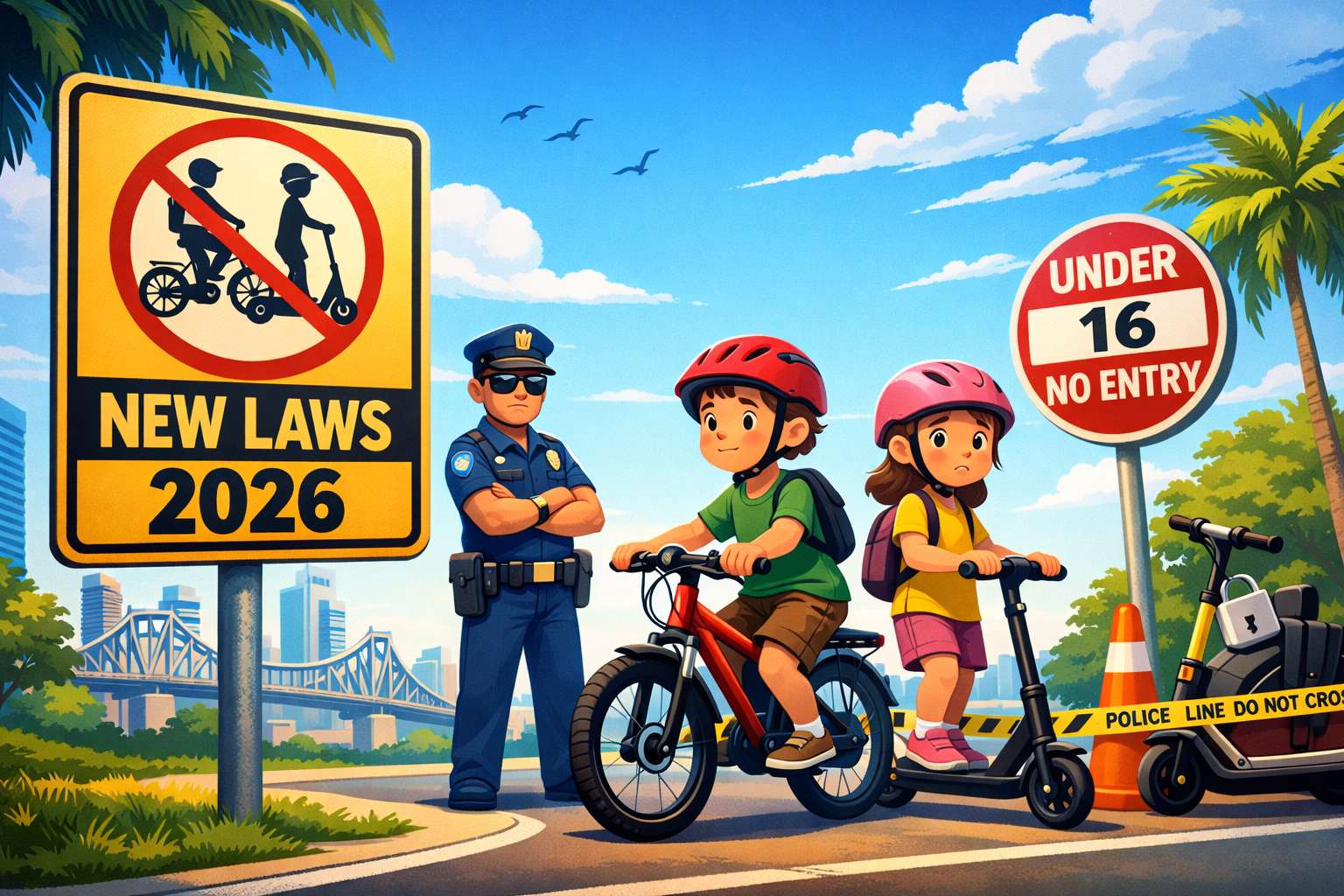
The headline point is easy to understand. The report backs a ban on e-bikes and personal mobility devices for children under 16. That group includes e-scooters. It backs a learner licence rule for riders aged 16 and over too.
That is why searches like new e bike laws Qld, electric bike laws Qld age limit, and e scooter laws qld 2026 are rising. Parents want clear answers. Riders want to know what they can still use. Sellers want to know what they can still market.
Right now, the key detail is this. These are proposed laws, not final laws. So the current rules still apply today.
What Queensland law says right now for e-scooters
Queensland already has age rules for e-scooters and similar devices. A rider must be at least 16 to ride alone. A child aged 12 to 15 can ride only under adult supervision. A child under 12 cannot ride a personal mobility device on public areas.
The speed rules matter too. On footpaths and shared paths, the limit is 12 km/h. On separated paths, bicycle paths, and some local streets, the limit can reach 25 km/h. Riders must wear a helmet. Riders must follow the road rules that apply to these devices.
Fines already apply. A rider who breaks the age rule can be fined. So this is not a soft rule that no one enforces. Families need to take it seriously now, not just after any new law arrives.
Shared hire schemes in Brisbane already set a strict line. Riders must be at least 16 to use shared e-scooters. That means many people already live under a tighter age rule in practice.
What Queensland law says right now for e-bikes
E-bikes sit in a very different legal spot today. Queensland does not set a minimum age for a legal e-bike at present. That point surprises many parents.
A legal public-road e-bike must meet strict rules. It must have pedals as the main source of power. Its motor must have a maximum continuous power output of 250 watts. Motor help must cut out at 25 km/h. Any no-pedal function must stop at 6 km/h.
That means a normal compliant e-bike can be ridden without a licence, registration, or insurance. For many families, this has made e-bikes look like a simple school run option or a cheap short-trip tool.
But not every machine sold online is legal on Queensland roads. Some bikes have a stronger motor. Some run on throttle power alone. Some can travel far past the legal assist speed. Those devices do not fit the legal e-bike class. In some cases, police can treat them more like unregistered motor vehicles.
That is a huge issue in 2026. A lot of buyers still think any electric bike is legal if it has pedals. That is not true.
What the proposed Queensland laws would change
The proposed reform would change the market in a big way. The committee wants e-bikes and personal mobility devices to be limited to riders aged 16 and over. It wants riders in that age group to hold at least a Queensland Class C learner licence.
That would be a major shift for e-bikes. Today, legal e-bikes have no minimum age in Queensland. Under the proposed model, that would end.
The report backs more changes too. It wants the footpath speed limit for e-mobility devices cut from 12 km/h to 10 km/h. It wants higher-speed non-compliant devices to fall into motorcycle, moped, or another road vehicle class. That would bring licence, registration, and Compulsory Third Party insurance rules into play.
The report goes after tampered devices too. It backs stronger product standards. It backs clearer retail labels. It backs anti-tampering rules. It backs stronger seizure powers for police.
There is another point parents should notice. The report backs penalties for parents or guardians linked to breaches by children under 16. That would raise the pressure on families who buy illegal or modified devices for younger riders.
Why the state is pushing harder
This push did not appear out of nowhere. Hospital injury numbers played a big part. Queensland’s review pointed to thousands of e-mobility injury presentations in emergency departments over a one-year period. Children under 16 made up a large share of those cases.
That trend has pushed the age issue into the spotlight. Policymakers are looking at the injury burden, and they want fewer young riders on faster devices in public spaces. That is the basic logic behind the proposal.
The concern is not just about crashes with cars. A lot of harm happens in single-rider falls, footpath impacts, and loss of control at speed. News coverage around the injury spike has kept this issue in front of the public. A recent report on the sharp rise in e-scooter injuries shows why so many families now search for Queensland age limits and rule changes.
What this means for parents
Parents need to split this issue into two parts. First, know the law that exists today. Then watch the law that may arrive next.
For e-scooters and similar devices, the current rules are already strict. Children under 12 cannot ride them on public paths and roads. Riders aged 12 to 15 need adult supervision. Riders aged 16 and over can ride alone, but they must follow speed and helmet rules.
For e-bikes, parents need to check the specs with care. A legal e-bike is not just any electric bike sold on a website or in a marketplace ad. Motor output matters. Assist cut-off matters. Throttle setup matters. One wrong detail can move a bike out of the legal class.
That matters even more now. A device bought for a 13-year-old today may face a very different legal setting soon. So parents should not buy on looks, claims, or seller buzzwords. They should buy on the actual legal definition.
What riders should do now
Riders should keep things simple. Use a compliant device. Wear a helmet. Follow the speed limit. Stay off illegal throttle bikes and modified machines.
Teen riders who plan to keep using e-bikes or e-scooters should pay close attention to the proposed learner licence rule. That part of the plan could change access in a big way. It could turn casual riding into something closer to entry-level road compliance.
Riders should watch for the state government response in 2026. That response will show which recommendations move closer to law.
The bottom line for Queensland in 2026
Queensland has not passed a full under-16 ban yet, but the state is clearly moving in that direction. Current e-scooter rules are already tight. Current e-bike rules are far looser, but that may not last much longer.
So the short answer is clear. Today, legal e-bikes in Queensland have no minimum age. Today, e-scooters already face age limits. Tomorrow, both may sit under a much tougher system.
That is why this story matters. It is not just about riders who break rules. It is about parents buying devices, kids riding to school, sellers listing products online, and police trying to sort legal bikes from illegal machines.