

Electric scooters now sit in the middle of daily city travel. People ride them to work, to school, and to meet friends. They feel quick and fun, so riders often treat them like a simple toy. Injury data does not treat them that way.
Fresh figures from New Zealand’s Accident Compensation Corporation, ACC, show a clear rise in e-scooter injury claims. The same dataset also shows something else that stands out. From the start of 2026 to early February, about half of new e-scooter injury claims involved people under 25.
New Zealand data shows a strong jump among teens
ACC claim data points to a sharp rise in injuries for younger riders. The biggest lift shows up in the 10 to 14 age group. That group recorded 203 new e-scooter claims in 2022. It then jumped to 605 in 2025.
ACC data also shows faster growth for under 25s than for the public as a whole. In 2025, new claims for under 25s rose 85% compared with 2022. Across all ages, new e-scooter claims rose 55% over the same period.
These numbers still have limits. ACC counts claims, not rides. It also depends on how people describe the incident when they file. So the data cannot tell you exact risk per trip. Still, the trend looks hard to ignore.
The injuries look familiar, and that is the point
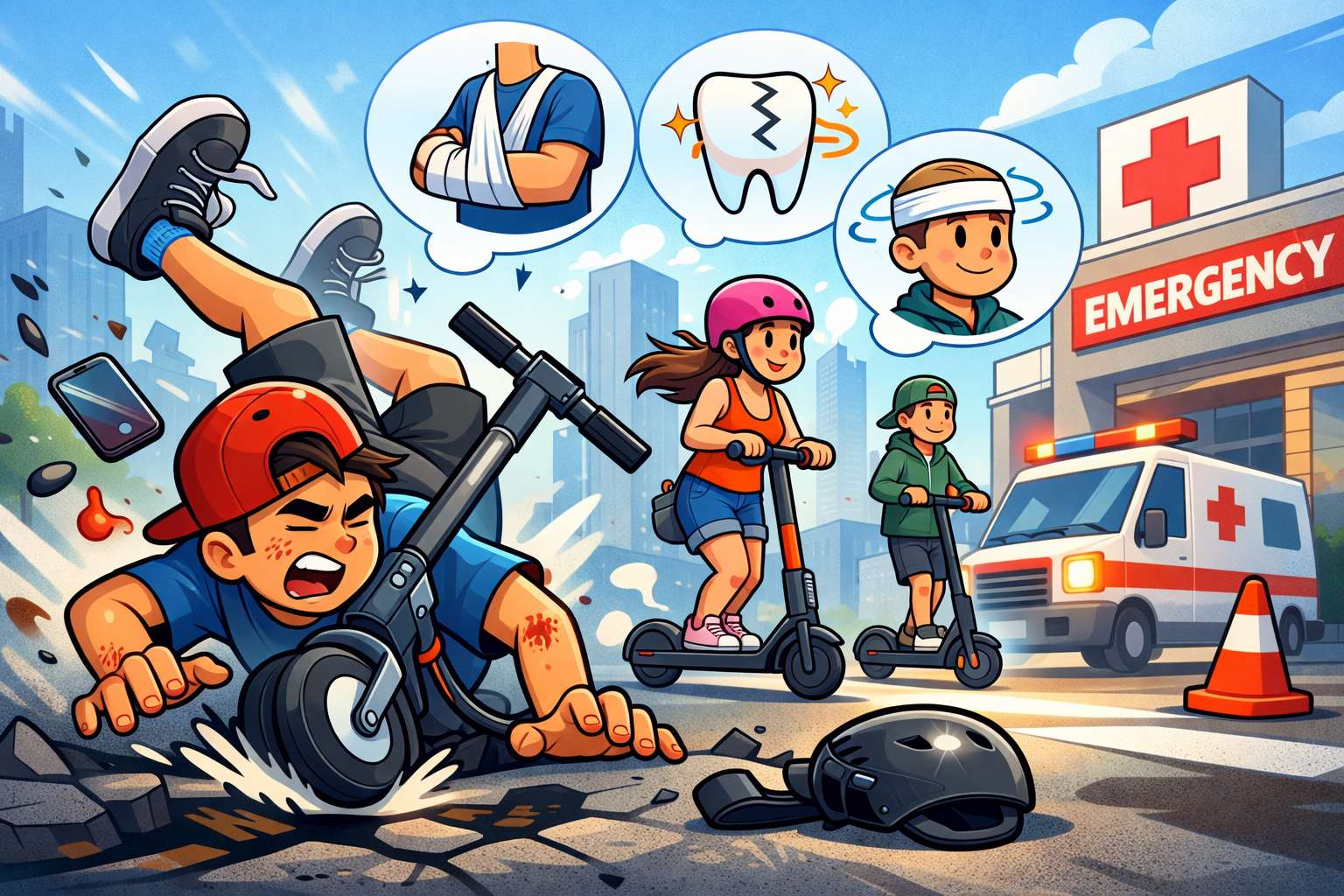
When riders fall, they usually hit the ground fast, and they often land poorly. ACC data shows the most common primary injury type is soft tissue injury, such as sprains and bruises. The next groups include lacerations and punctures, then fractures and dislocations. Concussions and dental injuries also appear in the frequent categories.
ACC also tracks what people report as the cause. Loss of balance or loss of personal control sits at the top. That detail matters because it points to prevention you can actually use. Riders do not need a high speed crash with a car to get seriously hurt. A wobble on a rough patch can do it.
Queensland emergency data tells a similar story
Queensland, Australia, shows the same direction. Emergency data collated by the Queensland Injury Surveillance Unit, QISU, in collaboration with Metro North’s Jamieson Trauma Institute, recorded 1,626 e-mobility injury presentations in 2024. It then recorded 2,000 in 2025.
Queensland Health also warns that the dataset depends on text entered at triage. That method can miss cases or label them in inconsistent ways. Even with that caveat, the year to year rise remains large.
US federal data shows rising injuries, and low helmet use
In the United States, the Consumer Product Safety Commission, CPSC, tracks emergency department injury estimates through a national hospital sample. CPSC reported a near 21% rise in micromobility injuries in 2022 compared with 2021. CPSC also reported a 22% year over year increase in e-scooter injuries in 2022.
Across 2017 to 2022, CPSC estimated 360,800 emergency department visits tied to micromobility products. It estimated 169,300 of those visits involved e-scooters.
Age distribution adds more context. CPSC estimates show that the 15 to 24 age group made up 25% of e-scooter related emergency visits from 2017 to 2022. The 25 to 44 group made up 40%. So young adults take a big share of the burden.
CPSC also ran a special follow up study on e-scooter injuries in 2022. It found that only 13% of injured riders reported wearing a helmet. It also found that 32% carried or held something while riding, and that 23% reported that poor visibility played a role.
CPSC also reported 233 micromobility fatalities from 2017 through 2022, while noting that death reporting remains ongoing and can change with late records.
Why under 25s show up so often
A few simple factors likely drive this pattern.
Young people ride more often in many cities, especially where shared scooters sit on every corner. They also ride in groups, at night, and on mixed paths with pedestrians. Those conditions raise conflict points, and they raise distraction too.
Skill matters as well. Riders need balance, braking control, and good scanning habits. Many teens learn on the fly. That learning curve has a cost.
Rules also vary by place, and that creates confusion. In New Zealand, for example, NZTA says riders do not need a helmet by law, but it recommends one. When laws send a soft signal, many people follow the soft option.
Some countries now tighten micromobility rules
Several governments have started to clamp down on youth riding and risky use. Finland has enacted new micromobility rules that ban e-scooter use for children under 15. The law also requires municipal licences for rental companies, applies car level blood alcohol limits to e-scooter users, and caps speed at 25 km/h.
Other places debate similar steps, but I cannot confirm which new proposals will become law in each market.
What riders and parents can do right now
You do not need to wait for new laws to cut risk. Small habits help, and they help fast:
- Put on a helmet every ride, and tighten the strap so it stays put.
- Slow down on wet paint, metal covers, gravel, and broken pavement.
- Keep both hands on the bars, and keep bags off the handlebars.
- Do not ride with a passenger, even for a short hop.
- Use lights at dusk and at night, and wear something bright.
- Avoid alcohol and drugs before riding.
- Practice braking and turning in a quiet area before riding in traffic.
- Check tires and brakes often, especially on private scooters.
If you need an age by age checklist for kids and teens, this guide keeps it simple and practical: kids scooter safety guide for 2026.
The takeaway
E-scooters can help cities move, and they can replace short car trips. But injury data keeps climbing, and younger riders take a big share of the harm. The good news is that the biggest drivers look boring. They include speed, balance, surface quality, visibility, and distractions. That also means riders can control a lot of the risk, starting today.