

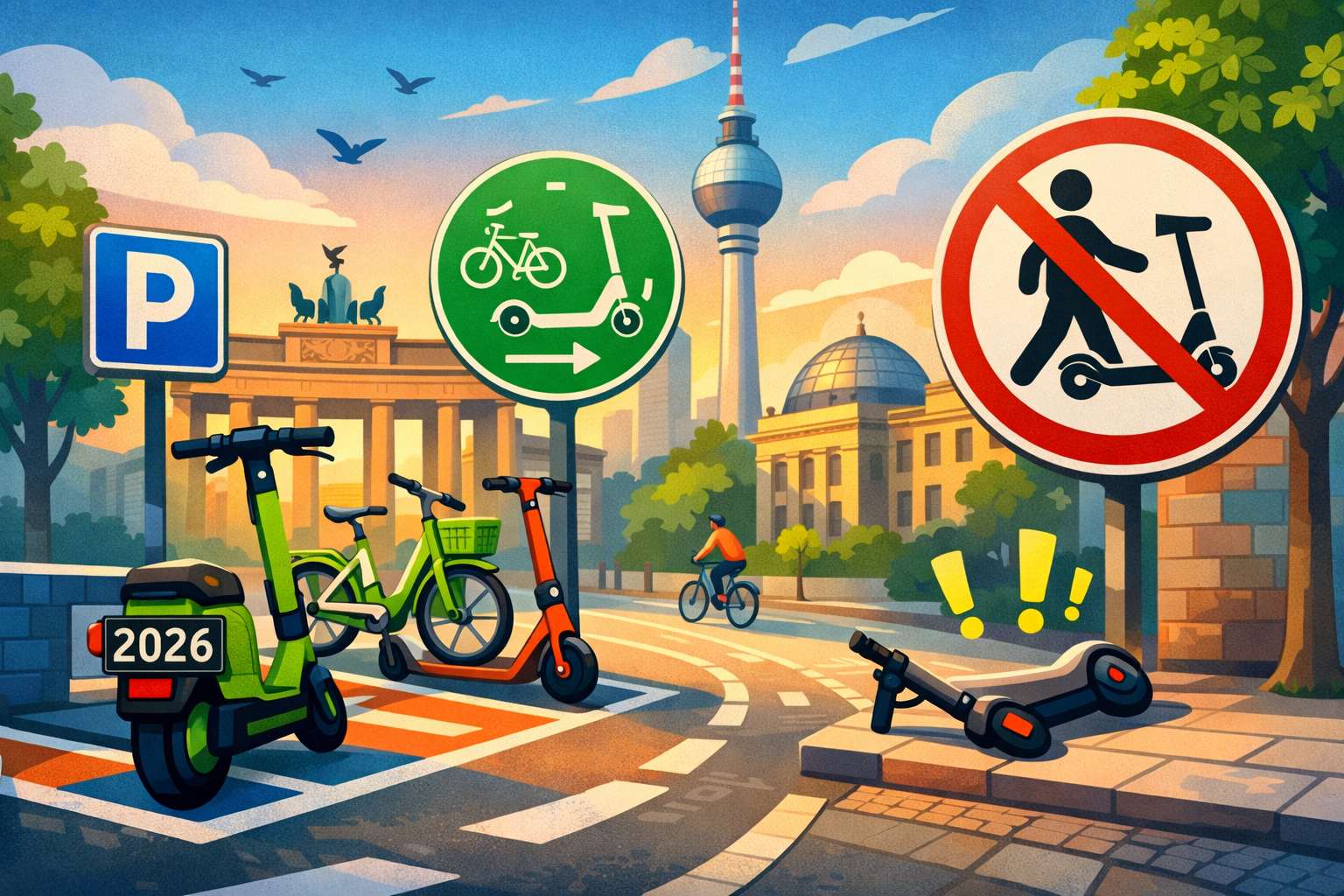
Berlin is getting tougher on e scooters and shared bikes that block pavements. That matters for locals, tourists, and anyone who uses Lime or another rental app in the city. It also matters for private owners who want to stay legal on German roads.
Many people still ask the same things. Can you ride an e scooter on the sidewalk in Germany? Can Lime bikes be left anywhere in Berlin? Do you need a license plate for an e scooter in Germany? The short answer is no, no, and yes.
The rules can feel messy at first, but they make more sense once you break them down. Germany separates riding rules from parking rules. Then Berlin adds its own local controls for shared vehicles. So a scooter might be legal to ride in one place, but not legal to park just anywhere after the trip ends.
You generally cannot ride an e scooter on the sidewalk in Germany
This is the rule that trips up the most riders. In Germany, e scooters do not belong on the sidewalk in normal everyday use. Riders should use cycle paths or cycle lanes when those are available. If there is no cycling infrastructure, they usually move onto the road.
That means the pavement is not a fallback option just because traffic feels busy. A lot of people assume a slow scooter ride on the sidewalk is harmless, but the law does not treat it that way.
There are limited exceptions. In some places, local signs may allow e scooters in areas that normally serve pedestrians. Even then, riders must move at walking pace and must not put pedestrians at risk. If there is no sign that clearly allows it, do not use the sidewalk.
For visitors, that is the safest rule to remember. No sign, no sidewalk.
What the current e scooter rules in Germany actually require
Germany treats e scooters as a specific vehicle type with clear limits. A road legal e scooter must meet the national technical rules. It must have handlebars or a holding bar, and it must stay within the allowed design speed range. The usual top legal speed is 20 km/h.
The minimum rider age is 14. You do not need a standard driving licence to ride one. That sounds simple, but many riders stop there and miss the most important point. In Germany, an e scooter still needs insurance if you want to use it on public roads.
That is why the small insurance plate matters so much. A private e scooter in Germany needs valid liability insurance and the official insurance plate for that period. Without it, the scooter is not road legal. If a rider gets into a crash without valid insurance, the problem can become serious very fast.
So if you are wondering whether your own scooter needs a plate, the answer is yes. It needs the small insurance plate used for this category, not a normal car plate.
Berlin is cracking down on pavement clutter
Berlin has spent years dealing with complaints about shared scooters and bikes left across pavements, corners, crossings, and building entrances. The city has moved away from the old leave it where you want model. In many busy areas, that approach no longer works.
Instead, Berlin now relies more on marked parking zones, designated bays, and local no parking areas for shared micromobility. This system aims to keep sidewalks open for pedestrians, wheelchair users, parents with strollers, and people with limited mobility.
That is a big shift in practice. In the past, riders often finished a trip wherever it felt convenient. Today, that same move can fail in the app or create a problem for the operator. In some parts of Berlin, especially central areas, the city expects shared vehicles to end their trips only in approved places.
This change also reflects a wider trend across Europe. Cities want the benefits of micromobility, but they do not want pavements turned into storage space for rental fleets. That is one reason local parking enforcement keeps getting tighter.
Can Lime bikes be left anywhere in Berlin
No, you should not assume that a Lime bike or scooter can be left anywhere in Berlin.
That is the practical answer most riders need. Berlin uses local parking controls, and rental apps add their own geofenced rules on top. In some neighbourhoods, you must park in a marked bay or at a designated mobility hub. In others, you may get a bit more freedom, but you still cannot block the pavement or leave the vehicle in a careless spot.
Even where the app lets you end the ride outside a formal bay, the vehicle still needs to be parked properly. Riders should place it at the edge of the pavement, keep pedestrian space clear, and avoid entrances, crossings, tactile guidance strips, bus stops, and cycle lanes.
That means the real rule is not leave it anywhere. The real rule is leave it only where the city and the app allow, and park it in a way that does not obstruct others.
If you use shared scooters often, this is worth remembering before every ride. Check the drop off rules before you unlock, not after you arrive. That simple habit can save time, stress, and extra charges.
Why Berlin riders should care about the latest rule changes
The legal picture is getting firmer, not looser. Germany has already moved to give cities and municipalities clearer control over how shared e scooters and rental bikes use public space. That helps cities like Berlin push operators toward designated parking systems and more structured local agreements.
For riders, that means the days of casual parking are fading. Berlin is not banning micromobility, but it is forcing more order into the system. That can improve walkability and reduce street clutter, but it also means riders need to pay closer attention.
This matters even more for tourists. Visitors often assume the rules work like they do in other European cities. They do not always. Berlin has its own mix of local controls, and Germany has its own national framework for how e scooters can be ridden on public streets.
If you want a simple approach, follow these steps. Ride in cycle lanes where possible. Use the road when allowed and necessary. Stay off the sidewalk unless a sign clearly says otherwise. And park shared vehicles only where the app and local rules permit.
What this means for everyday riders in 2026
Berlin is clearly trying to protect pavements while keeping shared mobility in the transport mix. That puts more responsibility on riders, but the rules are not hard once you know the basics.
Do not ride an e scooter on the sidewalk unless local signs clearly allow it. Do not expect to leave Lime bikes or scooters wherever your trip ends. And do not use a private e scooter on public roads without valid insurance and the proper plate.
That is the core of it.
These rules may feel strict, but they follow a wider push to make cities safer and easier to move through. Berlin wants fewer blocked pavements, fewer random drop offs, and clearer expectations for both riders and rental operators. Other places are trying similar ideas in different ways. For example, Taiwan paid riders to ditch gas scooters and cars, which shows how cities and governments keep reshaping urban transport through incentives, restrictions, and smarter mobility policies.
If you ride in Berlin, the best move is simple. Treat the scooter like a real road vehicle, not like a toy. Respect the parking rules before you end the trip. Then you are far less likely to run into trouble.