

Boise’s shared e-scooters and e-bikes feel normal now. You see them outside coffee shops, near the river, and lined up close to busy corners downtown. And for a lot of people, they are not just a fun ride anymore. They are part of how they move around the city.
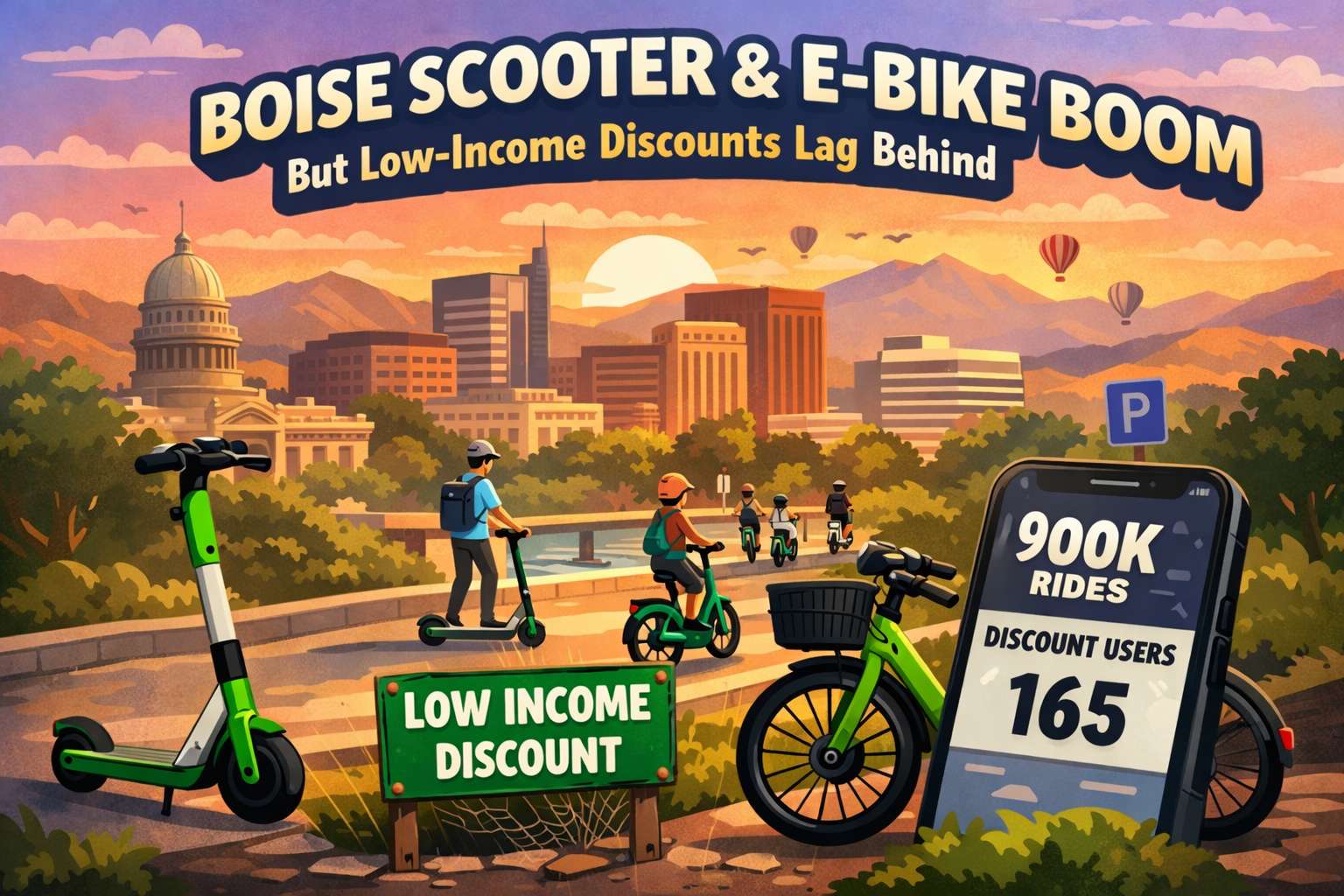
In 2025, Boise riders recorded just over 900,000 shared micromobility trips. That is a big jump from 607,204 trips in 2024. E-scooters made up about 778,000 rides in 2025, and shared e-bikes covered the rest.
So yes, usage is climbing fast. But there is another side to the story. The low-income discount program exists, and it has real value, yet only a small number of riders use it.
Scooter and e-bike ridership is growing fast, and it keeps stacking up
Boise has supported shared scooters for years, and the numbers show steady growth. Since shared service began in 2018, the city has passed two million total trips across scooters and e-bikes.
That matters, since a trend that lasts for years is not just hype. It also means Boise has a lot of trip data to work with. The city can see where people ride most, when demand spikes, and where parking causes the biggest headaches.
Then 2025 pushed things even further. Going from around 607,000 rides to over 900,000 in one year is not a small step. It points to something simple. More riders now treat scooters and e-bikes like real transportation.
A single operator now runs the shared scooter program
Boise uses a single-provider setup inside city limits, and Lime runs the service. That makes the program easier to manage, and it makes the rules easier for riders to follow.
One app. One pricing model. One support system.
At the same time, it puts more pressure on consistency. If devices collect downtown, riders in other areas feel left out. And if parking gets sloppy, people blame the whole system, not just one rider.
That is why city oversight matters. Boise’s contract setup includes fees tied to operations and enforcement. So the city can fund monitoring, and it can push faster cleanup when issues come up.
Safety became a bigger topic once rides surged
More rides bring more close calls. That is just reality, especially when scooters share space with walkers, runners, and cyclists. The Boise River Greenbelt is a perfect example. It is beautiful, but it can get crowded fast.
So Boise tightened speed rules for shared scooters and e-bikes. Devices now run at 12 mph on the Greenbelt at all times. Then downtown speeds drop to 10 mph from 6 p.m. to 3 a.m. The previous maximum was 15 mph.
These changes are not about punishing riders. They are about lowering risk in the places where conflicts happen most.
And speed is only part of it. Riding behavior still matters. One person per scooter. Eyes up at crossings. No weaving through pedestrians. Then parking correctly at the end of the ride, even when you are tired or rushing.
Parking is still the biggest daily complaint, even with better rules
Parking issues are what people notice first. A scooter left sideways on the sidewalk can block strollers, wheelchairs, and curb ramps. And even if it happens once, it sticks in people’s minds.
Boise has tried to make parking easier and more predictable, not just more strict. One major step was adding parking corrals. In 2024, the city installed about 40 corrals around downtown, Boise State’s campus, nearby neighborhoods, and key transit routes.
Corrals help in a simple way. Riders see a clear place to end a trip, and the sidewalk stays open.
Boise has also used small incentives to nudge good habits. Riders can receive $1 off a future trip when they park in preferred zones shown in the app.
That approach makes sense, since people respond to small rewards. And when the “right spot” is obvious, many riders will use it without thinking twice.
Low-income discounts exist, but enrollment remains surprisingly low
Here is the part that still feels off.
Boise’s total ridership is booming, yet the low-income discount program has very few enrolled users. In 2024, the city recorded 144 discount-program users, and those riders took 3,845 trips. Then, in the first three quarters of 2025, the city counted 165 users.
When you compare that to hundreds of thousands of rides, the gap is hard to ignore.
This does not mean the program is bad. It usually means people do not find it, or they hit barriers that stop them from signing up.
A few common problems show up in cities that run discount programs:
- People do not know the discount exists.
- The sign-up steps feel confusing or time-consuming.
- Some riders do not have payment options that work smoothly with app systems.
- Some worry about surprise fees if they make a mistake.
- Devices may not be available where they live, so the program feels pointless.
So even when a discount is real, it can still sit unused.
Boise also has a second discount tool that is tied to geography. Riders can receive 50% off when trips start in designated equity focus areas. That can help people who do not enroll in a formal program. Still, it only works well when devices are actually present in those neighborhoods.
Other cities are making changes too, and Boise can learn from them
Boise is not alone here. Cities all over the U.S. are trying to balance growth with safety, access, and rules that people follow.
If you want a quick example of how fast local policies can shift, check this update on Mesa parks now allowing e-scooters and e-bikes, with new helmet rules for kids. Different city, different rules, same bigger question. How do you support micromobility without creating chaos?
That kind of comparison matters, since Boise can watch what works elsewhere. Then it can adjust before problems grow.
What Boise can do next to grow access, not just ridership
Boise already has the building blocks. Now it needs to turn those blocks into everyday results.
First, the discount program needs more visibility. People should see it in places they already visit, like libraries, community centers, clinics, and local service offices.
Second, sign-up should feel simple. Short steps matter. Clear instructions matter. And faster approval helps a lot.
Third, device coverage outside downtown has to stay consistent. A discount does not help if riders cannot find a scooter near home. So distribution matters as much as pricing.
And finally, Boise should keep the basics strong. Safe speeds in crowded areas. Clear rules on sidewalks and crossings. Then better parking corrals where people actually end rides.
The takeaway Boise riders will feel in 2026
Boise’s scooter and e-bike system is growing fast. 2025 proved that. And if ridership keeps climbing, the city will keep adjusting speed, parking, and enforcement.
Still, the biggest opportunity is not just higher trip counts. It is wider access.
If Boise can raise discount enrollment and improve device coverage in more neighborhoods, shared scooters and e-bikes can feel like a real option for more residents, not just the busiest parts of town.