

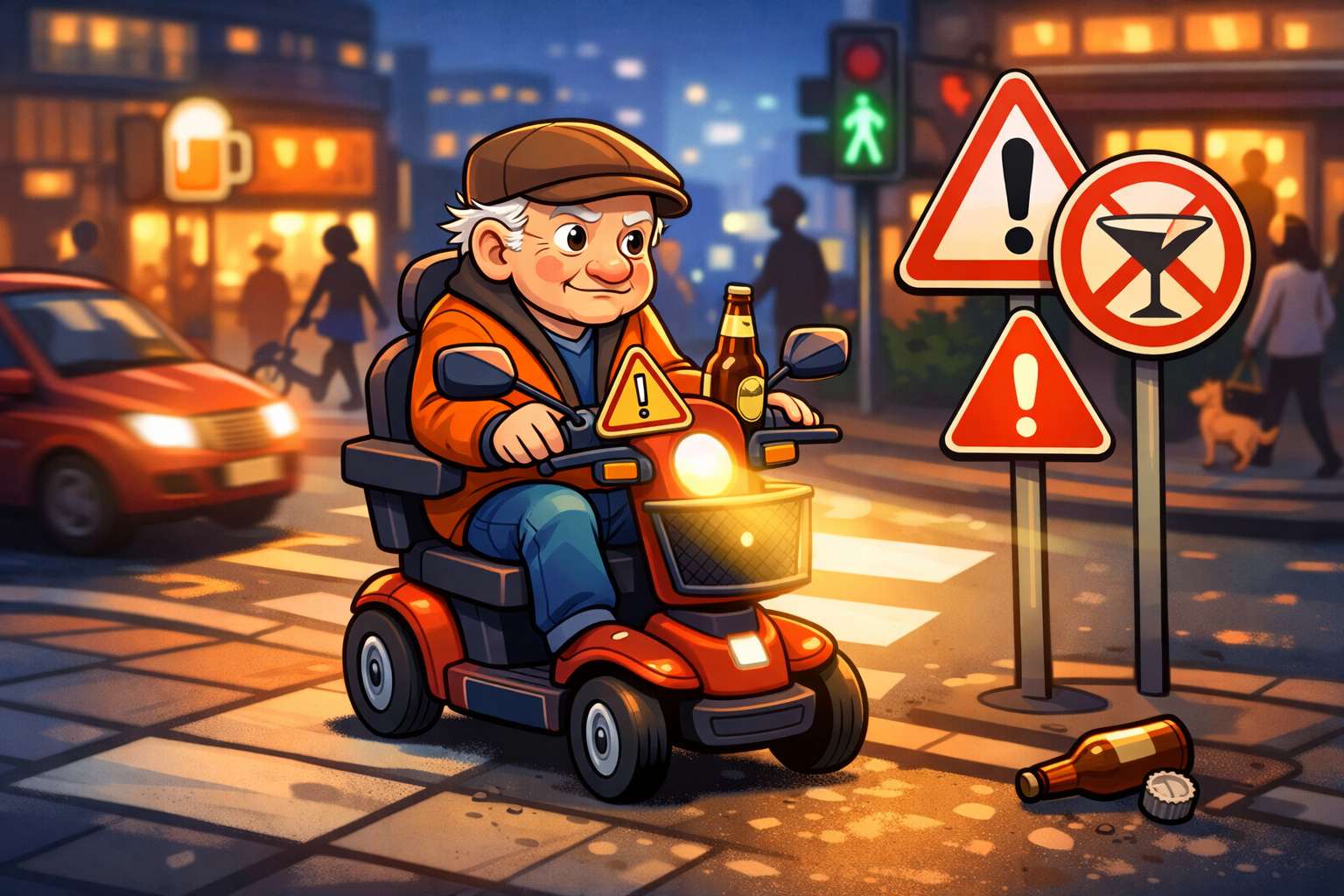
The UK is tightening its focus on road safety, and mobility scooter users are part of the conversation. A new Road Safety Strategy sets long-term targets to cut deaths and serious injuries on Britain’s roads by 2035. At the same time, the Department for Transport has opened a full review of the laws that cover powered mobility devices.
So yes, this is about cars and drink driving. Yet it is just as much about shared public spaces, like pavements, pedestrian areas, and crossings. That is where mobility scooters spend most of their time.
The key message feels pretty clear. Rules still matter outside main roads.
The drink-drive limit is back in the headlines
The government has said it plans to consult on lowering the drink-drive limit in England and Wales. That matters, since the legal limits differ across the UK.
Here are the current limits for England, Wales, and Northern Ireland:
- 35 micrograms of alcohol in 100ml of breath
- 80mg of alcohol in 100ml of blood
- 107mg of alcohol in 100ml of urine
Scotland already uses lower limits:
- 22 micrograms of alcohol in 100ml of breath
- 50mg of alcohol in 100ml of blood
- 67mg of alcohol in 100ml of urine
That difference changes behaviour, and it changes what people see as “safe”. It can even change what families say to each other before someone heads out.
Now, mobility scooters are not cars. Still, public safety does not stop at the kerb. Alcohol slows reaction time, and it blurs judgement. That risk shows up on pavements too.
So why are mobility scooter users caught up in all this?
Mobility scooters move through tight, busy places. Think of shopping streets, car parks, hospital entrances, and crossings outside schools. Those spaces have constant movement and sudden changes.
So even at low speed, a small mistake can turn serious fast.
A short wobble can clip a pushchair. A wide turn can catch a dog lead. A sudden stop can send someone off balance. Then the situation escalates in seconds.
That is the reason the “rules still matter” warning feels aimed at real life, not just the Highway Code.
The law review is bigger than most people realise
In early January 2026, the Department for Transport launched a 12-week consultation to modernise the law for powered mobility devices. It runs until 31 March 2026.
This review exists for a simple reason. The current rules date back decades, and modern scooters no longer match the old assumptions. Sizes vary more. Speeds vary more. And public spaces are busier than ever.
The consultation looks at changes that could affect daily riding, including:
- clearer rules on where powered mobility devices can be used
- updated size and speed rules for larger devices
- age-related rules, where they apply
- possible permission for tandem powered mobility devices
- updated language to replace outdated legal terms
So the goal is clarity. People want to know where they belong, and what “safe use” really means in 2026.
The class rules matter, and many riders forget them
UK guidance splits mobility scooters and powered wheelchairs into two common classes:
- Class 2: maximum speed of 4mph or less
- Class 3: maximum speed of 8mph
Both Class 2 and Class 3 devices can be used on pavements and in pedestrian areas. They can be used on cycle tracks too. Yet they cannot be used on cycle lanes painted on the road.
Class 3 scooters can go on the road. They need registration with the DVLA.
That mix of pavement and road access creates confusion for many people. So this law review lands at the right time.
Road use has extra requirements
A mobility scooter used on the road needs more than a strong battery and working brakes. Official guidance says a road-going scooter must meet practical safety standards, such as:
- front and rear lights and reflectors
- direction indicators that work as hazard warning signals
- a rear view mirror
- an audible horn
- an efficient braking system
- a clear view of the road and traffic ahead
These details sound basic, yet they protect riders at junctions and crossings. They help drivers spot you earlier. And they reduce panic reactions from other road users.
Next, the rules on where you can ride stay strict. Road use does not include:
- motorways
- bus lanes
- cycle lanes
Dual carriageways raise even more risk. Guidance often points toward an amber flashing light for visibility. It warns against using dual carriageways with speed limits over 50mph.
“Off-road” does not mean “risk-free”
A lot of people hear “mobility scooter” and picture a slow ride on a wide pavement. Real life looks different.
Pavements narrow. Shop entrances create bottlenecks. People step out without looking. Drivers reverse out of bays. Cyclists cut across corners. So a rider needs sharp attention, even at 4mph.
So what does this mean for a mobility scooter user on a quiet shopping street? It means the same thing it means for every road user. Stay in control, and stay predictable.
That sounds strict, but it is fair. Everyone shares the space.
Micro-mobility rules are changing across the region
This is not only a UK story. Many places are updating rules for electric scooters, mobility devices, and shared streets.
For a useful comparison, take a look at how helmet laws could shift for e-scooters across the Irish market. You can read a full breakdown here: https://scooterpick.com/ireland-e-scooter-helmet-law-what-could-change-next-and-why-it-matters/
It shows the same pattern. Governments want clearer rules, and the public wants fewer grey areas.
What riders can do now
The law review and drink-drive consultation will take time. Still, everyday habits matter right now.
Here are simple actions that fit real life:
- keep speed low near pedestrians, even on open pavements
- take wider turns slowly, not sharply
- stop early at crossings, and leave space for others
- use lights and reflectors in low light
- avoid alcohol before riding, even for short trips
- check tyre pressure and brakes often
Next, think about your usual route. A slightly longer path with smoother surfaces can feel safer and calmer. That choice reduces sudden swerves and hard stops.
What happens next in 2026
Two dates are now on the radar:
- the powered mobility device law consultation runs until 31 March 2026
- the government’s road safety work continues through 2026, with drink-drive limits part of the agenda
So the direction is clear. The UK wants safer streets and simpler rules. Mobility scooter users sit inside that plan, whether they ride on roads or stay on pavements.
For now, the safest approach is practical. Treat every ride like real driving in shared space. Slow down, stay alert, and give people room.