

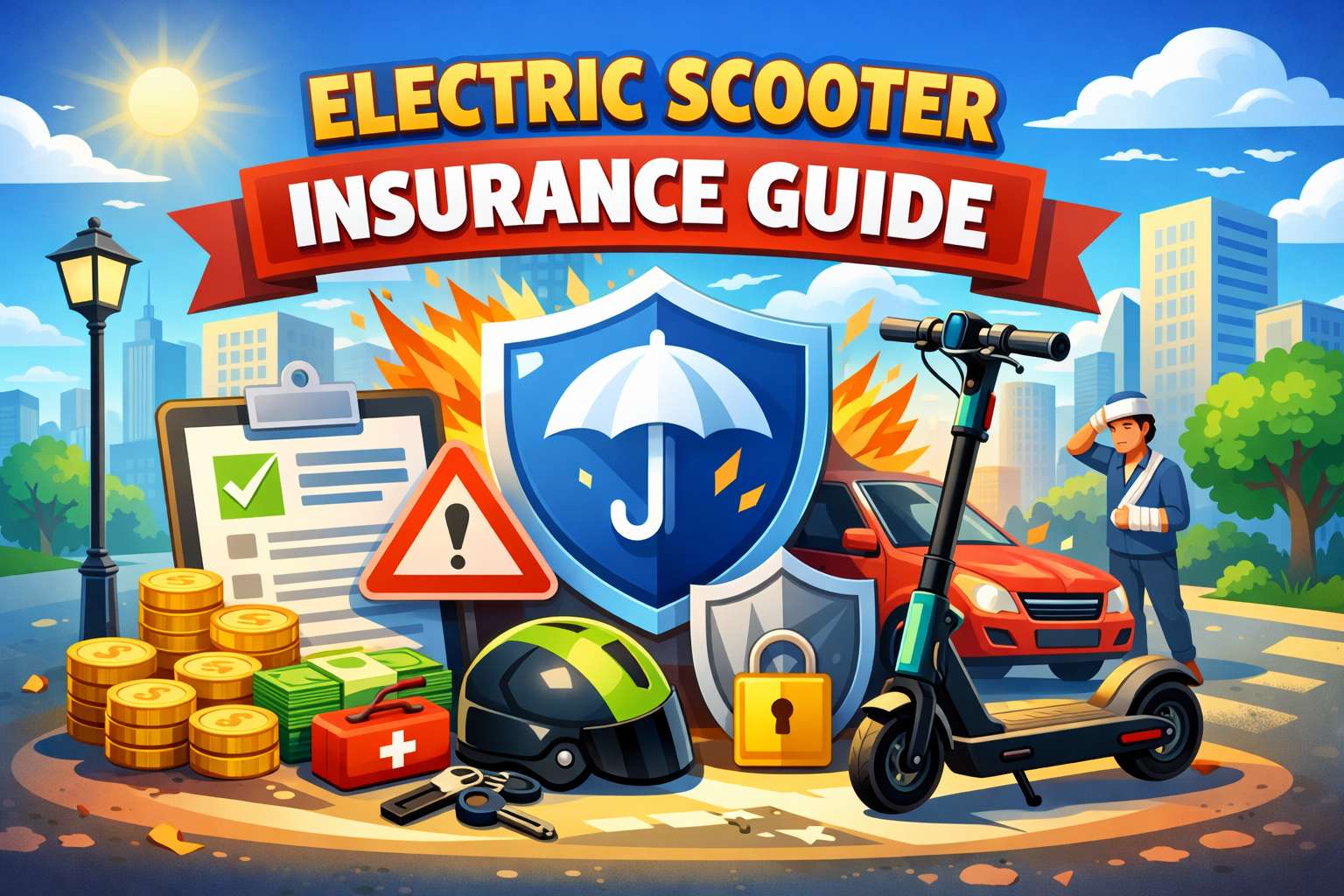
Electric scooters feel light and simple. You charge them, fold them, and ride. Yet the risk looks a lot like any other road risk. One slip on wet pavement can lead to a broken wrist. Then one fast stop can end with a cracked bumper. And one sudden door opening can turn a normal ride into a stressful mess.
Insurance exists for one reason. It pays when a ride turns into a bill.
So, let’s break down what electric scooter insurance covers, when you need it, what affects price, and how to choose a policy that matches the way you ride.
What “electric scooter insurance” actually means
Scooter insurance is not one single product everywhere. Each country sets its own rules. Each insurer labels scooters in its own way too. Still, most policies fall into the same core blocks.
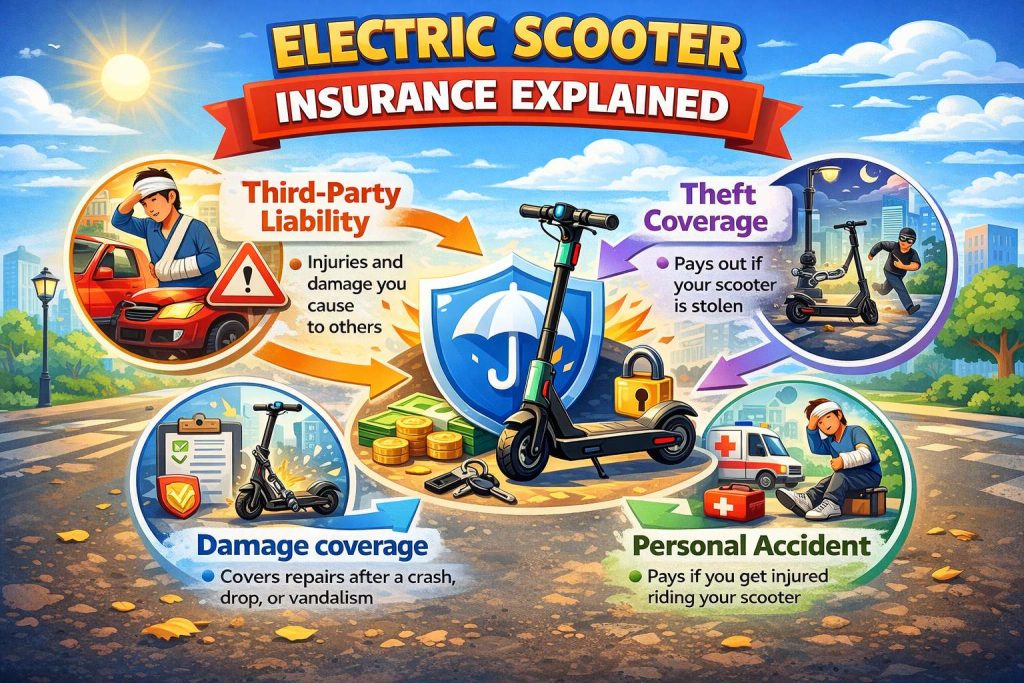
Third-party liability
This is the big one. It covers damage you cause to other people or their property.
For example, it can cover:
- Medical costs for someone you hit
- Repairs to a parked car
- A broken phone or glasses
- Damage to a fence, door, or shop window
If your country requires scooter insurance, it usually means liability insurance. So, start here first.
Theft coverage
Scooters get stolen fast, especially in cities. Theft cover can pay the scooter’s value if someone steals it. Still, insurers often set strict rules, and you need to follow them.
Common requirements include:
- A certain lock type
- Locking to a fixed object
- Storing the scooter indoors overnight
- Reporting the theft quickly
So, theft cover only helps when you follow the fine print.
Accidental damage (your scooter)
This helps pay for repairs after a crash, a drop, or a hit. It matters more when your scooter costs real money and parts are expensive.
Batteries, controllers, and suspension repairs can add up fast. So, damage cover can save you from a painful bill later.
Personal accident cover
This pays a fixed amount if you get hurt. It does not replace health insurance. Still, it can help if you miss work or face costs during recovery.
Legal support
Some policies include legal support after a crash. This can help when another person disputes fault, or when costs rise and you need help handling paperwork.
When do you really need scooter insurance?
Two things decide this. First, your local law. Then, your personal risk.
1) The law where you ride
Many places treat scooters as vehicles once they cross certain limits. Speed matters. Weight matters. Motor power can matter too. Then the rules change again based on where you ride, like streets, bike lanes, or mixed paths.
So, do one quick check. Look up the current rules in your city or country before you buy a policy. Then match your scooter type to that rule.
Helmet rules often link to these same discussions. So if you want a quick view of what may change next in one country, read this update on the helmet law debate in Ireland:
Ireland e-scooter helmet law, what could change next and why it matters
2) Your personal risk
Even if your area does not require insurance, the financial risk stays real. A low-speed crash can still cause high costs if another person gets hurt. The same goes for damage to a car, bike, or stroller.
So ask yourself this. If something goes wrong tomorrow, can you afford to pay out of pocket? If the answer is no, insurance starts to look like a smart safety net.
Rental scooter coverage vs owning your own scooter
Rental scooters work differently. Many rental operators include basic coverage inside the rental service. Still, the details change from company to company. So you need to read the rider terms, not guess.
When you own your scooter, everything sits on you. You choose the policy. You carry proof of cover if your area asks for it. Then you follow the local road rules.
So, if you switch between rentals and your own scooter, compare both sets of coverage. That small check can save you later.
What scooter insurance usually covers
Most claims land in a few common categories. So when you read a policy, look for these sections first.
Damage to other people’s property
This is common in busy areas. One small mistake can scratch a car door or break a mirror.
Liability cover can pay for:
- Repairs
- Replacement parts
- Labor costs
Then you avoid paying the full bill yourself.
Injury to another person
This is the serious one. A pedestrian fall can create medical costs, time off work claims, and legal problems.
Liability cover may help pay for:
- Medical costs
- Rehab costs
- Legal costs, if included
- Compensation rules set by local law
So, even a small crash can turn into a big expense without liability cover.
Theft of your scooter
Theft cover can help, but it comes with rules. If you ignore the lock rules, insurers can reject the claim.
So check these points:
- What lock is required?
- Do you need to lock to a fixed object?
- Does theft outside the home count?
- Do you need proof of forced entry for indoor theft?
Then keep receipts and photos when possible.
Damage to your scooter
Damage cover may include:
- Crash repairs
- Vandalism damage
- Some transport damage
Most policies use a deductible, so you pay a set amount per claim. A lower deductible usually costs more per year. Then a higher deductible costs less per year, but you pay more when you file a claim.
Why home insurance often fails for e-scooters
A lot of riders assume home insurance covers everything they own. Yet many home policies exclude motorized vehicles. Others only cover theft at home, not outside. And many home policies cover liability inside your home, not on public roads.
So, before you rely on home insurance, check these exact points:
- Does the policy exclude motor vehicles?
- Does it exclude powered devices used on roads?
- Does it cover theft away from home?
- Does it cover liability outside your property?
If the wording feels unclear, ask the insurer for a written answer. Then save it.
How to choose the right scooter insurance in 10 minutes
You can pick the right cover fast if you follow a simple order.
Step 1: Start with liability
Liability is the foundation. If you buy only one thing, make it this.
Pick a liability limit that matches your riding environment. City riding adds risk. Tight streets and heavy traffic raise exposure. So a higher limit can make sense.
Step 2: Add theft cover if you park outside
Do you lock your scooter outside shops, gyms, offices, or apartment blocks? Then theft cover matters.
Still, focus on claim conditions. A cheap theft policy that never pays does not help anyone.
So check lock rules before you pay.
Step 3: Add damage cover for higher priced scooters
If your scooter is expensive, repairs can hit hard. Battery parts and electronics can cost more than you expect. So damage cover becomes more valuable as scooter value rises.
Step 4: Add personal accident cover if you ride daily
Daily riders face more time on the road. So exposure rises, even when you ride carefully.
If you already have strong health cover and income support, you may skip it. If you do not, personal accident cover can reduce stress after an injury.
What affects the price of scooter insurance?
Insurance pricing follows risk. So these factors usually change the price the most.
Top speed
Faster scooters raise crash severity risk. So insurers often charge more.
Scooter value
A higher value scooter costs more to replace. So theft payouts rise too.
Where you ride
City riding brings more close calls. Suburban routes often stay calmer. So pricing may reflect that.
Where you store it
Outdoor storage raises theft risk. Indoor storage lowers it. So storage habits can change the premium.
Your cover mix
Liability only is often the cheapest. Add theft and damage cover and the cost rises. Then personal accident cover pushes it up again.
Common coverage gaps that surprise riders
A policy can look good until you read the exclusions. So watch for these surprises.
“Private land only”
Some policies cover riding on private property, not public roads. If you commute, that cover can be useless.
So confirm the policy covers the places you actually ride.
Speed or class limits
Some insurers only cover scooters under a certain class. If your scooter exceeds that limit, the policy may not apply.
So match the policy to your scooter specs.
Theft cover with strict proof rules
Some theft policies require a specific lock type. Some require proof of purchase for the lock. Others require locking to a fixed object every time.
So, if you want theft cover, build the lock habit now.
Wear and tear exclusions
Damage cover often excludes:
- Normal wear
- Brake pad wear
- Tire punctures from normal use
- Water damage outside stated conditions
So, treat damage cover as crash protection, not a maintenance plan.
What to do after a crash
Crashes feel messy and fast. So a short checklist helps you stay calm and protect your claim.
Step 1: Get safe
Move out of traffic if you can. Turn off the scooter. Then call emergency services if someone is seriously hurt.
Step 2: Take photos
Use your phone to capture:
- The scooter
- The road surface
- Vehicle damage
- Visible injuries
- The wider scene with street signs
Then you keep a clear record.
Step 3: Exchange details
Collect:
- Names and phone numbers
- Addresses if needed locally
- Vehicle plate number if involved
- Witness details
So you do not rely on memory later.
Step 4: Write a short note
Write a quick note on your phone about what happened. Add time and location. Then you have a clean timeline later.
Step 5: Report quickly
Most insurers want quick reporting. Some places require police reporting for injuries or high-value damage. So check your local rules and follow them.
Theft prevention that protects your insurance claim
Insurance helps after theft. Yet prevention still matters, since stolen scooters create real disruption.
Use a simple routine:
- Lock the frame, not just the stem
- Lock to a fixed object when possible
- Avoid isolated areas at night
- Keep the serial number recorded
- Keep purchase receipts saved
Then take one extra step in high-risk areas. Snap a quick photo of the scooter and the lock setup. That tiny habit can help if you need to prove you followed the lock conditions.
Do you need scooter insurance if it is not required?
If you ride in quiet areas at low speed, risk goes down. Still, one mistake can cost a lot if you hit a pedestrian or damage a car.
So ask yourself three quick questions:
- Do I ride near cars or pedestrians?
- Can I afford to pay for damage I cause?
- Can I replace my scooter if it gets stolen?
If the answer is no to the last two, insurance is worth a serious look.
Helmet rules and park rules can change your exposure too. For example, local rule updates can reshape where you ride and what gear is required for certain riders. If you want a real example of how fast this changes, see this update about Mesa parks allowing e-scooters and e-bikes, plus new helmet rules for kids:
Mesa parks now allow e-scooters and e-bikes, new helmet rules for kids start Feb 11
A simple commuter setup that works
Commuters need cover that fits real life, not a perfect scenario.
A practical commuter setup often looks like this:
- Liability cover with a strong limit
- Theft cover, since you will park outside sometimes
- Damage cover if your scooter costs more than you want to replace quickly
Then, if you ride every weekday, personal accident cover can be a useful add-on.
A simple setup for faster scooters
Faster scooters raise risk and attention. They can also trigger stricter rules in some areas.
So for this category, focus on:
- Higher liability limits
- Damage cover that includes crash repairs
- Theft cover with clear replacement terms
If the policy excludes your scooter class, keep looking. A mismatch can leave you exposed when you need help the most.
Quick buying checklist
Use this checklist before you pay:
- Confirm the scooter’s top speed
- Confirm the scooter’s weight
- Confirm where you ride most (roads, lanes, paths)
- Choose liability first
- Add theft cover if you park outside
- Add damage cover if replacement would hurt your budget
- Check exclusions for public-road use
- Check lock requirements for theft cover
- Save your proof of insurance on your phone
Then you ride with a plan, not luck.