
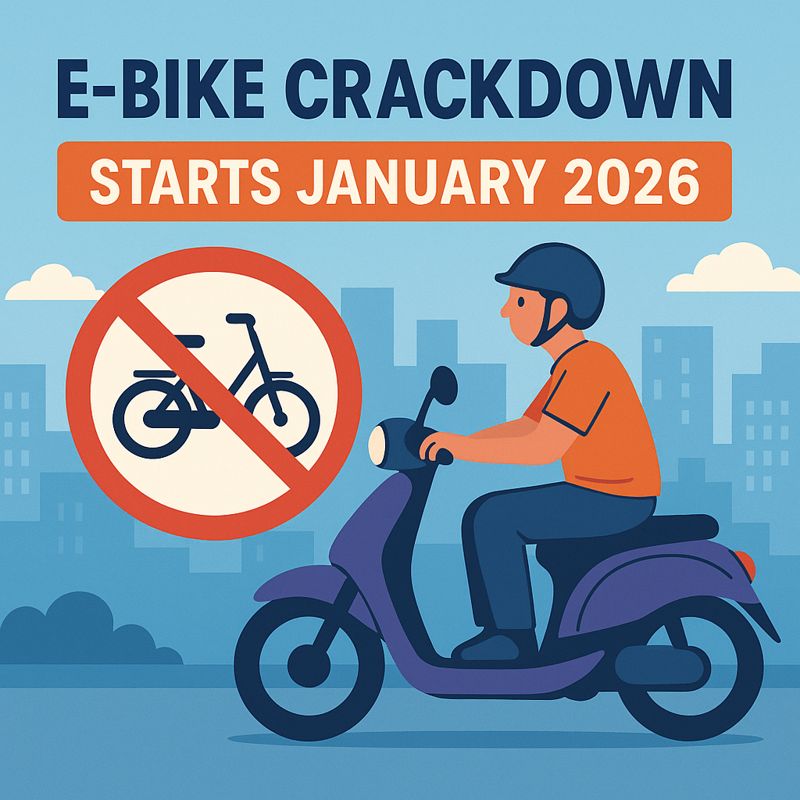
A big change is coming for e-bikes and e-trikes on Philippine roads. On January 2, 2026, authorities plan to begin stricter enforcement on routes where these vehicles are not allowed, especially national highways and major roads. So, riders who keep using restricted roads risk being stopped, and they can face impounding based on the enforcement plan shared by transport officials.
This matters for everyday trips. It affects commuters, delivery riders, students, and parents who use e-bikes to save money. It affects drivers, too, since traffic patterns can shift fast once enforcement teams start active operations.
What changes on January 2, 2026
The main point stays simple. E-bikes and e-trikes must stay off national highways and other major roads covered by the restriction. Up to now, many areas focused on reminders and education. Then the approach changes, and officers begin real enforcement on the ground.
That means checkpoints, spot checks, and roadside stops in key areas. It can mean towing and impounding, too. So, for many riders, the biggest change is not the rule itself. The biggest change is how firm the response becomes.
Which vehicles get attention
On the street, people call many things an “e-bike.” Some units have pedals. Some rely on throttles. Some carry a passenger, a cargo box, or both. Yet many of these vehicles move at low speeds compared to the flow of a highway, and that gap can create risk in a hurry.
This is where confusion starts. A rider takes the same route every day. Then that route crosses a stretch treated as a restricted corridor. Next, a stop happens, and the rider learns the hard way that the road counts as part of a national highway network.
Clearer enforcement aims to remove that gray area on the roads covered by the rule.
Where riders can still travel
This crackdown does not erase e-bikes from daily life. Riders can still use routes that match local rules and road types meant for slower traffic.
In many places, that points riders toward:
- Barangay roads and inner streets
- Local roads that do not form part of a national highway
- Bike lanes and mobility paths where local rules allow them
- Designated crossings and safer connectors between neighborhoods
Local government units can set added traffic rules, so posted signs matter a lot. Then, when a route gets busy, riders can shift to a parallel street that feels slower.
For a related look at how rules can tighten in other places, you can read this guide on Spain’s new electric scooter laws for 2026 and what changes on January 2.
Simple steps to prepare before January
A smooth start in January begins with planning now. So focus on route choices and basic safety habits.
Start with your daily route. Mark any stretch that runs on a national highway. Then pick an inner-road alternative, even when it adds a few minutes.
Next, check your e-bike like you would check a bicycle or a small motorcycle:
- Test your brakes and fix them fast when they feel weak.
- Check your front light and rear light, and replace broken parts.
- Pump tires to the right pressure, then check again after a few days.
- Wear a helmet, and use reflective gear at night.
Cargo riders need extra care. Keep loads balanced. Avoid stacking weight too high. Then slow down on corners and rough patches.
Parents and students can run a practice route in daylight. That helps you spot risky intersections and narrow streets. Then the trip feels less stressful once enforcement begins.
What this signals for 2026
This enforcement push sends a direct message. National highways are built for faster vehicles, and low-speed units do not mix well with that flow. So riders will need safer local routes, and cities will feel more pressure to build better bike lanes and short connectors between communities.
For riders, the practical takeaway is clear. Stay off restricted roads, plan your route now, and treat January 2, 2026 as a firm start date.