

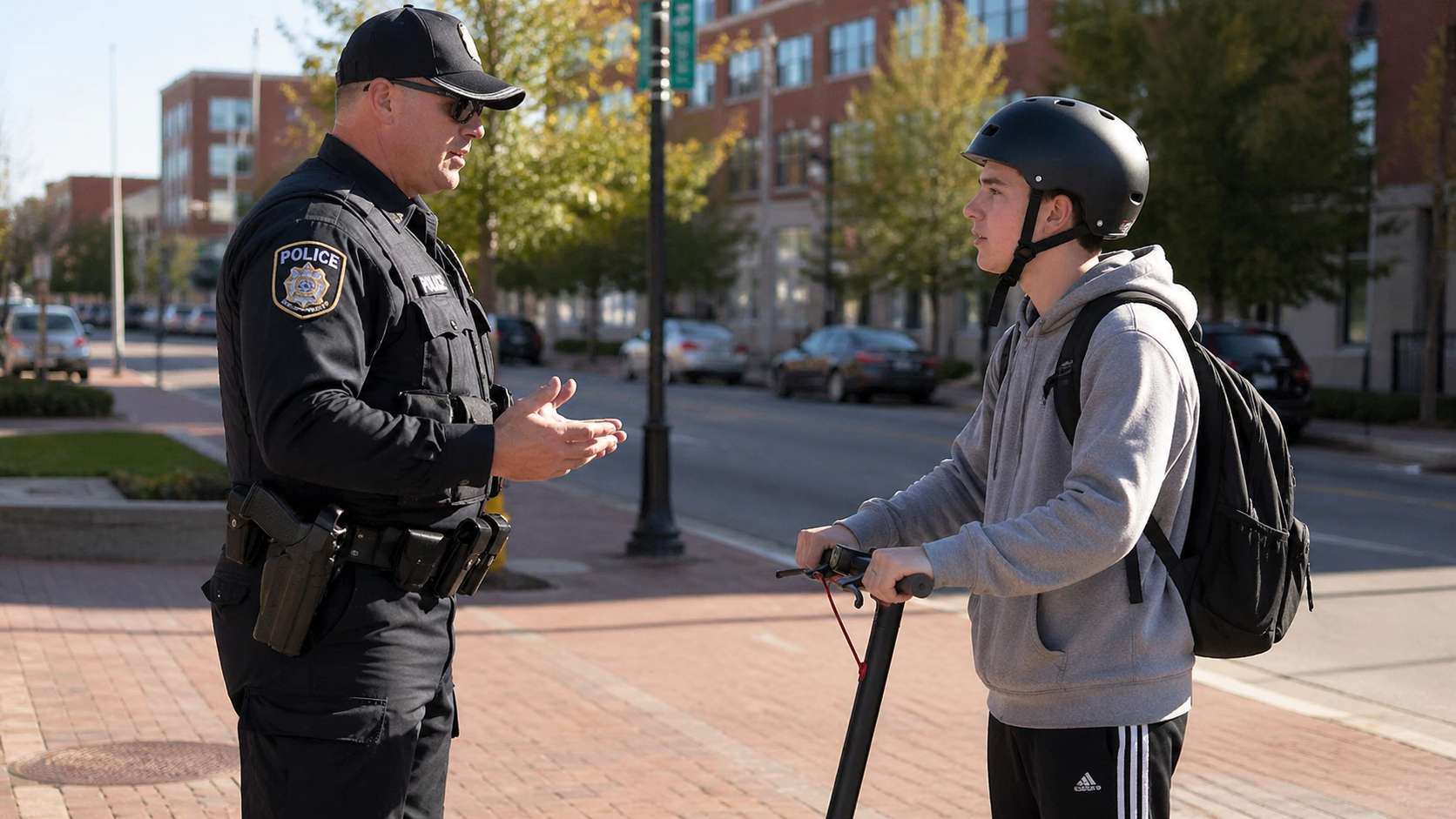
Indiana police have a clear message for e-bike and e-scooter riders: check the rules before you ride. The warning matters for parents, teens, commuters, and anyone buying a battery-powered ride online. Many electric bikes and scooters look simple at first glance, but state law does not treat every model the same way.
Some products sold as “e-bikes” do not meet Indiana’s legal e-bike rules. That can change where a person can ride, what safety gear they need, and whether the vehicle falls into a different legal category. For families, this is more than a small detail. It can affect a child’s safety and a parent’s buying decision.
Why Indiana Police Are Talking About E-Bikes and E-Scooters
Police in Indiana have warned riders to pay close attention to electric bike and electric scooter regulations. The main issue is classification. A legal e-bike in Indiana must fit into one of three classes. It also needs working pedals, a motor rated at 750 watts or less, and a top assisted speed that matches state limits.
That detail can surprise buyers. A fast throttle bike with a large motor can look like a normal e-bike in photos. Still, the specs can tell a different story. A model with too much power or the wrong speed setup can fall outside the e-bike rules.
This matters more now since e-bikes and scooters have become common around neighborhoods, campuses, parks, and downtown streets. Riders use them for short trips, school commutes, work travel, and weekend rides. So, police want people to know the rules before a ride turns into a ticket, crash, or legal problem.
What Counts as an E-Bike in Indiana?
Indiana law places e-bikes into three classes.
Class 1 e-bikes use pedal assist only. The motor helps only as the rider pedals, and assistance stops at 20 mph.
Class 2 e-bikes can use a throttle. The motor must still stop helping at 20 mph.
Class 3 e-bikes use pedal assist and can reach 28 mph with motor help. These bikes have stricter age and helmet rules.
The motor rating matters too. Indiana’s e-bike rules use a 750-watt limit. A product that goes past that number does not fit the standard e-bike definition. Parents should check this before buying, since many online listings promote speed first and explain legal limits later.
The bike also needs a label. The label should show the e-bike class, top assisted speed, and motor wattage. This small sticker can help riders, parents, shops, and police understand what type of ride they are dealing with.
Class 3 E-Bikes Need Extra Care
Class 3 e-bikes deserve special attention. Indiana does not allow a person under 15 to operate a Class 3 e-bike. Riders and passengers under 18 must wear a properly fitted helmet on a Class 3 e-bike.
This rule matters for families shopping for teens. A 28 mph electric bike can feel like a good upgrade for school or work, but it is not the same as a slower Class 1 or Class 2 model. It carries more speed, more risk, and more legal limits.
Parents should look past the product name. Terms like “commuter e-bike,” “fat tire e-bike,” or “teen e-bike” do not prove that the bike fits a child. The spec sheet gives the real answer.
Indiana E-Scooter Rules Riders Should Know
Electric scooters follow many of the same road duties as bicycles in Indiana. Riders must treat them like real vehicles, not toys. That means obeying traffic signs, using care around pedestrians, and riding in places where scooters are allowed.
Lighting rules matter at night. A scooter used on a highway after dark needs a white front light visible from at least 500 feet. It also needs a red rear light or reflector visible from at least 500 feet.
Brakes matter too. Indiana rules require a scooter brake that can stop the wheels properly on dry, clean, level pavement. A weak brake is not just annoying. It can make a scooter unsafe in traffic, at crossings, or near walkers.
Interstate highways are off limits. Riders should also check local road, sidewalk, and trail rules before using a scooter in a new city.
Local Rules Can Change the Ride
State law gives the baseline, but city rules can add more limits. Some Indiana cities restrict sidewalk riding. Some areas control scooter parking. Others set rules for downtown zones, parks, campuses, and shared paths.
That means a scooter ride that feels legal in one place can break a local rule a few miles away. A rider in West Lafayette, Carmel, Indianapolis, Bloomington, Fort Wayne, or another city should check local rules before riding on sidewalks or trails.
This is also why police warnings matter. Riders often assume the same rules apply everywhere. In real life, local rules can change the answer.
Trail Access Is Not the Same for Every E-Bike
Trail access can confuse riders. Class 1 and Class 2 e-bikes often get broader access on paved or gravel routes than Class 3 e-bikes. Natural surface trails can have tighter limits. Some parks ban bikes or e-bikes from certain paths.
A Class 3 e-bike can work well for road commuting, but it does not fit every trail. Riders should check posted signs and local park rules before entering bike paths, shared-use trails, and natural trails.
This helps avoid conflicts with walkers, runners, kids, and slower cyclists. It also keeps riders from taking a fast e-bike into a place built for lower speeds.
What Parents Should Check Before Buying
A safe purchase starts with the specs. Parents should check the motor wattage, top assisted speed, throttle setup, class label, brakes, lights, and tire size.
The 750-watt limit is a key number. So are the 20 mph and 28 mph speed limits. A Class 2 throttle e-bike stops motor help at 20 mph. A Class 3 e-bike reaches 28 mph with pedal assist, but it carries age and helmet rules.
Buyers should be careful with fast online models. Some products look like bicycles, but their motors, throttles, and speed ratings place them closer to mopeds or off-road vehicles. Those rides can create problems on public roads, sidewalks, and trails.
For scooters, check the brake quality, lights, frame weight, rider weight limit, and local use rules. A cheap scooter with weak brakes can feel fine in a driveway, then feel risky near traffic.
Why This Warning Fits a Bigger E-Scooter Trend
Indiana is not alone. Cities across the United States are paying closer attention to e-bikes, scooters, parking, sidewalks, and rider behavior. Portland, for example, has seen new shared scooter activity, and stories like new Lime scooters reach Portland show how fast micromobility keeps changing in busy cities.
Indiana riders should expect more attention too. More scooters and e-bikes on the road mean more questions about speed, safety, age limits, trail use, and parking. Police warnings now can help riders avoid bigger problems later.
Safe Riding Tips for Indiana Riders
Riders should follow a few simple habits every time.
Check the e-bike class before the first ride. Use lights after dark. Wear a helmet, even on slower rides. Slow down near pedestrians. Stop at stop signs. Keep both hands ready to steer. Park scooters without blocking sidewalks, ramps, doors, or paths.
Parents should ride with younger users at first. A short practice session in a quiet area can teach braking distance, turning, balance, and speed control. That practice matters more than most people think, since electric motors add speed fast.
Drivers have a role too. Give riders room. Watch bike lanes before turning. Check mirrors near intersections. Electric scooters and e-bikes can be harder to spot than cars, but they move faster than many drivers expect.
Indiana police are sending a practical warning, not just a legal reminder. Know the class, check the wattage, follow local rules, and treat every ride like real traffic. That is the safest way to enjoy an e-bike or e-scooter in Indiana in 2026.