

Queensland’s e-scooter debate has reached a key moment
Queensland’s proposed e-scooter and e-bike laws have sparked a strong warning from rental operators. Neuron says rental e-scooter use in the state could fall by up to 50 per cent under the planned licence rule. Lime has raised concerns too, so the debate now goes far beyond one company or one city.
The issue sits at the centre of Queensland e-scooter laws in 2026. The state wants tougher rules after a rise in injuries and deaths linked to e-mobility devices. At the same time, shared scooter operators say the bill could hurt a transport option that many people use for short, low-cost trips.
That tension matters. Rental e-scooters now form part of daily travel in places like Brisbane, the Gold Coast, Townsville, Bundaberg, Rockhampton, and Yeppoon. People use them to reach train stations, hotels, campuses, offices, shops, and waterfront areas. So, a major drop in ridership would affect riders, councils, tourism operators, and rental companies.
For readers who want the wider background, this earlier guide on the Queensland e-scooter licence push explains why the proposal has become such a serious issue.
What the new Queensland e-scooter laws would change
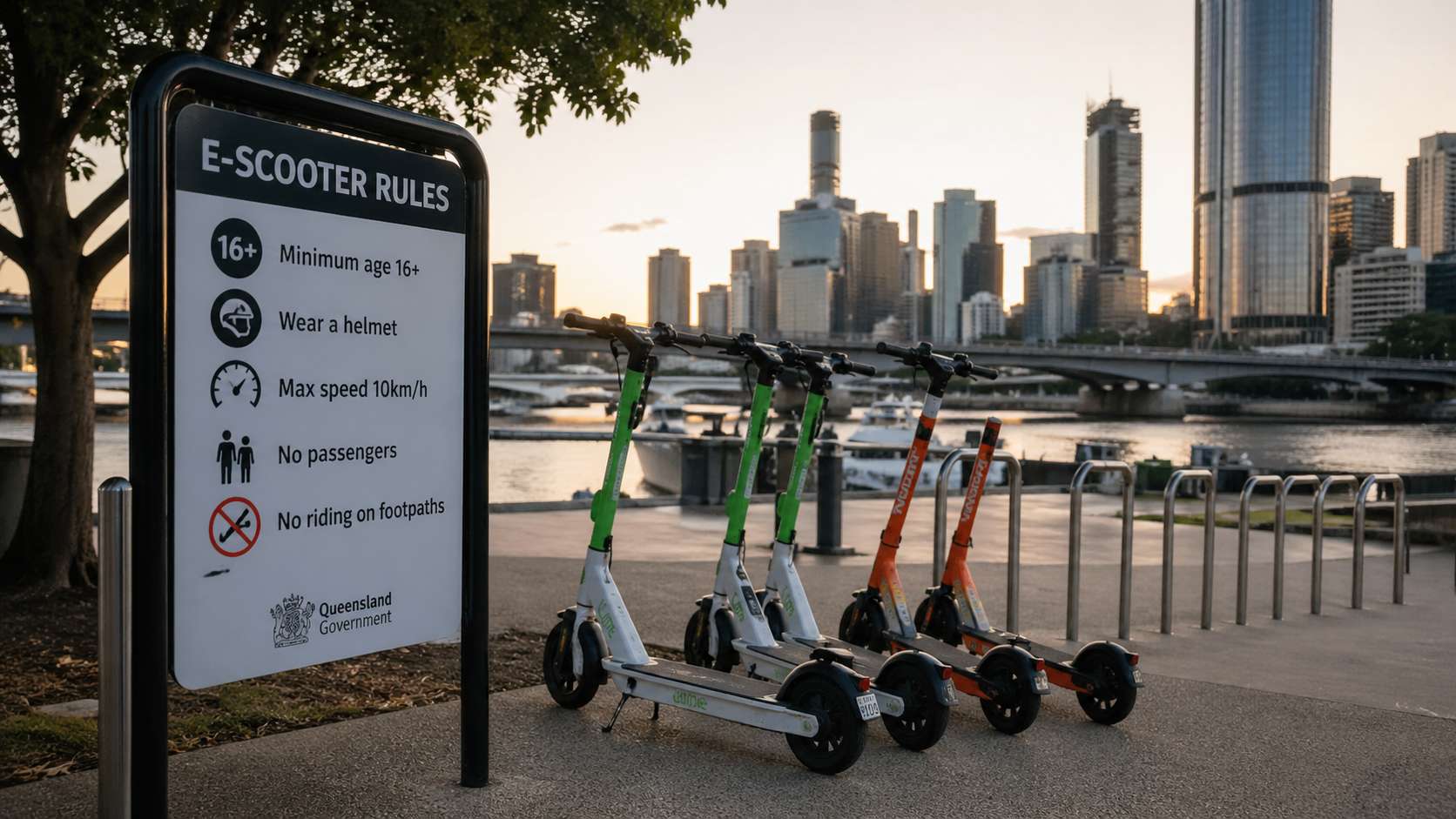
The Transport and Other Legislation Amendment Bill 2026 would change how Queensland handles e-scooters, e-bikes, and other personal mobility devices. The bill would set a minimum rider age of 16. Riders would also need a valid driver licence of any type or class.
That licence rule is the biggest change for rental scooters. At present, many casual riders can unlock a scooter through an app after accepting safety rules. Under the new plan, rental firms would need to check licence eligibility too.
Then there is the speed limit change. The bill would set a 10km/h limit for e-mobility devices on footpaths and shared paths. It would also bring tougher penalties for unsafe conduct. That includes speeding, carrying passengers, riding without a helmet, drink riding, and careless riding.
Police would get stronger powers as well. The bill targets illegal high-powered devices, including e-bikes and scooter-style vehicles that do not meet legal limits. So, the proposal covers both everyday rental scooters and more dangerous private devices.
Why rental e-scooter companies expect a sharp drop
Rental scooter trips depend on quick access. A rider opens the app, scans the scooter, confirms the rules, and starts the trip. That simple process makes shared scooters useful for short urban travel.
The proposed licence check adds friction. Some riders would need extra verification. Others would lose access completely. Tourists, students, younger workers, and people without a driver licence would feel that change first.
Neuron told the Queensland inquiry that rental scooter use could drop by up to 50 per cent. That figure matters because rental scooters work best at scale. If ridership falls hard, operators may reduce fleet sizes or leave some areas. Then riders who still qualify may find fewer scooters on the street.
Lime has pointed to tourism as a major concern. Visitors often use rental scooters for short trips between hotels, restaurants, beaches, event spaces, and public transport stops. Many overseas visitors do not hold a local driver licence. Some do not hold any driver licence at all. So, the rule could cut access for a group that often relies on quick rental transport.
Safety remains the main reason behind the bill
Queensland’s safety concerns are real. E-scooter and e-bike injuries have placed more pressure on emergency departments. Officials have also raised concerns about illegal high-powered devices that can travel faster than legal personal mobility devices.
The government wants clearer rules, stronger enforcement, and safer rider behaviour. That goal makes sense. Helmets, speed limits, age limits, and drink-riding penalties all target risks that riders and pedestrians see every day.
Still, the hard question is how the law should separate managed rental scooters from illegal private machines. Rental fleets usually include app controls, speed caps, geofencing, parking zones, rider education screens, and trip data. Private illegal devices may not include any of those controls.
That difference sits at the heart of the debate. Rental firms argue that broad restrictions could punish managed services and still miss some of the worst behaviour on illegal devices.
The 10km/h path speed limit has split opinion
The proposed 10km/h speed limit on footpaths and shared paths aims to protect pedestrians. Slower scooters reduce crash force, and they give riders more time to react.
Yet some transport experts fear the rule may create a new problem. If riders feel too slow on shared paths, they may move onto roads more often. That could place them beside cars, buses, trucks, and delivery vans.
This concern matters most in areas without protected bike lanes. Many Queensland streets still lack safe space for small electric vehicles. So, a lower path speed limit may help pedestrians in some places but expose riders to traffic risk in others.
A better system would need clear local planning. Busy footpaths, quiet shared paths, bike lanes, school zones, nightlife precincts, and tourist areas do not all need the same treatment. Still, the bill points toward a simple statewide rule.
Tourists, commuters, and students face the biggest change
The licence rule would hit casual users first. A local commuter with a driver licence can pass the check and keep riding. A tourist without a licence cannot. A 16-year-old student without a learner licence cannot. A worker who never entered the driver licensing system cannot.
That shift could change how people move through cities. Rental scooters often cover the first and last part of a trip. A rider may take a train into Brisbane, then use a scooter for the final kilometre. Another rider may use one to get from a hotel to a conference venue.
For students, scooters can fill gaps between campus buildings, train stations, and rental housing. For hospitality workers, they can help with late-night travel after public transport becomes less frequent. So, reduced access would affect more than weekend leisure rides.
Parents would also face new pressure. The bill includes stronger rules around young riders, and it places more responsibility on adults when children use e-mobility devices unlawfully. That part of the plan signals a wider shift toward stricter family and household responsibility.
Illegal e-bikes and high-powered devices remain a separate problem
Many Queensland residents worry less about rental scooters and more about fast, heavy, illegal devices. Some look like e-bikes but behave more like motorbikes. Others exceed legal speed or power limits.
The bill targets this problem through a new prohibited bike framework. That would help police deal with non-compliant e-bikes, non-compliant personal mobility devices, and motorised vehicles that cannot legally operate in public spaces.
This part of the reform has strong public appeal. Illegal high-powered devices create real danger for pedestrians, legal riders, and road users. They also damage trust in e-mobility as a whole.
Still, the law needs precision. If rental scooters with built-in speed limits face the same public pressure as illegal machines, the state may reduce safer shared options without fully solving the illegal device problem.
What happens next for Queensland riders
The Queensland inquiry now has to weigh safety, access, enforcement, tourism, and city transport. The government wants new rules in place soon, so riders and rental companies face a short adjustment window.
For everyday riders, the main points are simple. The proposed Queensland e-scooter laws would raise the entry bar. They would set a minimum age of 16. They would add a licence requirement. They would lower path speeds to 10km/h. They would also give police stronger tools to deal with unsafe riding and illegal devices.
For rental companies, the stakes are higher. A 50 per cent drop in riders would change the economics of shared scooters across the state. That could mean fewer scooters, smaller operating zones, higher costs, or weaker service in some towns.
For councils, the bill creates another challenge. Local leaders want safer streets, but many also want cleaner transport, fewer short car trips, and better links to public transport. Rental scooters can support those goals when they run under strong local rules.
Queensland now needs a balanced answer. Stronger enforcement against illegal devices makes sense. Clearer rules for helmets, speed, and drink riding make sense too. Still, the licence rule could reshape rental scooter access in a way that many riders feel right away.
The final result will show whether Queensland wants to tighten e-mobility rules across the board or draw a sharper line between managed rental scooters and unsafe illegal devices.