

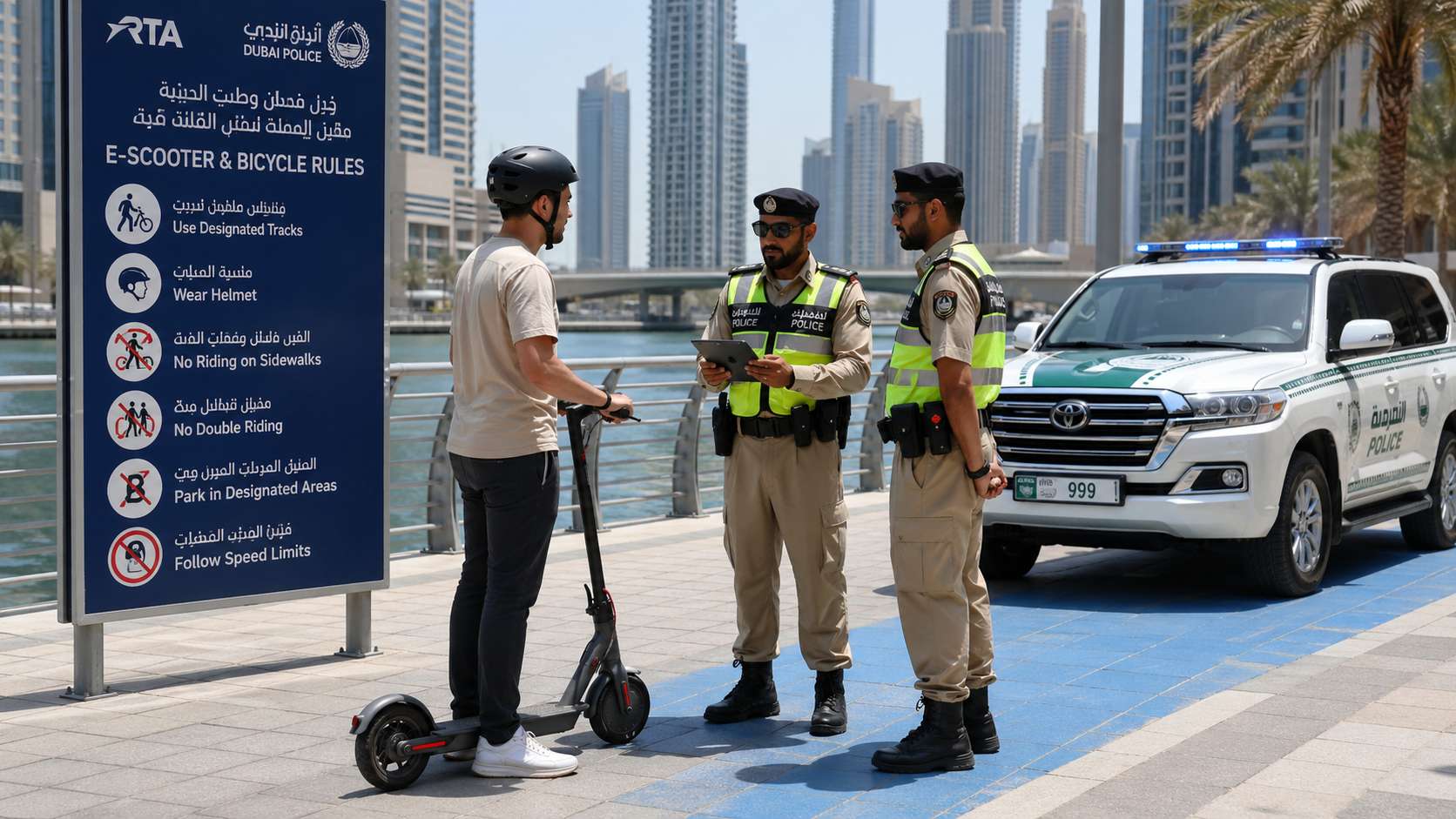
Dubai is taking a firmer line on e-scooters, bicycles, and e-bikes. From May 1, 2026, the Roads and Transport Authority and Dubai Police will run joint patrols through the new Personal Mobility Monitoring Unit.
The unit will check riders on cycling tracks, public roads, and soft mobility zones. It will focus on unsafe riding, missing safety gear, wrong-lane use, speed violations, and e-scooters that carry more than one person.
So, what does this mean for daily riders? It means Dubai e-scooter rules are moving from signs and permits into more visible street enforcement. Riders in busy areas now have a higher chance of being stopped, fined, or having a non-compliant device impounded.
Dubai’s New Patrol Unit Starts With Clear Targets
The new Personal Mobility Monitoring Unit brings RTA inspectors and Dubai Police together in one field team. Their work covers e-scooters, bicycles, and electric bikes, so the campaign reaches more than private scooter owners.
First, patrols will watch for riders who leave approved tracks. Then, they will check for helmets and protective gear. After that, they will look at unsafe riding habits, speed limits, and devices that do not meet the rules.
At the same time, the patrols will deal with careless parking. A scooter left across a walkway can block parents with strollers, delivery workers, wheelchair users, and older pedestrians. For that reason, parking rules matter just as much as riding rules.
Riders who break the rules can face fines. In some cases, authorities can impound the device through the approved process.
Areas Covered by RTA and Dubai Police Patrols
Dubai has named several high-traffic places where the patrols will operate. These include Jumeirah Beach Track, Mohammed bin Rashid Boulevard, Dubai Water Canal, Business Bay, and Dubai Marina.
The unit will cover older and busier neighbourhoods too. Al Mankhool, Al Karama, Al Hamriya, Al Raffa, and Al Muraqqabat are part of the announced focus areas.
This matters for residents and visitors. A short ride near a Metro station, beach path, cafe, hotel, or office tower still falls under the same rule set. So, riders should not treat low-speed trips as risk-free.
Tourist zones need extra care. Dubai Marina and the Water Canal often mix pedestrians, rental riders, joggers, families, and cyclists in the same space. A slow and predictable ride will reduce risk fast.
Key Dubai E-Scooter Rules Riders Need to Follow
Dubai’s rules for personal mobility devices are clear in day-to-day use. Riders need to stay on approved routes. They need to follow signs. They need to wear a helmet. They need to use a safe device with working brakes and lights.
E-scooter riders should ride alone. Carrying a passenger on one scooter creates poor balance and raises crash risk. Plus, it gives patrols a simple reason to stop the rider.
Speed control matters too. Some areas feel open, but they still have posted limits. Slow down near pedestrians, crossings, corners, shops, and station exits.
Riders should keep both hands free and avoid phone use during a trip. A small distraction can turn into a crash fast, mainly on shared paths.
Device condition matters as well. Weak brakes, loose handlebars, poor tyres, and bad lights can make a scooter unsafe. Before any upgrade or repair, riders should know the difference between safe changes and risky hacks. This guide on safe electric scooter mods vs dangerous hacks explains the kinds of changes that make sense and the ones riders should skip.
RTA E-Scooter Permit Rules Still Matter
Many riders search for terms like RTA e-scooter permit, Dubai scooter licence, electric scooter permit Dubai, and Dubai e-scooter fines. Those searches make sense, as permits remain a key part of the system.
Dubai requires an RTA permit for certain e-scooter use, based on the official rules. Riders should check the current RTA requirements before using a private scooter. Rental apps often guide users through basic safety steps, but the rider still has to follow the rules on the street.
A valid permit does not give anyone permission to ride anywhere. It only supports legal use where riding is allowed. The route, speed, parking spot, and rider behaviour still matter.
For tourists, this point is easy to miss. A rental scooter may look simple, but Dubai treats it as a regulated mobility device. So, visitors should read the app rules and local signs before starting a ride.
What Can Get a Scooter Rider Fined?
The most common problems are easy to avoid. Riding outside designated tracks can lead to enforcement action. Riding without a helmet can do the same. Speeding, reckless movement near pedestrians, and carrying a passenger can create trouble too.
Wrong parking can bring penalties as well. A scooter should not block pavements, ramps, building entrances, crossings, or access points. It should sit in a marked area where possible.
At the same time, riders should avoid road sections that do not allow e-scooters. Dubai has fast traffic in many areas, and a small scooter offers little protection. The safest route is almost always the approved route.
For delivery riders, the rules carry extra weight. More time on the road means more chances for patrol checks. A helmet, working lights, proper lane use, and careful speed can help avoid fines and reduce crash risk.
Why Dubai Is Tightening E-Scooter Enforcement
Dubai supports short-distance transport, but the city wants safer streets and paths. E-scooters and bikes help people cover last-mile trips. They connect homes, Metro stations, offices, shops, and beaches. But they can cause real problems when riders ignore basic rules.
The new patrols send a simple message. Dubai still accepts personal mobility devices, but riders must treat them like real transport.
That means no weaving through crowds. No fast riding near families. No passenger trips on one scooter. No blocked pavements. No poor repairs that make the device unsafe.
This approach should help pedestrians too. People walking near beach tracks, canals, and business areas need clear space and predictable rider behaviour. Calm riding keeps shared areas usable for everyone.
What Residents and Visitors Should Do Before Riding
Before a ride, check the scooter. Look at the brakes, tyres, lights, handlebar, throttle, and battery. Then check your route. Use approved tracks and avoid guessing near main roads.
Next, wear a helmet. Add reflective gear at night, mainly in busy areas or low-light streets. Keep your speed low near people, parked cars, junctions, and building exits.
After the trip, park with care. Leave enough room for people to pass. Do not block ramps or doorways. A good ride can still end with a violation if the scooter blocks public space.
Residents should keep up with RTA updates. Visitors should treat local signs as the main guide. Rental users should read the app rules before unlocking a scooter.
Dubai E-Scooter Rules 2026 Bring More Visible Enforcement
The launch of joint RTA and Dubai Police patrols marks a tougher phase for Dubai e-scooter rules in 2026. From May 1, riders will see more checks in popular areas, residential districts, and shared mobility zones.
The core rules are not hard to follow. Use approved tracks. Wear a helmet. Ride alone. Keep speed under control. Park properly. Keep the scooter safe and roadworthy.
For commuters, tourists, and delivery riders, the message is clear. Dubai still wants cleaner and easier short trips, but unsafe riding now carries a higher risk of fines and impoundment.