

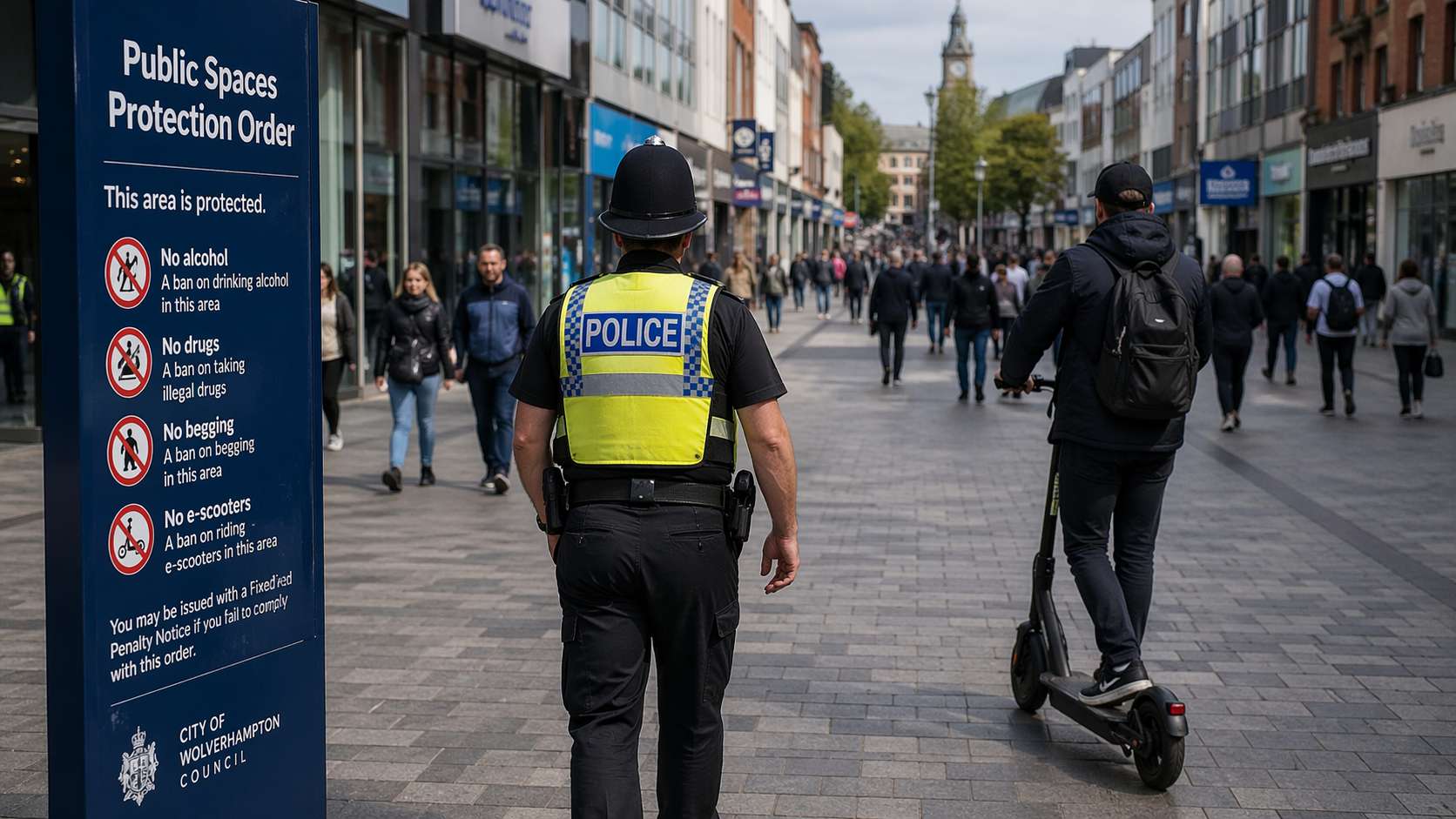
Wolverhampton has approved a tougher city centre Public Spaces Protection Order after rising concern over anti-social behaviour, unsafe e-scooter use, aggressive begging, street drinking, drug use, and public nuisance. The new order gives council officers and police extra powers in busy public areas, so they can act faster when behaviour affects shoppers, workers, visitors, and local businesses.
The decision matters for anyone who travels through the city centre. It affects people who use e-bikes, people who ride e-scooters, groups drinking in public, and anyone causing fear or distress in key pedestrian areas. It also sends a clear message: Wolverhampton wants its city centre to feel safer, cleaner, and easier to use.
The new rules sit under a three-year Public Spaces Protection Order, often called a PSPO. These orders let councils set local restrictions in places where repeated behaviour harms public life. In Wolverhampton’s case, the focus falls on the city centre and surrounding busy routes.
What the New Wolverhampton PSPO Covers
The new PSPO targets several types of behaviour. That includes aggressive begging, unsafe riding on e-scooters and e-bikes, public drinking linked to nuisance, drug use, loitering, loud music, and public urination or defecation.
For most residents, the practical result is simple. People should expect stronger enforcement in the city centre. Officers can ask someone to stop certain behaviour, leave the area, or face a Fixed Penalty Notice.
The order does not mean every person in the city centre will face extra checks. Instead, it gives officers a tool for repeat problems. For example, a person walking through town with a lawful e-bike should not be the main target. A rider weaving through pedestrians at speed creates a different risk.
This distinction matters. Wolverhampton wants to control behaviour that causes harm, fear, or disruption. The order gives the city a clearer way to deal with those problems before they grow.
Why E-Scooters Are Part of the Ban
E-scooters remain a confusing topic across the UK. Many people see them in shops and online, then assume they can ride them through town. In most public places, private e-scooters are still not legal for normal road or pavement use.
That rule catches many riders out. A private e-scooter can usually only be used on private land with the landowner’s permission. Legal rental trials work only in approved areas and under set rules.
Wolverhampton’s new city centre restrictions add another local layer. They target anti-social and unsafe use in crowded places. That matters near shops, bus stops, taxi ranks, railway links, and matchday routes.
Pedestrians face real risk from fast riders on narrow pavements. Older people, children, wheelchair users, and people with visual impairments can feel exposed when riders move too close. So, the order aims to make public space calmer and more predictable.
This is not only a Wolverhampton issue. Cities across the UK and abroad keep changing rules for e-bikes and e-scooters as rider numbers grow. For a wider look at how rule changes can affect riders, see this guide on Queensland e-bike and e-scooter laws from July 1.
Aggressive Begging and City Centre Safety
The PSPO also covers aggressive begging. This part of the order needs careful handling. Some people who beg may face homelessness, addiction, poor mental health, debt, or family breakdown. Enforcement alone will not fix those issues.
Still, aggressive begging creates a different problem from quiet requests for help. It can involve following people, blocking paths, standing close to cash machines, targeting shop entrances, or putting pressure on vulnerable passers-by.
For shoppers and workers, that behaviour can feel intimidating. For businesses, it can keep customers away from doorways and high street areas. So, Wolverhampton’s order gives officers a way to act when begging becomes threatening or persistent.
Support services still have a role. The strongest response pairs enforcement with outreach, housing advice, addiction support, and mental health help. Without that support, the same people often return to the same streets.
Street Drinking, Drug Use, and Public Nuisance
Street drinking appears in many city centre PSPOs. The issue is not always the drink itself. The problem starts when alcohol use leads to shouting, harassment, blocked doorways, litter, damage, or fear.
Drug use brings other risks. It can leave needles, waste, and visible dealing or use near public routes. Then families, commuters, and shop staff have to deal with the impact.
Public urination and defecation create another problem. They make the city centre feel neglected. They also create cleaning costs and health concerns.
Loud music and loitering can be harder to define, so fair enforcement matters. Officers need to focus on behaviour that causes clear nuisance or distress. The order should not punish people simply for being present in public space.
What Riders Should Do Now
E-scooter riders should treat Wolverhampton city centre as a high-risk enforcement area. If the scooter is private, do not ride it on public roads or pavements. That advice applies before any local PSPO action comes into play.
E-bike users should ride legally and safely. That means using roads and cycle routes where allowed, slowing down near pedestrians, and avoiding pedestrian-only areas where riding is not permitted.
Food delivery riders should pay close attention. Many city centres now face complaints about fast riding near shoppers. A delivery deadline does not excuse dangerous riding.
Rental schemes work differently. Where a legal trial exists, riders must follow the trial rules. Leeds, for example, has taken a formal trial route after years without a legal shared e-scooter scheme. You can read more about that in this update on how Leeds launched a legal e-scooter trial after five years.
What the Ban Means for Shoppers and Businesses
For shoppers, the PSPO should make the city centre easier to move through. Pavements should feel less crowded by unsafe riders. Doorways should remain clearer. Public spaces should feel less tense.
For local businesses, the order may help protect footfall. People are more likely to visit shops, cafes, restaurants, and services when streets feel safe. A cleaner and calmer city centre can support trade, especially during weekends, evenings, and matchdays.
At the same time, businesses should not expect instant change. PSPOs work through steady enforcement. Officers need to be visible, consistent, and fair. The public also needs to understand what behaviour crosses the line.
Clear signs can help. So can public updates from the council and police. When people know the rules, fewer people break them by mistake.
Fixed Penalty Notices and 24-Hour Exclusion Powers
People who breach the Wolverhampton PSPO can face enforcement action. That can include a Fixed Penalty Notice. In some cases, officers can also require a person to leave the city centre area for a set period.
A 24-hour exclusion can help stop repeat disruption on the same day. For example, it can deal with someone who keeps returning to harass shoppers, ride dangerously, drink in a nuisance group, or ignore officer instructions.
This power must be used with care. A fair system should focus on behaviour, not appearance or personal hardship. It should also record decisions clearly, so the public can trust the process.
The goal should be safer streets, not punishment for its own sake. Good enforcement changes behaviour. Poor enforcement only moves the problem to the next street.
Why the City Centre Needed a Stronger Order
Wolverhampton has already used PSPO powers in the city centre. The new order expands the local response and gives officers more ways to deal with common complaints.
City centres have changed in recent years. More people use e-bikes and e-scooters. Delivery work has grown. Some high streets face more visible hardship. Public services remain under pressure. At the same time, residents and businesses expect clean, safe, welcoming spaces.
That mix creates tension. A PSPO gives the council one way to manage it. It cannot solve every social problem, but it can reduce the worst behaviour in busy public areas.
The order also reflects a wider trend. More councils now use local powers to manage e-scooter riding, street drinking, begging, and nuisance behaviour. The challenge is balance. A city needs rules, but it also needs support routes for people in crisis.
A Clearer Message for Wolverhampton City Centre
The new Wolverhampton city centre ban gives police and council officers stronger powers against unsafe e-scooter riding, anti-social e-bike use, aggressive begging, public drinking, drug use, and nuisance behaviour.
For the public, the message is direct. Ride legally. Keep pavements safe. Do not block shop entrances. Do not intimidate people. Do not use public spaces in ways that make others feel unsafe.
For the council, the harder work starts after approval. The order needs fair enforcement, clear signs, public updates, and strong links to support services. If Wolverhampton gets that balance right, the city centre can become safer without losing compassion.
The PSPO will not fix every issue overnight. But it gives the city a stronger legal tool. Used well, it can help Wolverhampton create a cleaner, safer, and more comfortable centre for residents, visitors, workers, and businesses.