
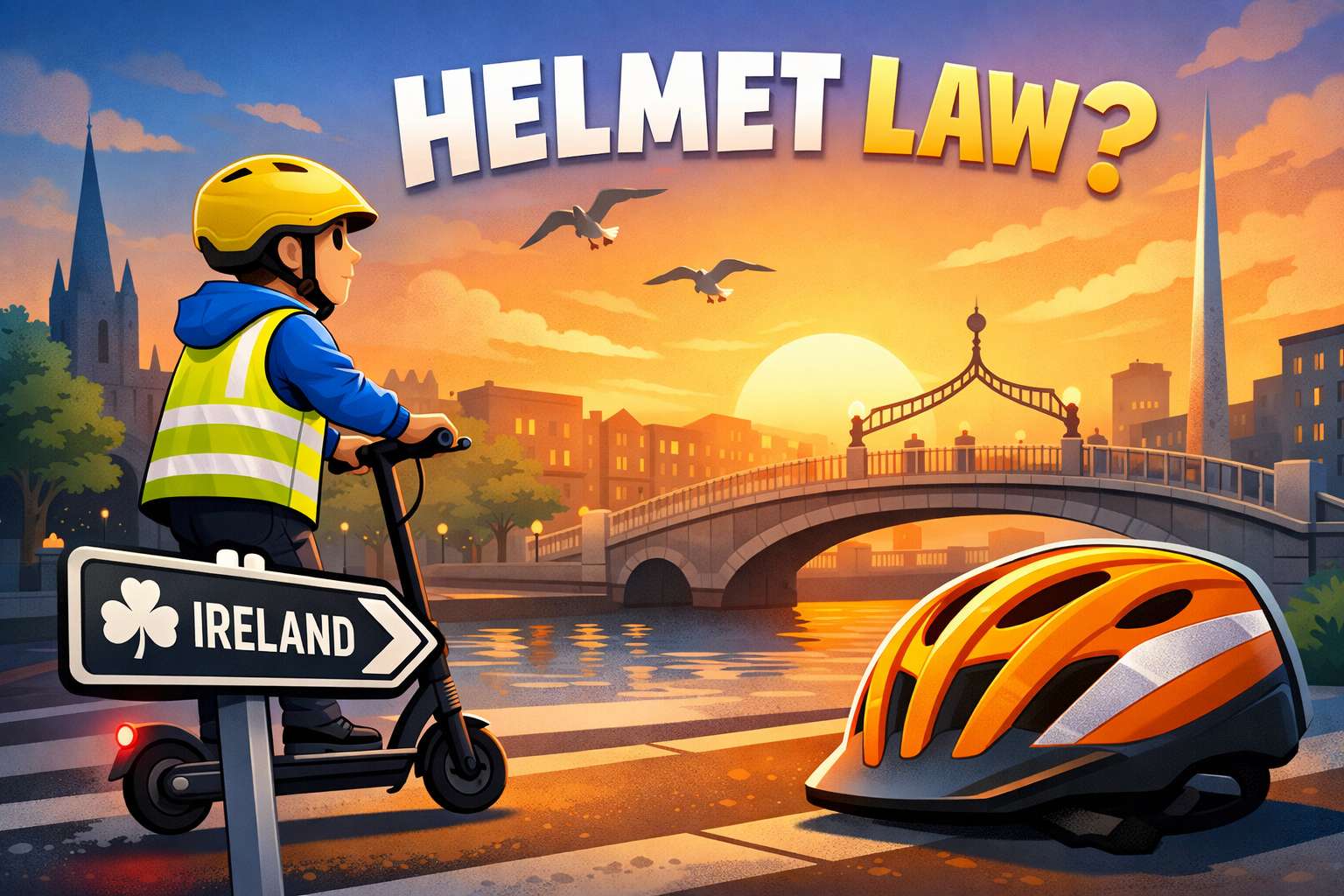
Ireland is talking about a new rule for e-scooter riders. This time, the focus is simple. A helmet requirement may become law. High-visibility clothing may follow in some form too. So the big goal is fewer serious injuries, and fewer tragedies on the road.
This is not a debate about banning e-scooters. Instead, it is a push to make everyday riding safer. E-scooters now show up in commutes, short errands, and quick trips across town. Then reality kicks in. More riders means more crashes, and more head injuries.
What Ireland already requires for e-scooters
Ireland already has clear rules for legal e-scooter use on public roads. So it helps to start there.
- Riders must be at least 16 years old.
- E-scooters must stick to a 20 km/h top speed limit.
- Riders must not carry passengers.
- Riders must not ride on footpaths.
Riders get strong safety advice too. For example, many safety campaigns push helmet use and high-vis clothing, especially in low light. Still, advice is not the same as law. So that gap is what the current review aims to close.
Why helmets jumped to the top of the list
Doctors and road safety voices keep pointing to the same pattern. Head injuries can be severe, and they can change a life in minutes. So helmets end up at the centre of the conversation.
There is another hard point too. Some children ride e-scooters on public roads, even though the minimum age is 16. Then crashes happen, and hospitals see the outcomes up close. In fact, many of the worst cases involve the head and face.
A helmet rule will not stop every crash. Yet it can soften the blow in many common falls, curb strikes, and sudden slides on wet surfaces. So it is one of the quickest changes lawmakers can make.
What “compulsory helmets” can look like in real life
A helmet rule sounds straightforward. Then the details arrive, and they matter.
Lawmakers need to define who must comply. Next, they need to define what counts as a compliant helmet. Then enforcement needs a clear plan that works on the street, not just on paper.
A practical rule set often includes:
- Helmets required for all riders on public roads.
- A clear helmet standard, such as a recognised cycle helmet certification.
- A fine that matches other road safety penalties.
- Simple guidance for retailers, so buyers hear the rule at purchase time.
There is one more detail that keeps coming up. Private property use often sits outside road rules. So most enforcement focuses on public roads and public places first.
Will a helmet law reduce injuries
Yes, for many crash types it can. E-scooter incidents often involve a quick loss of balance. Then the rider hits the ground fast. So head impact becomes a key injury point.
Still, helmets are not a magic fix. Speeding can raise harm. Footpath riding can put pedestrians at risk. Carrying a passenger can make the scooter unstable. Underage riding can lead to poor choices. So enforcement and public education still play a big role.
High-visibility clothing is part of the same safety push
High-vis rules show up in the same talks for a reason. E-scooters are small, and drivers can miss them in traffic. Then dusk hits, or rain starts, and visibility drops.
Reflective details and bright clothing help drivers spot riders earlier. So a future rule may focus on night riding, winter months, or poor visibility conditions. That kind of scope is common. It starts narrow, and it can expand later if needed.
What riders can do right now
What should riders do right now. Wear a helmet on every ride, and treat it like a seatbelt.
Then add a few habits that make a big difference:
- Use lights front and rear, and check them before you leave.
- Wear reflective details at night.
- Ride at a speed that fits the surface and traffic.
- Stay off footpaths, and keep clear of crowded shared paths.
- Do not carry passengers.
- Check tyre pressure and brakes every week.
These steps match the direction Ireland is heading. Plus they cut risk today, not months from now.
What to watch for in 2026
The Government plans to review the helmet proposal in early 2026. Then, if it backs the change, the next steps should include updated regulations, public messaging, and a start date for enforcement.
So keep an eye on the fine print. Helmet standards matter. High-vis scope matters. Enforcement plans matter. Those details decide how the rule feels in daily life.