

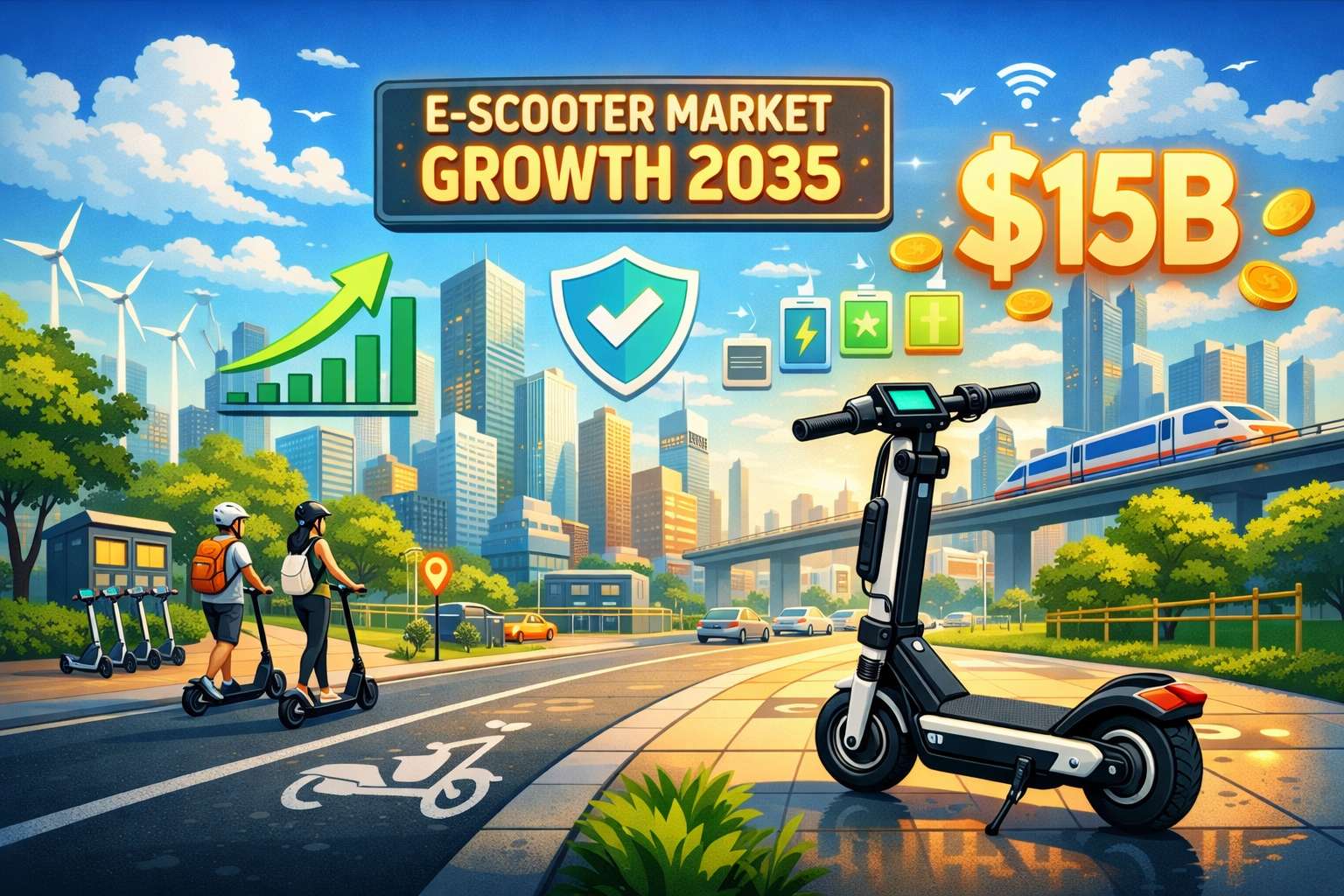
The compact e-scooter market is getting more attention in 2026, and the reason is simple. Forecasts now point to a much larger market by 2035. In your draft, the headline target is USD 15 billion, and that number is driving a lot of search traffic.
So, is that target realistic? Yes, it can be. But one point matters from the start. No single public authority publishes one global, final number for this segment in 2035. Private reports use different definitions, different regions, and different model ranges. So the growth direction looks clear, yet one exact figure stays hard to lock across all sources. I cannot confirm one universal market total for 2035 today.
Still, the growth case is strong. Compact scooters fit city life, and city life is getting denser. People need short daily transport, quick storage, and low running cost. Compact models match that use case well, and that fit keeps demand alive in many markets.
Why this market keeps moving up
First, compact scooters solve real daily problems. Riders can fold them, carry them, and park them in tight spaces. So they work for apartment users, office commuters, and mixed-mode travelers who combine scooter rides with bus or train trips.
Then, battery pricing has improved from recent levels in the wider EV chain. That shift can lower product costs, and it can improve margins for reliable brands. At the same time, better battery management systems keep getting more common, and that helps with thermal control and service life.
And city behavior keeps helping this category. Short urban trips are frequent, traffic is heavy, and parking costs remain high in many areas. So a compact electric scooter often becomes the cheapest practical option for routine movement across town.
Why forecasts differ, and why that is normal
Forecast variation is not a red flag by itself. It is common in fast-moving sectors. One report may count only compact and foldable personal models. Another may include broader electric scooter classes, rental fleets, or regional categories with very different pricing.
So readers should treat headline numbers as directional indicators, not exact guarantees. The market can still grow fast, even when two reports disagree on the final 2035 value. What matters most is trend quality: adoption rate, policy stability, battery safety progress, and after-sales performance.
And your article can keep that balanced tone. You can state the bullish case, and you can still stay honest about uncertainty.
Regulation now shapes demand city by city
Rules are now one of the top growth filters. Some cities welcome shared fleets with strict parking controls. Others limit permits or tighten speed frameworks. So brand strategy cannot rely on one global playbook.
The UK is a good example. Public-road access has leaned on trial structures in many zones, and policy review continues. If your readers track UK updates, this guide gives useful context: mobility scooter rules in the UK for 2026.
At the same time, battery compliance rules are getting stricter in Europe and beyond. So product teams now need better documentation, traceability, and labeling discipline. In practice, that favors brands with mature quality systems and strong supplier control.
Safety is now a growth factor, not a side topic
Safety stories now shape buyer trust fast. One fire incident can spread across social media in hours. Then local regulators react, and then fleet expansion plans can slow.
So battery certification, charger quality, and thermal safeguards are no longer optional talking points. They are core purchase criteria. And riders are learning to ask better questions before checkout. They ask about certification marks, service center access, replacement parts, warranty terms, and real-world range in mixed traffic.
That shift is good for the market long term. Weak products lose share. Strong products earn repeat buyers.
What users search right now before buying
Search intent in this category has matured. People still search for speed and range, yet trust terms are rising. Common intent clusters include:
- best compact e-scooter for commuting
- foldable electric scooter for adults
- lightweight scooter with long battery life
- safe electric scooter battery certification
- electric scooter legal speed by country
- electric scooter rain rating and water protection
- scooter warranty and spare parts availability
So your SEO structure should match these real questions. And your content should answer them in plain language with clear examples.
What brands need to do from 2026 to 2035
Brands that win this cycle will focus on reliability first. Then they will improve service speed, and then they will keep policy teams close to product teams.
A strong playbook looks like this:
- publish transparent real-world range tests
- document battery origin and certification status
- keep spare parts in local stock for fast repairs
- train service partners with clear diagnostic flows
- adapt firmware and safety settings to local rules
And customer support matters more than many teams expect. Riders remember bad service longer than they remember top speed claims. So response time, part availability, and warranty clarity can decide brand loyalty.
Final outlook
The USD 15 billion headline can happen, and the path is visible. Yet the market will not grow on hype alone. It will grow through trust, safety, and policy-fit execution in real cities.
So the best content angle is simple. Keep the growth optimism. Keep the risk context. Keep the buyer-first detail. That mix reads as credible, ranks better, and converts better.