

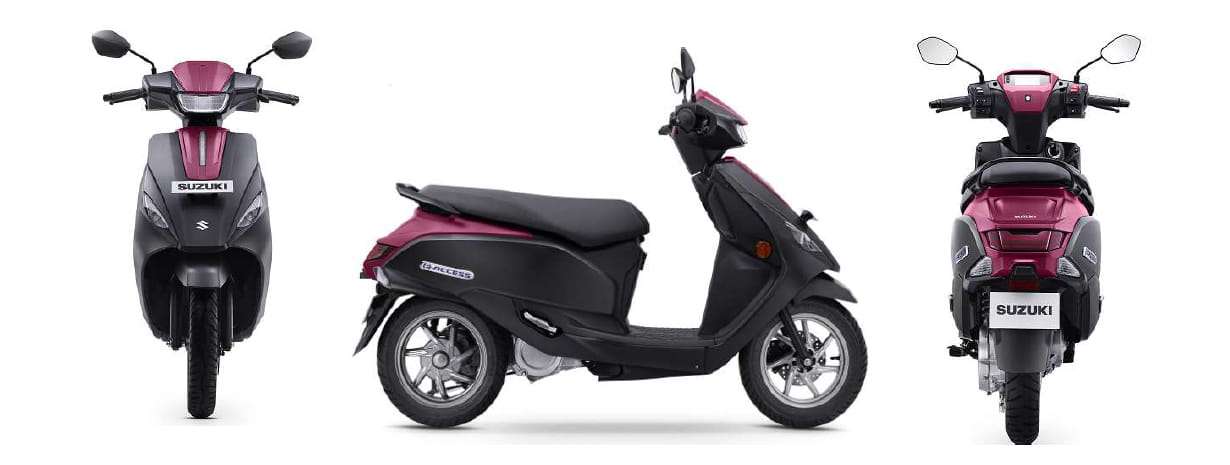
Suzuki has entered the Indian electric scooter race with the e-Access, and the first full month now gives us a clean baseline. In January 2026, Suzuki dispatched 703 e-Access scooters to dealers. Then, 201 units reached customers through registrations in the same month. So the launch is real, but retail pickup is still in its opening phase.
Then February added more context. By February 14, total customer deliveries reached 370 units, which means 169 extra units were retailed in the first half of February after the January 201 count. That movement matters, since it shows buyers are still entering the funnel after the first launch wave.
What the Dispatch vs Retail Gap Tells Us
First, the gap between wholesale dispatch and retail registration is common in auto launches. Dealers need display stock, test ride stock, and state-level allocation time. Still, a wide early gap usually pushes one question to the top. Are price and value aligned for mainstream buyers right now.
Now look at price positioning. The e-Access sits at Rs 1,88,490 ex-showroom Delhi, and that places it in a premium slot for an urban commuter scooter. So shoppers compare it fast against TVS iQube and Bajaj Chetak, not just on range but on total ownership math and monthly EMI comfort.
Specs Buyers Keep Searching For
Search demand around this model keeps circling the same set of terms. e-Access price in India, e-Access range, e-Access charging time, LFP battery life, Suzuki electric scooter warranty, and Suzuki e-Access on-road price Delhi.
Now for the hard numbers buyers ask first. The e-Access uses an LFP battery, 3.072 kWh capacity, with a claimed range of 95 km under AIS 040. Motor output is 4.1 kW and peak torque is 15 Nm. Portable charging from 0 to 80 percent is listed at 4 hours 30 minutes. Fast charging from 0 to 80 percent is listed at 1 hour 12 minutes.
At the same time, Suzuki is pushing long-life and reliability language around the battery pack and frame-integrated battery case. The company states that LFP chemistry supports longer cycle life, and it keeps highlighting thermal and safety testing in its product communication. That message is aimed at first-time EV buyers who worry about battery aging more than top speed.
Warranty, Buyback, and Finance. The Real Purchase Triggers
Price opens the discussion, but ownership terms close the deal. Suzuki is offering extended warranty coverage up to 7 years or 80,000 km. Then it adds buyback assurance in two slabs. Up to 60 percent value on a 36-month plan, and up to 50 percent on a 48-month plan, based on ex-showroom value terms in the program note.
So the brand is trying to reduce resale fear and long-term battery anxiety at the same time. For many buyers, this part can matter more than a small range difference on paper. EMI and exit value often decide the final booking in this segment.
Dealer Network and Charging Reach
Now comes another core buyer concern. Service and charging access. Suzuki says the e-Access rides on a 1,200+ outlet network, with DC chargers active at 240+ outlets and expansion planned in phases. This reach can reduce hesitation in tier 2 and tier 3 cities where public charging confidence still grows city by city.
Then there is the portable charger angle. Home charging remains the daily pattern for most electric scooter users in India. So a strong service footprint plus home charging convenience can carry more weight than headline spec wars in day to day ownership.
How This Fits Suzuki’s Bigger January Story
The e-Access launch came in a month where Suzuki posted strong overall two-wheeler momentum. SMIPL reported total January 2026 sales of 1,25,786 units, with domestic at 1,00,296 and exports at 25,490, up 15 percent year on year in total sales. That backdrop gives Suzuki room to support a gradual EV ramp without panic moves.
Now place that inside the wider market context. SIAM reported India two-wheeler domestic sales at 19,25,603 units in January 2026, up 26.2 percent year on year. So demand is healthy at category level, and the fight is really about conversion, value perception, and showroom pull for each brand.
What to Watch in the Next 60 to 90 Days
Next, watch three metrics. Retail run rate per week, city-wise registration spread, and discount intensity through finance and exchange offers. Then watch how many test rides convert at dealer level after the first curiosity phase.
Yet there is a practical point many buyers miss. Early launch months are often a calibration window. Dealer stock settles, customer education gets better, and finance scripts improve. So March and April data will tell a clearer story than January alone.
For readers tracking this model closely, this detailed explainer is useful: Suzuki e-Access electric scooter lands in India, price, 95 km range, fast charging, and the big warranty hook
Bottom line
Suzuki’s e-Access start is mixed, not weak. Dispatches show intent. Retails show caution. Then feature depth, warranty length, buyback support, and network reach show Suzuki’s playbook clearly. The brand is not chasing a flash launch spike. It is trying to build trust, then scale.
So the next phase is simple to read. If weekly retail numbers keep climbing and dealer conversion improves, the January gap will look like a normal launch lag. If growth stays flat, price-value pressure will stay at the center of every e-Access search and every showroom conversation.