
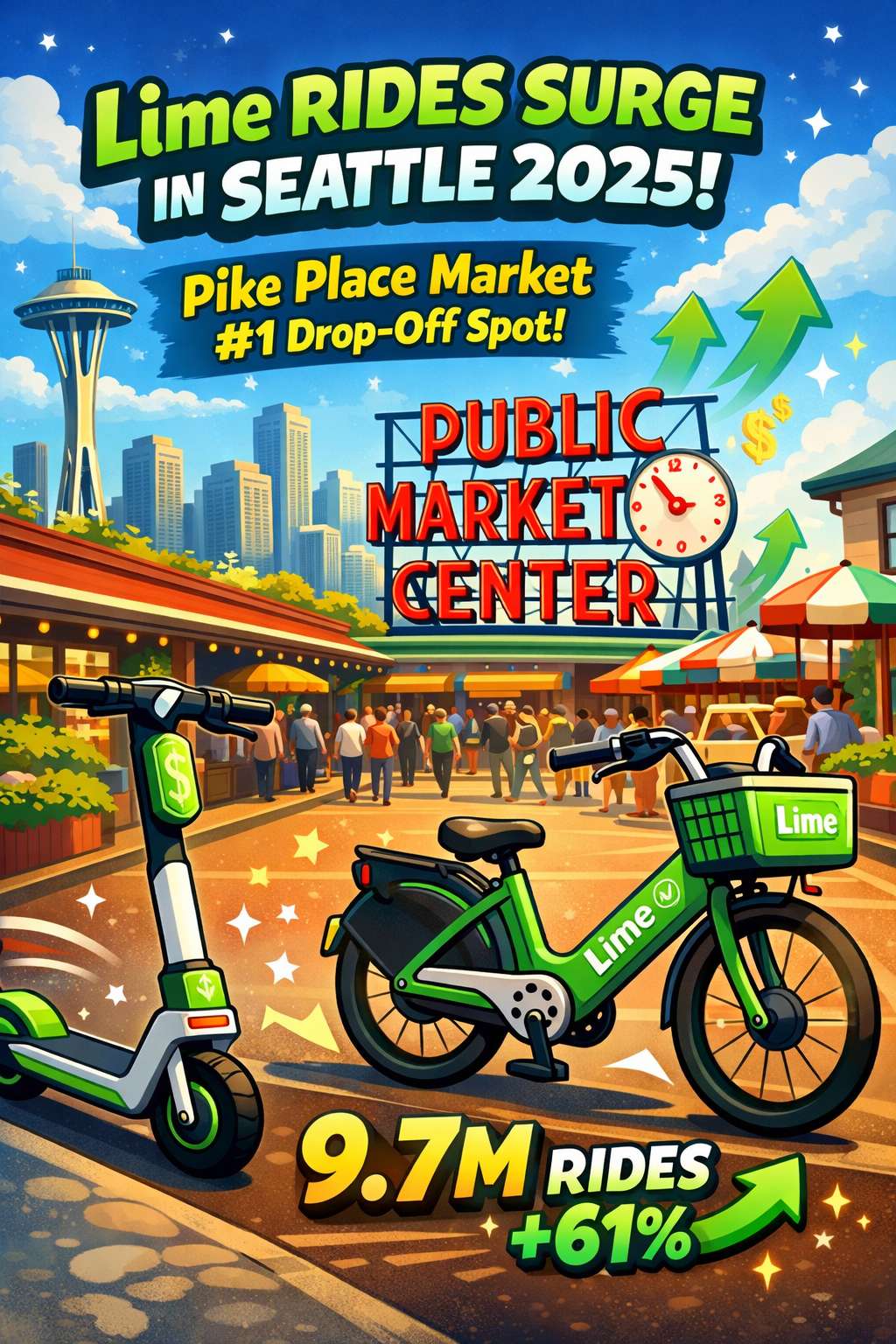
Lime rides in Seattle 2025 hit a new high. Riders took about 9.7 million trips across the city in 2025. That total marks a 61% increase from 2024, so the change feels real on the street.
The map tells an even clearer story. Downtown pulled a big share of short trips, and Pike Place Market sat right in the middle of it. Pike Place Market ranked as the No. 1 end location for Lime trips in North America in 2025. People finished more Lime rides there than at any other end point on the continent, and that is a wild detail for a single Seattle destination.
Pike Place Market turned into the default finish line
Pike Place works as a natural finish for quick rides. Hotels sit nearby, and so do offices, transit stops, and parking garages. Riders start close, then they roll a short stretch, and then they park near the edge of the crowds.
That last step matters. The streets around the Market get tight fast, so many riders stop early and walk in. It feels simple, and it saves time, and it keeps cars out of the slowest blocks. For a lot of people, that small win makes scooters and e bikes feel normal, not special.
Summer drove the biggest spikes, and then fall hit a peak day
Warm months pushed the highest totals for Lime rides in Seattle 2025. August led the year with more than 1.3 million rides. That tracks with tourism, longer days, and packed weekends. People ride to meet friends, and they ride to grab food, and they ride to connect two errands in one loop.
Then the year produced a standout day. Lime’s busiest day in Seattle landed on September 27, with just under 60,000 trips recorded. That number says more than “nice weather.” It points to habit. People saw a scooter nearby, and then they took it, and then they did it again later.
City totals back up the same trend
Seattle tracks shared micromobility across the program, and the totals have climbed year after year. City reporting showed nearly 6.3 million shared trips in 2024, up 29% from 2023 and up 69% from 2022. The longer arc looks big too. Seattle has logged 20.7 million or more total trips since 2019.
Those totals matter for daily life. Short rides can replace short car trips, so downtown traffic gets a tiny break. At the same time, more rides bring more parking pressure, so the curb becomes a bigger part of the conversation.
Parking became a bigger deal, so Seattle added more space
A higher ride count means more scooters and bikes at the end of trips. That creates friction fast, especially near busy sidewalks. So Seattle pushed for cleaner parking and clearer rules.
The city uses enforcement steps that start with warnings. Then fines rise for repeat issues. Suspension can follow for serious or repeated problems. That structure sets expectations, and it gives operators a reason to keep devices in line.
Seattle also added new places to park. The city installed about 200 new parking zones downtown between October 2025 and May 2026. Those zones hold around 2,000 bikes and scooters. That work targets the places where trips end most often, so it fits the data instead of guessing.
Digital controls help too. Operators can guide riders to approved zones, and they can block parking in trouble spots. So sidewalks stay clearer, and curb space works harder.
What this surge says about Seattle right now
The 61% jump points to a simple truth. People want a quick ride for short trips, and they want it at street level, not hidden behind a schedule. Lime rides in Seattle 2025 show that demand stayed strong across the year, not just on sunny weekends.
Pike Place Market ending as the top drop off spot adds another clue. Tourists and locals share the same downtown routes, and they keep choosing two wheels for the last mile.
If you like following micromobility news and pricing, you can also check this update on a different scooter deal here: Amazon slashes MAXSHOT kids electric scooter price for holiday gift shoppers. It sits in a different lane than Seattle commuting, yet it shows how fast the scooter space moves week to week.
So what happens next. Seattle keeps building parking where rides end, and ridership keeps rising, and the system feels less chaotic. Pike Place will stay busy either way, and that is the point. People already picked their favorite finish line.