

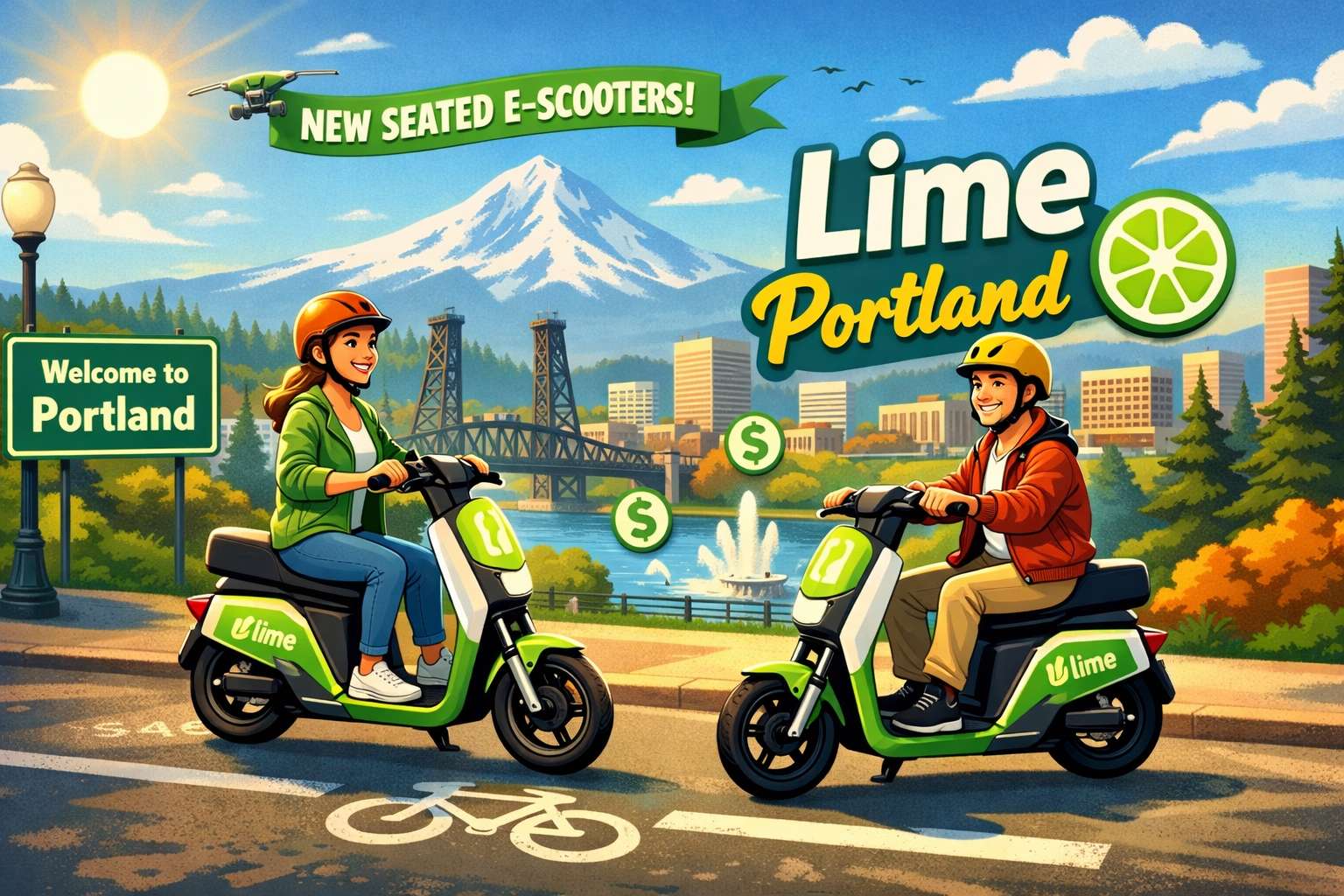
Portland is getting a fresh batch of Lime vehicles this week, and this rollout stands out from a standard fleet boost. Lime plans to add 250 seated e-scooters in Portland, so riders will soon see a new option on city streets. That matters for one simple reason. A lot of people like the idea of shared scooters, but not everyone wants to stand for the whole trip.
So, the big question is easy to understand: how much is a Lime scooter in Portland? The short answer is clear. Lime charges a base unlock fee, and then it charges by the minute. Yet the real value of this new rollout goes past price alone. Riders want to know what the seated scooters are like, who they fit best, where they can ride, and whether they make sense for daily use.
Portland already has a busy shared micromobility scene, and these new seated Lime scooters fit right into that pattern. People use shared rides for short commutes, quick errands, and first mile or last mile travel to transit. Now there is a format that may feel easier, steadier, and more comfortable for many riders.
What Lime costs in Portland
Lime’s standard pricing in Portland starts with a $1 unlock fee and then $0.35 per minute. So the total price depends on how long you ride.
A 10 minute trip costs about $4.50. A 15 minute trip costs about $6.25. A 20 minute trip costs about $8.00.
That means Lime works best for short city rides. A quick run to a coffee shop, grocery store, bus stop, or office can feel fair. But a longer ride adds up fast, so many riders will still compare it with transit, walking, or bike share.
This is why people search terms like Lime scooter price Portland, Lime scooter cost Portland, Portland scooter rental price, and how much is Lime in Portland. They want the real trip cost, not just the unlock fee. And that makes sense. The minute rate shapes the final price more than anything else on most rides.
There is good news for riders who qualify for Lime Access. Discounted pricing in Portland brings the unlock fee down to $0.50 and the minute rate down to $0.07. That changes the math in a big way. A 10 minute trip drops to about $1.20. That is a strong option for people who need low cost local travel.
And there is one more detail worth knowing. Trips that start in East Portland get an automatic discount, which helps bring shared transportation to more parts of the city.
Why seated Lime scooters matter
The seated Lime scooter gives riders a different feel from the usual stand-up model. It offers seated comfort, and that small change can make a big difference. Some people do not like balancing on a standing scooter. Others want a more relaxed ride. Then there are people carrying a small bag, heading to transit, or riding a bit farther than they want to stand.
So this new format opens the door to more riders.
The seated model feels closer to a light urban runabout than a classic rental scooter. It keeps the easy app-based rental model, but it adds a seat and storage space under the seat. That storage feature matters more than it sounds at first. A place for small personal items makes errands easier, and it makes short practical trips more realistic.
Portland’s program has room for this kind of vehicle. The city already treats shared scooters as part of everyday transport, not just a novelty. People use them to connect neighborhoods, reach bus and rail lines, and cover short trips that feel too long to walk. So a seated model fits the city well.
It may even bring in riders who skipped Lime before. Some people never liked the feel of stand-up scooters. Others worried about comfort or stability. A seated version does not solve every concern, but it gives those riders a new way in.
Who will like the new seated e-scooters
These scooters will likely appeal to a few clear groups.
First, they will attract casual riders who want a more relaxed trip. Standing for 15 or 20 minutes is not ideal for everyone. A seat changes that.
Next, they will help commuters who need a short ride to or from transit. Portland has plenty of trips where the distance is awkward on foot but easy on a shared scooter.
Then there are visitors and occasional riders. A seated scooter can feel less intimidating than a stand-up model, especially for someone who has not used shared micromobility before.
And some riders will simply prefer comfort over speed. That is a normal choice. Not every shared ride needs to feel sporty.
Rules Portland riders need to know
Portland has clear rules for shared scooters, and riders need to follow them.
Riders must be at least 18 years old. They must wear a helmet. They cannot ride on sidewalks. They should use bike lanes when possible. Only one person can ride each scooter. Shared scooters are not allowed in parks, and riders should not bring them onto public transit.
The city caps shared scooter speed at 15 mph, which helps keep trips calmer and more predictable on busy streets.
Parking rules matter too. In Portland, riders need to lock the scooter to a public bike rack or an approved city signpost at the end of the trip. They cannot leave it loose on the sidewalk, and they cannot attach it to private property. This rule helps reduce sidewalk clutter, and it makes the system work better for everyone.
If you want a fuller look at riding rules, parking habits, and street awareness, this guide on Portland e-scooter safety in 2026 adds useful local context.
Is Lime worth it in Portland?
For short city trips, yes, it can be worth it. That is the honest answer.
Lime makes the most sense for quick rides across inner neighborhoods, short trips to transit, and errands that need speed and flexibility. You unlock, ride, park correctly, and move on. That convenience is the main selling point.
But price still matters. If you ride for too long, the cost rises fast. So Lime is not the cheapest answer for every trip. It is best for short hops where time and ease matter more than the lowest possible fare.
The new seated scooters make that offer stronger. They give Portland riders more comfort, a little storage, and a setup that feels friendlier for a wider range of people. And that could help Lime win more repeat riders in the city.
Why this rollout matters now
Portland has moved past the early trial phase of shared scooters. The city now treats them as a normal part of local transportation. That means fleet changes matter more now than they did a few years ago.
So this new rollout is not just about adding 250 more devices. It is about giving riders more choice. Some people want the classic stand-up scooter. Others want a seated option that feels calmer and easier. Portland now has room for both.
And that is the real story here. Lime is not just adding more scooters. Lime is broadening the type of rider it can serve in Portland.