

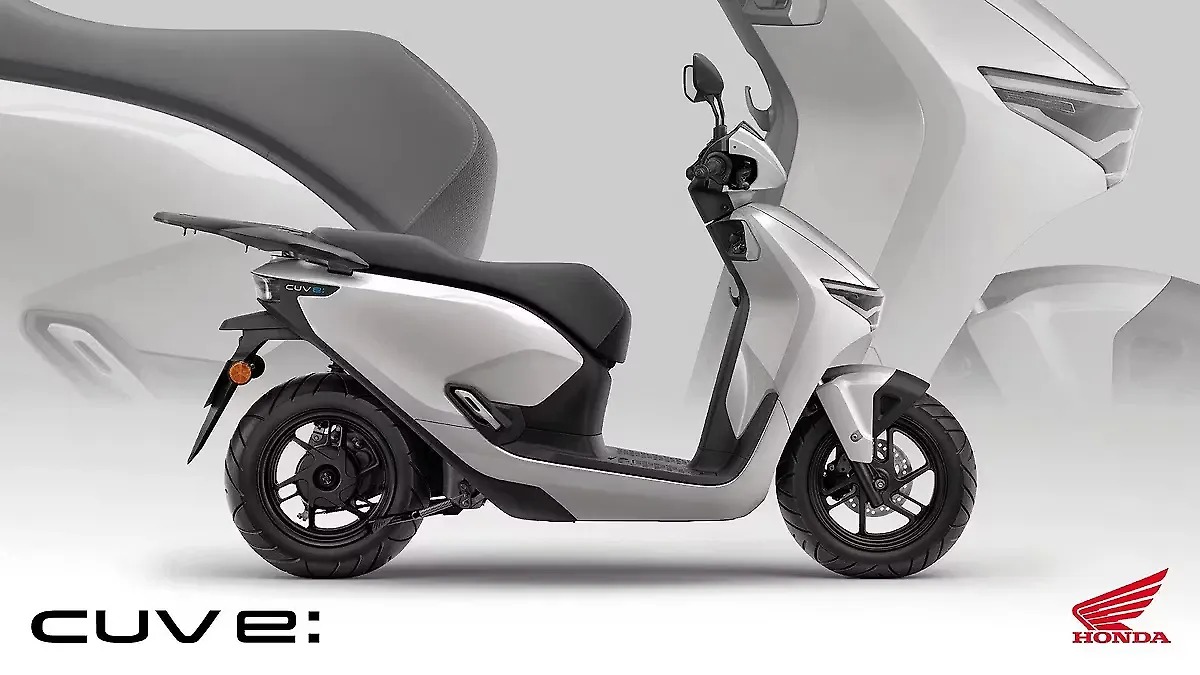
Honda’s new CUV e is no longer just a show bike with a nice press photo. It is now a real electric scooter for Europe, with official market listings, confirmed specs, and country level pricing. That matters for buyers who want facts, not teasers.
This launch feels important for Honda. The brand already stepped into the European electric scooter space with the EM1 e, but the CUV e goes further. It aims at riders who want a daily commuter with better speed, stronger range, and more real world use. It is still built for the city, but it looks far more serious than a basic short trip runabout.
Search interest around this model is easy to understand. People want to know the Honda CUV e price in Europe. They want to know the range, the charging time, the battery setup, and whether this scooter feels close to a 125cc class machine. Right now, the answer looks promising. Honda has given this model enough performance and enough practicality to make it relevant for daily riders, not just early adopters.
Honda CUV e Price in Europe
Let’s start with the part most buyers care about first. The Honda CUV e price in Europe sits in the mid range commuter bracket, not the entry level budget zone.
Across official European market pages, prices differ a bit from country to country. In the UK, the Honda CUV e Connected is listed at £3,800. In Germany, the scooter starts at €4,500 ex works, with a higher figure shown once delivery is added. In Spain, the listed price is €4,550. In France, it is €4,599. In Italy, it is €4,690.
So, the price band is already clear. This is not a cheap city toy. It is a proper Honda electric scooter aimed at people who want dependable daily transport and modern features. In the UK, the deal gets better through an EV grant offer that cuts the displayed on the road price on some official pages. That helps, and it makes the scooter more competitive for urban commuters who are comparing it with petrol scooters or other electric rivals.
What the Honda CUV e Gives You
The spec sheet is one reason this scooter is getting attention. Honda did not keep things basic here.
The CUV e uses a side mounted electric motor with peak output of 6 kW and torque of 22 Nm. Top speed is listed at 83 km/h. That is enough for city traffic and many suburban routes too. It should feel stronger than very small electric scooters that struggle once the road opens up a bit.
Range is another key point. Honda lists the CUV e at around 72 km on the European spec sheet. That number will not fit every rider in every condition, but it gives a good picture of what the scooter is meant to do. This is a machine for commuting, errands, short work trips, and regular city movement. It is not built for long weekend touring, and Honda is not pretending that it is.
That focus is a good thing. It keeps the scooter honest, and it makes the product easier to understand.
Swappable Batteries Make a Big Difference
One of the biggest selling points is the battery system. Honda uses two removable Mobile Power Pack e battery units. This setup matters a lot in daily life.
Not every rider has easy access to outdoor charging. Not every apartment building gives people a simple plug near the parking space. So removable batteries solve a real problem. You can take them inside and charge them off the scooter. For a lot of city riders, that is the detail that makes an electric scooter practical instead of annoying.
Each battery pack weighs a little over 10 kg, so they are not feather light, but they are still manageable for most adults. Honda’s charging figures put a full charge at about six hours. A partial charge from 25 percent to 75 percent takes much less time, which suits riders who top up during the day.
This battery format fits Honda’s wider EV plan too. It gives the company flexibility across markets, and it gives users a setup that feels familiar once they live with it.
It Feels More Grown Up Than the EM1 e
Honda already has the EM1 e in Europe, but the CUV e sits above it in real use. That is easy to see from the specs, and it is easy to feel in the product position too.
The EM1 e works as a light urban scooter for short trips. The CUV e aims higher. It brings more pace, more range, more tech, and more of the feel buyers expect from a mainstream commuting scooter. That difference matters for search traffic as well. A lot of users are not just looking for “Honda electric scooter Europe.” They are looking for the first Honda electric scooter that truly feels ready to replace a petrol model for day to day use.
That is where the CUV e looks strongest.
If you are curious about where Honda’s design language may head next, this look at the Honda Uc3 electric scooter gives useful context around the brand’s broader city mobility direction.
Features That Help in Daily Use
Honda has packed in enough convenience to make the CUV e feel modern without making it feel fussy.
The scooter gets three riding modes: Sport, Standard, and Econ. That gives riders a simple way to match power delivery to traffic, road type, or battery needs. Reverse assist is another smart touch. It sounds small, but it helps in tight parking spots and awkward urban corners.
The standard version gets a 5 inch TFT display. The higher Connected version gets a 7 inch screen with Honda RoadSync Duo. That setup adds route guidance, smartphone connectivity, music control, and other connected features that riders now expect from a premium commuter.
You also get full LED lighting, Smart Key access, USB C charging, under seat storage, and a front pocket for small items. These details do not grab headlines, but they matter every day. And that is exactly where this scooter has to win.
Size, Weight, and Road Manners
Honda has kept the CUV e approachable. The seat height is 760 mm, so a wide range of riders should feel comfortable on it. Kerb weight is about 119 to 120 kg, depending on trim. That keeps it manageable in traffic, in parking spaces, and at walking speed.
It rides on 12 inch wheels, with a telescopic fork up front and a single rear shock. Braking uses a front disc and a rear drum with Honda’s combined braking setup. This is not an aggressive sport package, but that is not the point. The chassis is built for city balance, easy control, and daily predictability.
That setup should suit new riders, returning riders, and commuters who want something easy to live with.
Why This Launch Matters
The real story is not just that Honda has unveiled another electric scooter. The real story is that Honda now has a stronger and more credible electric commuter in Europe with clear pricing and real retail presence.
The CUV e gives buyers more than concept talk. It gives them a scooter with usable speed, practical range, removable batteries, connected features, and the trust that comes with a major brand. It also lands at a price that shows Honda sees this as a real transport product, not a side project.
For riders who want a Honda electric scooter in Europe that feels closer to a true everyday replacement for a small petrol scooter, the CUV e looks like the brand’s best step so far.
Final verdict
Honda has taken a smart route with the CUV e. It did not chase wild numbers. It built a city scooter that looks usable, well judged, and easy to fit into normal life.
The price is not low, but the package feels complete. You get solid performance, around 72 km of claimed range, swappable batteries, and a feature list that covers the basics and then adds a few nice extras. For urban riders who want a cleaner commute from a brand they already trust, the Honda CUV e deserves real attention.