

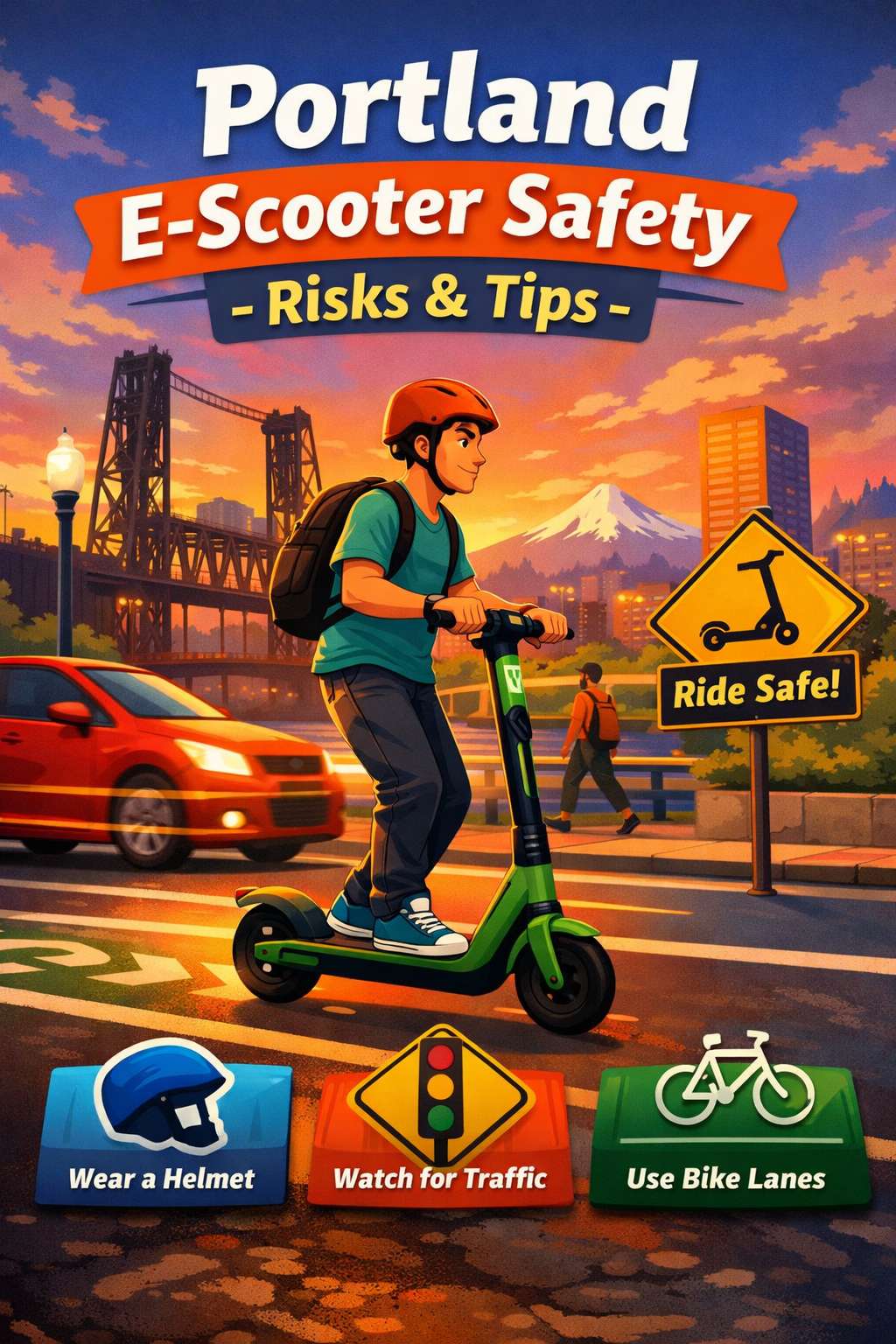
Portland did not treat e-scooters as a short trend. The city turned the pilot into a permanent program, and now shared scooters are part of daily travel for work, school, and short errands. So yes, e-scooters are in Portland, and yes, people use them a lot.
PBOT reports about 3,500 shared scooters in service through Lime and Lyft. And PBOT says riders have completed millions of trips since launch. That matters for one simple reason. High trip volume means safety conversations need real data, not guesswork.
Are e-scooters risky in Portland?
The honest answer is yes, there is risk. Still, risk does not mean every trip is dangerous. Most rides end without injury. Yet crashes do happen, and serious crashes happen too.
During the pilot years, Portland reported injury events at a measurable rate per 10,000 rides. At the same time, the city did not report scooter deaths in early pilot reports. Then, later, Portland police reported a fatal e-scooter crash in 2025. So the picture is mixed. Daily use is normal, but severe outcomes are possible in traffic.
That is why the right question is not “safe or unsafe.” The better question is “what raises risk, and what lowers it?”
Are there e-scooters in Portland right now?
Yes. Portland has an active, permanent shared e-scooter system. And riders must follow clear city rules.
Key rules include:
- Ride in the street or in bike lanes where legal.
- Do not ride on sidewalks.
- Wear a helmet.
- Follow local speed limits for scooters.
- Park and lock scooters correctly at trip end.
These rules are not just legal details. They target common crash patterns, and they reduce conflict with walkers, drivers, and cyclists.
How many people are injured by electric scooters each year?
If you look at U.S. data, the total is large. National injury surveillance shows tens of thousands of emergency department visits tied to e-scooters each year. And multi-year totals are in the hundreds of thousands.
So what does that mean for Portland readers? It means local risk is part of a wider pattern. Cities with large scooter use usually see the same core problem areas: road conflict, night visibility, rider behavior, and parking habits.
Portland-level totals can vary by reporting method and time window. So annual city figures may not always appear in one clean dashboard. Still, city reports and police updates confirm this point clearly. Injury risk is real, and severe crashes can occur.
What are the main risks of e-scooters?
The same risk factors show up again and again. And once you see them, they are easy to remember.
1) Traffic conflict with larger vehicles
This is the biggest danger point. Cars and trucks move faster, weigh more, and do far more harm in a collision.
2) Low visibility
Night riding, dim streets, rain glare, and dark clothing all reduce reaction time.
3) Speed mismatch
Scooters feel stable until speed rises near intersections, curb cuts, and turning cars.
4) Sidewalk riding
It feels safer for some riders, but it creates sudden conflict with people walking, children, and pets.
5) One-handed riding and cargo issues
A heavy bag on one shoulder or one hand off the handlebar cuts control fast.
6) Poor parking behavior
Blocked sidewalks create hazards for wheelchair users, parents with strollers, and older adults.
So yes, e-scooters can be risky. But risk is not random. It usually follows these patterns.
Practical tips that reduce risk right away
Now for the part that helps most. Small habits make a real difference.
- First, wear a helmet every ride, even on short trips.
- Next, pick routes with bike lanes and lower traffic speed.
- Then, slow down before every intersection and driveway.
- And keep both hands on the bars for the full ride.
- At night, use bright front and rear lights, and wear visible clothing.
- Plus, never ride with two people on one scooter.
- After the ride, lock and park the scooter in a legal spot.
These steps are basic, and they work. They also match the risk patterns in city and national injury data.
What Portland can improve next
Rider behavior matters, and city design matters too. So both sides need action.
Portland can improve safety faster with a few focused moves:
- Publish yearly e-scooter injury totals in one stable public format.
- Map crash hot spots by corridor and time of day.
- Expand protected bike lane connections where scooter traffic is high.
- Tighten conflict points near freight routes and major intersections.
- Keep parking enforcement consistent in dense pedestrian areas.
When data is easy to read, public trust rises. And when street design is predictable, crash risk drops.
What people also search on this topic
Readers often ask the same follow-up questions, so here are short answers.
“Do helmets really matter on low-speed rides?”
Yes. Head injury risk is still present at city speeds, and helmets lower severity.
“Are scooters safer than cars for short trips?”
For the public system, this depends on route type, rider behavior, and local street design. Bike-lane-connected routes are usually safer than high-speed mixed traffic streets.
“Are shared scooters the same as private e-scooters?”
Not always. Shared fleets are speed-limited by program rules. Private models can vary in speed, weight, braking feel, and tire setup.
“Where can I compare with another city launch?”
You can read this city rollout example here: Liverpool launches new e-scooters and e-bikes in 2026.
Final take
Portland embraced e-scooters, and residents clearly use them. So the mode is here to stay. At the same time, injury risk is not a rumor. It is documented, and fatal outcomes can happen. Still, the path forward is practical.
Riders can cut personal risk with simple habits. City leaders can cut system risk with clear data and safer street design. And when both happen together, e-scooters can remain useful urban transport with fewer serious crashes.
If you care about safe micromobility, keep your focus on three things: rider behavior, street design, and transparent injury reporting. Those three factors shape real-world safety far more than headlines do.