

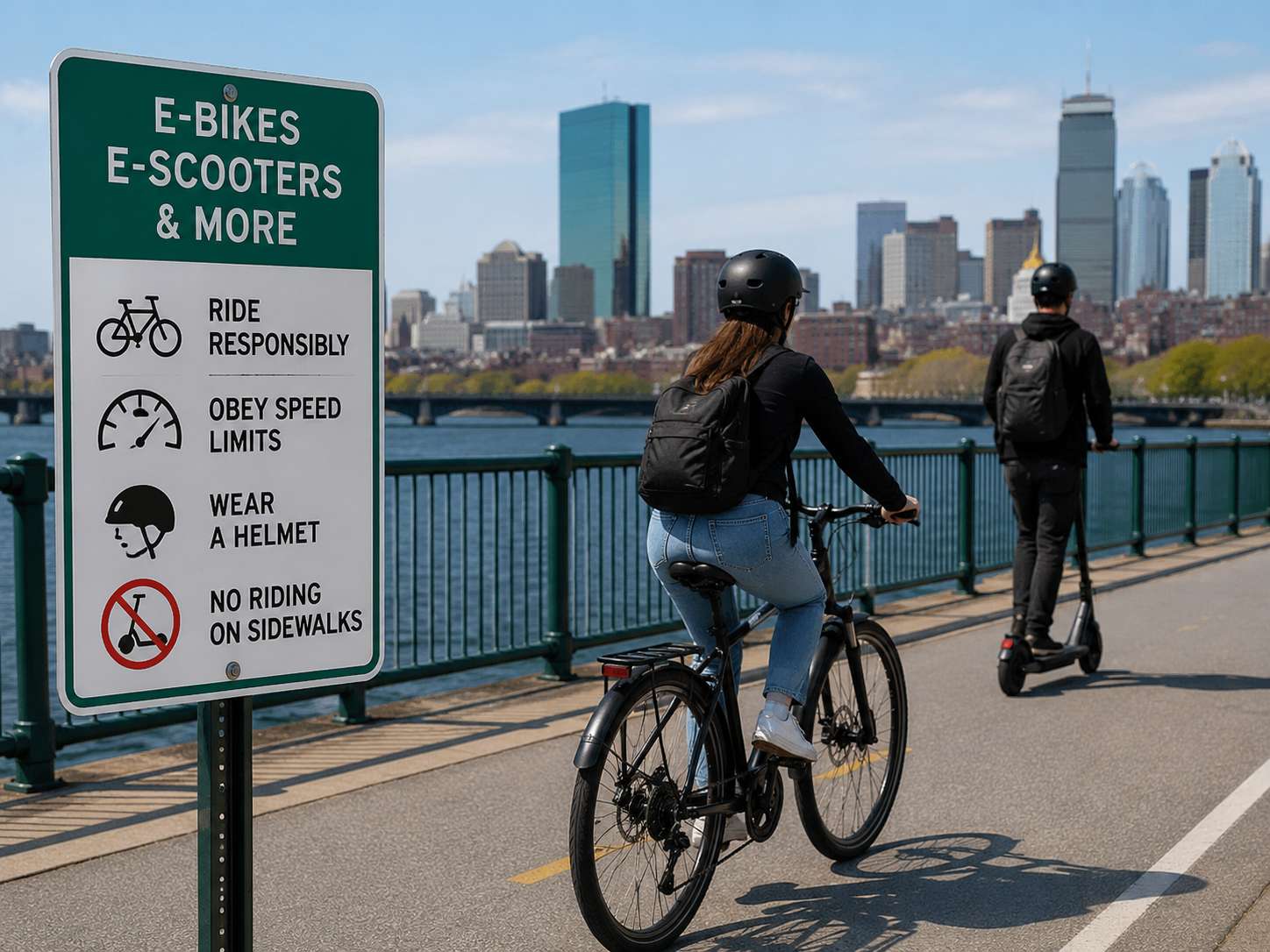
Massachusetts micromobility rules could change soon, and riders should pay close attention. On May 4, 2026, Governor Maura Healey filed S.3077, a bill called “An Act to enhance the safe use of micromobility devices.” The proposal now sits with the Joint Committee on Transportation, and a public hearing is set for May 28, 2026.
The bill targets e-bikes, electric scooters, mopeds, electric skateboards, and other small electric vehicles. It does not treat every device the same. Instead, it sorts them by speed, which makes the proposal easier for riders, parents, shops, and police to understand.
That matters for one clear reason. A 20 mph commuter e-bike does not create the same risk as a 45 mph electric dirt bike. Yet both can appear in bike lanes, on sidewalks, or near pedestrians. So the bill tries to draw cleaner lines between slower travel devices and faster motorized machines.
Why Massachusetts wants new micromobility rules
E-bikes and scooters have changed how people move through cities and towns. Many riders now use them for school, work, food delivery, errands, and short local trips. They cost less than a car, they take less space, and they help riders avoid parking stress.
But the rules have not kept pace with the products. A regular pedal bike, a Class 2 e-bike, a fast throttle e-bike, and an electric moped can look similar from a distance. Still, they can behave very differently in traffic.
So Massachusetts lawmakers now want a clearer rulebook. The proposed system focuses on top speed, rider age, helmet use, road access, and where each device can operate. For anyone tracking the Massachusetts e-bike law 2026, this bill is one of the most important updates to watch.
The bill uses speed tiers instead of broad labels
One of the biggest changes is the use of speed tiers. This gives the state a practical way to separate everyday e-bikes from faster electric vehicles.
Speed Tier 0 covers unpowered devices and powered devices that reach up to 20 mph. This group includes regular bicycles, Class 1 e-bikes, Class 2 e-bikes, lower-speed scooters, and mobility aid devices.
Speed Tier 1 covers powered devices that travel from 21 mph to 30 mph. This group includes Class 3 e-bikes, which can assist riders up to 28 mph during pedaling.
Speed Tier 2 covers devices that travel from 31 mph to 40 mph.
Speed Tier 3 covers devices that travel above 40 mph.
This system gives riders a simple test: how fast can the device go under power? From there, the state can apply different rules based on real road risk.
Lower-speed e-bikes stay closer to bicycle rules
The proposal treats low-speed e-bikes in a more rider-friendly way. Under the bill, Tier 0 devices stay closer to bicycle rules. That is good news for people who ride standard commuter e-bikes limited to 20 mph.
For daily riders, this part matters most. A Class 1 e-bike uses pedal assist and stops motor help at 20 mph. A Class 2 e-bike can use a throttle, but it also stays capped at 20 mph. Under the new tier plan, both remain in the lowest speed group.
That means these bikes should still work well for commuting, errands, and short neighborhood trips. Riders still need to follow road rules, use care near walkers, and ride at safe speeds. Still, the bill does not lump these slower e-bikes together with high-powered electric motorbikes.
Class 3 e-bikes get clearer treatment
Class 3 e-bikes have caused confusion in many states, and Massachusetts is no exception. These bikes use pedal assist up to 28 mph. They do not fit neatly with slower e-bikes, but they also do not work like mopeds or motorcycles.
The new bill places Class 3 e-bikes in Speed Tier 1. That gives them a clearer legal space. At the same time, it places more limits on riders than Tier 0 devices.
For example, Tier 1 rules are expected to include stronger helmet and age requirements. That makes sense, since a 28 mph e-bike can move fast enough to create serious crash risk. Even so, Class 3 e-bikes still serve a real purpose for longer commutes. They help riders cover more ground without using a car.
So the bill does not ban them. It tries to place them in a stricter, clearer category.
Faster electric devices face tougher limits
The toughest rules target Speed Tier 2 and Speed Tier 3 devices. These machines can travel from 31 mph to above 40 mph. Many look like e-bikes, scooters, or dirt bikes, but their speed puts them closer to motor vehicles.
Under the proposal, faster devices face tighter access limits. They would not belong on sidewalks, bike lanes, separated micromobility lanes, bike paths, or shared-use paths. This part of the bill targets a common safety problem in busy areas: fast electric machines passing walkers and cyclists in narrow spaces.
That change could affect riders who use high-powered e-motos, modified e-bikes, and fast throttle devices. It could also affect shops that sell products with unclear labels or unlocked speed modes.
For cities and towns, the benefit is clearer enforcement. If a device can travel above a certain speed, officials can place it in the correct tier. Then they can apply the right access rules.
Sidewalks and bike lanes are a central issue
Sidewalk riding sits near the center of the debate. Pedestrians need space where they can walk without dodging fast machines. At the same time, some riders use sidewalks because they feel unsafe in car traffic.
The bill tries to balance those needs through speed. A slower scooter or e-bike creates less risk than a fast electric motorbike. So the proposal gives lower-speed devices more flexibility, and it keeps faster devices out of pedestrian-heavy spaces.
Bike lanes raise a similar problem. They were built for bicycles and other slower devices. So a 40 mph electric machine can make those lanes feel unsafe for everyone else. The bill responds by limiting faster tiers from those areas.
This rule could shape future local debates in Boston, Cambridge, Somerville, Worcester, Springfield, and other Massachusetts communities where micromobility use keeps growing.
Battery safety gets more attention
The bill also brings battery safety into the discussion. That is a smart move, since lithium-ion battery fires have become a growing concern in apartments, garages, shops, and shared storage areas.
The proposal points toward recognized safety certification for e-bike batteries and electric micromobility systems. These standards help reduce risk from poor wiring, weak battery packs, bad chargers, and unsafe product design.
For riders, the advice stays simple. Buy certified devices from trusted sellers. Use the original charger. Stop using a battery that smells odd, swells, leaks, overheats, or shows damage. Then store the device away from exits, beds, and flammable items.
This part of the bill could also push retailers to check product paperwork more closely. If a scooter or e-bike lacks proper certification, it may become harder to sell in Massachusetts.
Modified e-bikes could face more scrutiny
Modified e-bikes are another major target. A rider can change a controller, unlock a speed limit, add a stronger motor, or alter a battery. After that, a device sold as a low-speed e-bike may no longer behave like one.
The bill pays attention to those changes. That matters because speed mods can increase crash risk, battery stress, and braking distance. A frame, tire, brake system, or fork built for 20 mph use may not handle 40 mph riding safely.
For parents, this detail is especially important. Some products look like normal e-bikes online, but they perform more like electric motorbikes. So shoppers need to check top speed, throttle type, motor output, battery certification, and local rules before buying.
What riders should do now
The bill is not law yet. The public hearing on May 28, 2026, is the next major step. After that, lawmakers can amend the bill, move it forward, hold it, or change parts of the proposal.
For now, riders should check their device class and top speed. They should also keep helmets ready, avoid sidewalk riding at unsafe speeds, and stay out of bike lanes with high-powered machines.
Parents should review what their teens ride. Delivery riders should check whether their work device fits Tier 0, Tier 1, Tier 2, or Tier 3. Shops should prepare for more questions about labels, speed caps, and battery certificates.
The big message is simple. Massachusetts wants micromobility rules that match how fast these devices actually travel. Slower e-bikes and scooters should keep more bicycle-like access. Faster electric vehicles should face stronger limits.
What this means for Massachusetts in 2026
Massachusetts is trying to build a clearer system before the streets get more crowded. That is a practical goal. E-bikes and scooters can reduce car trips, help people commute, and make local travel cheaper. But they need rules that protect riders, walkers, and drivers at the same time.
The Ride Safe Act could become a major turning point for Massachusetts micromobility regulations. If lawmakers pass it, riders will need to think less about product labels and more about speed, access, helmets, and safe operation.
For now, the bill gives everyone a clear sign of where the state is heading. Low-speed e-bikes and scooters remain part of everyday transportation. Faster electric machines face a stricter path.