

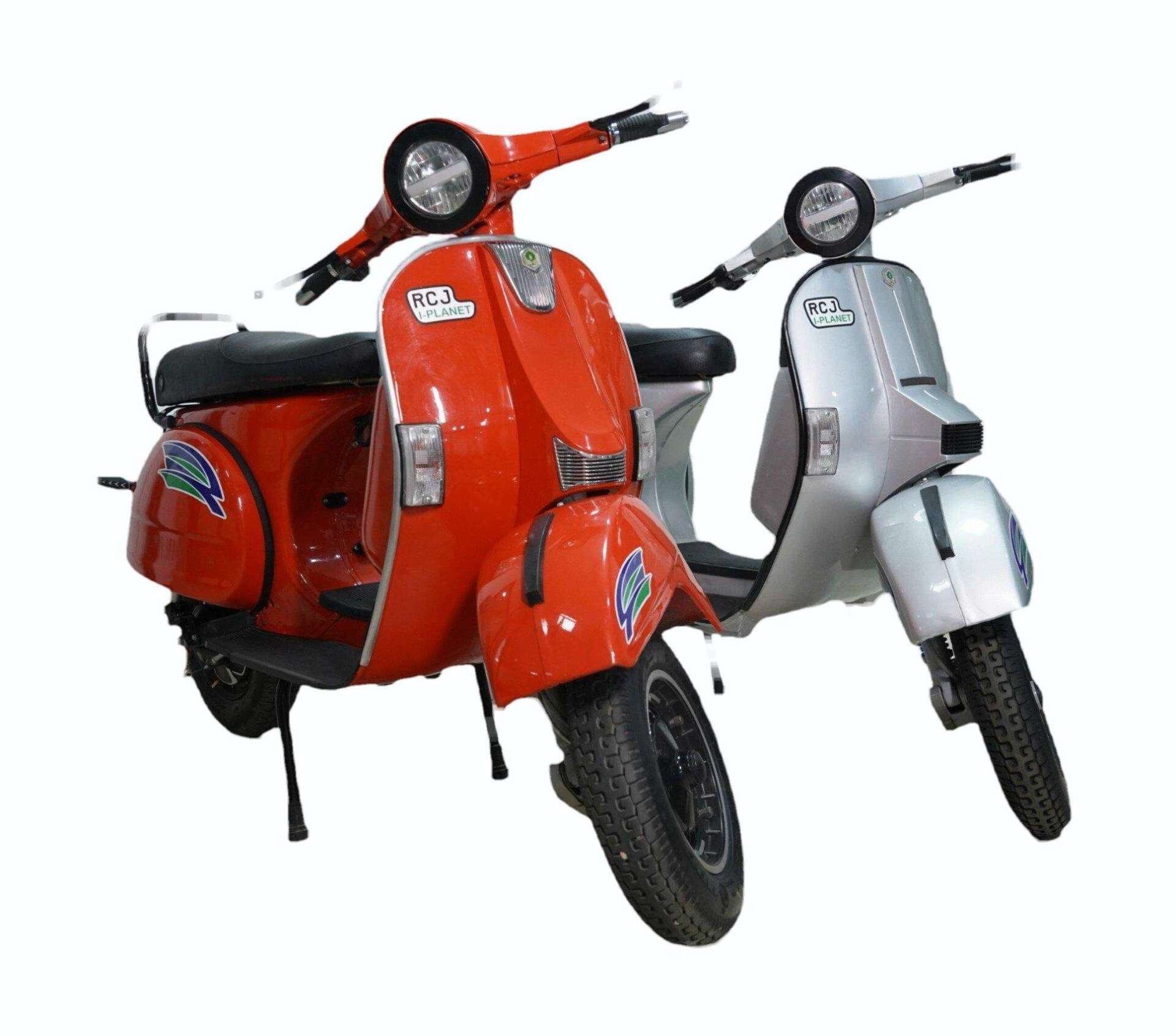
The RCJ iPlanet electric scooter has started drawing attention in India for one simple reason: it looks old-school, costs about Rs 70,000, and carries a no license and no registration claim. That mix gives it a clear place in the low-speed electric scooter market.
At first glance, the iPlanet looks familiar. Its rounded front, metal body, and classic stance give it a strong Vespa-style look. So, for buyers searching for a retro electric scooter in India, this model has instant visual appeal. It does not chase the sharp, sporty look used by many newer EV brands. Instead, it goes for a simple city scooter shape that many Indian riders already know.
The iPlanet comes from RCJ Auto Forge Pvt. Ltd., based in Ludhiana. The brand has placed this scooter in the low-speed EV category, so it targets short city rides, local errands, campus travel, and easy daily use. That positioning matters, since this scooter is not built to compete with high-speed electric scooters from bigger brands.
Why the RCJ iPlanet gets attention
The main hook is the design. Many budget electric scooters look plain or very similar to each other. The RCJ iPlanet stands apart with its retro scooter body. It looks closer to an older petrol scooter than a modern plastic-bodied EV.
Then there is the price. At around Rs 70,000, the iPlanet sits in a space where buyers expect simple use, low running costs, and basic daily practicality. The price makes it more accessible than many registered electric scooters, yet it still aims to look more premium than most low-speed models.
Still, the no license and no registration claim is the part that will pull in the most searches. Many riders want an electric scooter without license in India. Students, older riders, and families often look for non RTO electric scooters for short daily trips. The iPlanet fits that search intent well.
Low-speed EV rules matter here
The no license claim only works under India’s low-speed electric vehicle rules. For a battery-operated two-wheeler to stay outside normal motor vehicle registration rules, it must meet strict limits. The motor power must stay low, and the top speed must stay within the allowed low-speed range.
That means buyers should not rely only on a dealer claim. They should ask for the model paperwork, low-speed approval details, and battery documents before paying. The scooter’s documents should match the exact model being sold.
This matters even more now, as cities and local authorities are paying closer attention to small electric vehicles. For example, rule changes and local safety concerns around e-bikes and e-scooters keep growing in many places. Riders can see a similar pattern in how Wheaton tightened e-bike and e-scooter rules, with more focus on where and how small EVs get used.
So, even with a low-speed scooter, safe riding and correct paperwork still matter.
Battery, range, speed, and charging
The RCJ iPlanet uses a 1.5 kWh lithium-ion battery pack under the floor. It sends power to a rear hub motor. Public details list a claimed range of about 60 km per charge, a top speed of 25 km/h, and a charging time of around 3 hours.
For city use, that setup makes sense. A 60 km claimed range gives enough room for market runs, school trips, tuition rides, short work commutes, and nearby errands. Still, real-world range changes with rider weight, traffic, road slope, tyre pressure, and battery age.
The 25 km/h top speed shapes the whole scooter. This is not a fast EV. It is not meant for highways, flyovers, or heavy traffic roads where faster vehicles move close by. Instead, it works best on local roads, colony lanes, campuses, and short urban routes.
That slower speed can suit new riders too. It makes the scooter easier to handle, and it reduces stress in crowded areas. Even so, low speed does not remove road risk. A helmet, working lights, good brakes, and careful riding still matter every day.
How it compares with regular electric scooters
The iPlanet takes a different path from mainstream electric scooters. High-speed EVs from brands like Ola, Ather, TVS, Bajaj, and Suzuki focus on speed, features, connected apps, large displays, and longer rides. The iPlanet focuses on simple movement and a lower barrier to use.
That makes the choice clearer. Buyers who need 70 km/h performance, long-distance range, fast charging support, and a wider service setup should look at registered electric scooters. Buyers who need a slower, simpler scooter for short trips will understand the iPlanet faster.
The market is changing fast too. Newer models are reaching customers with more features and stronger brand support. For example, early interest around the Suzuki e-Access sales check shows how serious the electric scooter space has become. Bigger brands now want a stronger share of India’s EV two-wheeler market.
Still, that does not erase the need for basic low-speed scooters. Not every rider wants a high-speed EV. Some buyers want a simple machine that charges at home and covers nearby trips without much fuss.
What buyers should check before buying
Before booking the RCJ iPlanet, buyers should ask for the full specification sheet. They should check the battery capacity, charger rating, motor details, warranty period, and service location. Then they should ask for low-speed EV documents linked to that exact model.
Next, they should check the build quality in person. The metal body sounds attractive, but the finish, panel fit, paint quality, and weld quality still matter. The seat should feel comfortable for daily rides. The handlebar should turn easily. The brakes should feel predictable. The tyres should feel stable on rough roads.
The battery warranty deserves close attention. The battery is the most expensive part of an electric scooter. A clear warranty can save money later. Buyers should ask what the warranty covers, how long it lasts, and which actions can void it.
Service support matters too. A low purchase price loses value fast if spare parts become hard to find. So, buyers outside Ludhiana should ask how repairs, battery checks, and replacement parts will be handled.
Is the RCJ iPlanet worth it?
The RCJ iPlanet makes sense for a specific type of rider. It fits someone who wants a retro electric scooter under Rs 70,000, plans to ride short distances, and likes the idea of a low-speed EV with no license or registration paperwork.
It does not suit everyone. The 25 km/h speed limit will feel too slow for many riders. The brand network also needs careful checking, mainly for buyers outside the company’s home region. Plus, the no license claim depends on the scooter meeting the correct low-speed EV rules.
Still, the iPlanet has a clear charm. It brings a Vespa-style look to the budget electric scooter space. It offers a claimed 60 km range and a simple 3-hour charging setup. Then it adds a low-speed EV pitch that many Indian buyers actively search for.
For short city rides, it can be a neat choice. For fast commutes, it is the wrong tool. The best move is simple: check the documents, test the scooter, confirm the warranty, and study local service support before buying.