

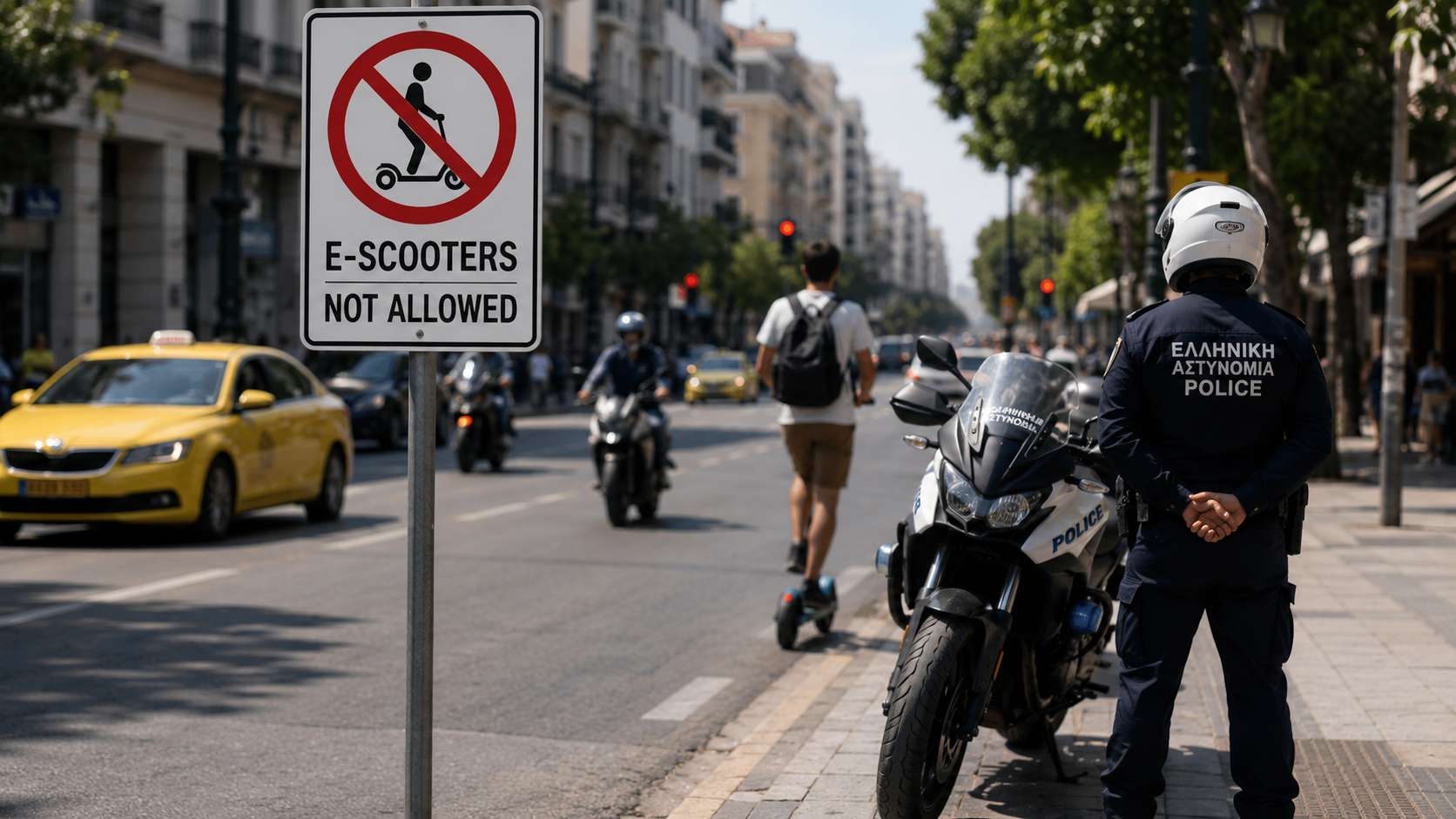
Greece Moves Toward Tougher Electric Scooter Rules
Greece is preparing tougher electric scooter laws after deadly crashes put young riders back in the spotlight. The debate grew after the death of a 13-year-old in Ilia, and it now focuses on minors, helmets, speed limits, road access, and shared scooter controls.
Government officials have signaled a stricter line. Under the plan now being discussed, minors could be banned from riding electric scooters on public roads. They could still ride in pedestrian zones and public squares, but they would no longer mix with cars, buses, trucks, and motorcycles on normal roads.
That would mark a clear shift from the current rules. Greece already has age limits, helmet rules, and a 25 km/h speed cap for electric scooters. Yet recent crashes show that the current system still leaves too many gaps, mainly for younger riders.
For families, the message is getting clearer. An electric scooter is not just a fun gadget for short trips. Once it enters traffic, it becomes part of the road system. So the rider needs judgement, control, and basic road awareness.
Why Greece Wants New E-Scooter Laws Now
The push for tougher rules follows a rise in electric scooter accidents in Greece. Reported police figures listed 109 e-scooter traffic accidents in 2025. Those crashes included two deaths, four serious injuries, and 103 minor injury cases. Then, during the first two months of 2026, Greece recorded 17 more e-scooter crashes.
Those numbers explain why officials are acting now. A scooter rider has little protection in a crash. A helmet helps, but it cannot make a child safe next to fast traffic. A small mistake can turn serious fast, mainly at junctions, crossings, and roads with parked cars.
The risk grows when children ride without training. Many young riders understand the throttle and brakes, but they do not always read traffic well. They may not spot a blind corner. They may not judge a car’s speed. They may panic when a bus or motorcycle gets too close.
At the same time, electric scooters are now part of city travel across Europe. Shared schemes, private scooters, e-bikes, and small electric vehicles keep changing how people move. For example, cities such as Liverpool are expanding shared micromobility services, as seen in this report on how Liverpool launches new e-scooters and e-bikes in 2026. Greece now faces the same core question: how can cities support cleaner short trips without raising the risk for children and pedestrians?
Current Electric Scooter Rules in Greece
Greek law places electric scooters under the wider category of light personal electric vehicles. The rules split these vehicles by design speed.
Low-speed models up to 6 km/h follow rules closer to pedestrian movement. Faster models above 6 km/h and up to 25 km/h follow rules closer to bicycles. That means the legal speed limit for most road-going electric scooters is 25 km/h.
Next, road access has limits. E-scooters cannot ride on roads where the speed limit for cars is above 50 km/h. This rule already blocks scooters from faster roads, but many risks remain on slower urban roads too.
Age rules already exist. Riders must be at least 12 for the slower category. They must be at least 15 for the faster 6 to 25 km/h category. Riders aged 12 and older must carry a legal identity document.
Helmet use is mandatory for e-scooter riders in Greece. Night riders must use reflective clothing or reflective gear too. The law bans passengers on electric scooters as well. That rule matters more than many riders think. Two people on one scooter change the balance, stretch braking distance, and make falls more likely.
Still, rules only work when riders know them and police can check them. That is one reason the new proposal focuses on simpler limits for minors. A clear road ban is easier to understand than a long list of mixed road rules.
What Could Change for Minors
The biggest planned change targets children and teenagers. If the proposal moves ahead, minors would no longer ride electric scooters on public roads. They could use them only in safer spaces such as squares and pedestrian areas.
That change would affect daily school trips, short local rides, and casual use in town centers. A teenager riding through traffic to reach school or a sports club could face new legal limits. Parents could face more pressure too, since they often buy the scooter and set the rules at home.
Some lawmakers want even tougher measures. Ideas discussed in public debate include a higher minimum age, stronger equipment rules, electronic speed limiters, lights, horns, and road bans for selected areas. Some proposals would push electric scooters closer to mopeds in the eyes of the law.
This debate matters for buyers as well. Many scooters sold online can exceed 25 km/h. Some models ship with app settings that change speed modes. Others can be modified. So Greece may need stronger rules at the point of sale, not only checks after a crash.
Electric two-wheelers are moving fast as a market too. New models, concepts, and production plans keep arriving, including projects such as the Ather EL01 as it gets closer to production. That wider shift makes safety rules more urgent. Small electric vehicles will keep growing, so governments need clear laws before the streets get more crowded.
Shared Scooters and Speed Controls Face More Pressure
Shared scooter companies already face strict duties in Greece. They must use technology to track scooters, limit speed, and block rides in areas set by local authorities. Companies that fail to meet those rules can face fines.
That gives Greece a working model for stricter control. Shared scooters can slow down in crowded zones. They can stop rides in blocked areas. They can use geofencing to keep riders away from roads where scooters do not belong.
Private scooters are harder to control. A rental company can push rules through an app. A private owner can ignore warnings, change settings, or ride a model that was never meant for public roads. So lawmakers may look at product checks, sales rules, and stronger penalties.
In practice, speed control matters more than marketing claims. A scooter that reaches 40 km/h or 50 km/h may look exciting online, but that speed changes the risk level. Braking takes longer. Small wheels become less stable. A pothole can throw the rider. Then traffic has less time to react.
What Riders and Parents Should Do Now
Parents should treat an electric scooter as a road vehicle, not a toy. The first rule is simple: no helmet, no ride. A proper helmet will not prevent every injury, but it can reduce the risk of serious head trauma.
Next, check the scooter before each ride. Brakes should work cleanly. Tires should have enough air. Lights should work at the front and rear. Reflectors should be visible. The bell or horn should be loud enough for pedestrians and cyclists to hear.
Then, check the speed settings. A scooter used in public should stay within the 25 km/h legal cap. A child should ride much slower than that, mainly near pedestrians, parked cars, driveways, and crossings.
Young riders should avoid night rides, phone use, headphones, and passengers. They should avoid weaving between cars too. These habits may look harmless for a few seconds, but they cut reaction time and raise crash risk.
For adult riders, the same basic rules apply. Ride sober. Slow down near people. Use lights early, not only after full dark. Signal clearly with your body position and hand movements when safe. Give pedestrians space.
What Greece’s E-Scooter Crackdown Means for 2026
Greece’s planned e-scooter crackdown points to a wider change in road safety policy. The country is not trying to remove electric scooters from city life. Instead, it wants to keep the highest-risk riders away from the highest-risk spaces.
That makes sense. Electric scooters can help with short trips. They take little space, cost less than cars, and suit dense urban areas. Yet they need clear rules, safe routes, and better rider habits.
The next phase will likely bring more checks on minors, helmets, speed limits, and unsafe riding. Shared scooter firms may face tighter technical controls too. Private scooter owners may face closer attention, mainly if their scooter exceeds legal speeds.
For now, families should act before the law changes. Keep children away from traffic. Pick safer spaces for practice. Buy proper safety gear. Check the scooter’s speed, brakes, and lights. Then set clear rules at home.
Greece’s message is plain: electric scooters are part of modern transport, but children do not belong in road traffic on fast, exposed machines. Stricter laws now look likely, and riders should prepare for them before fines and police checks become more common.