

Quick take
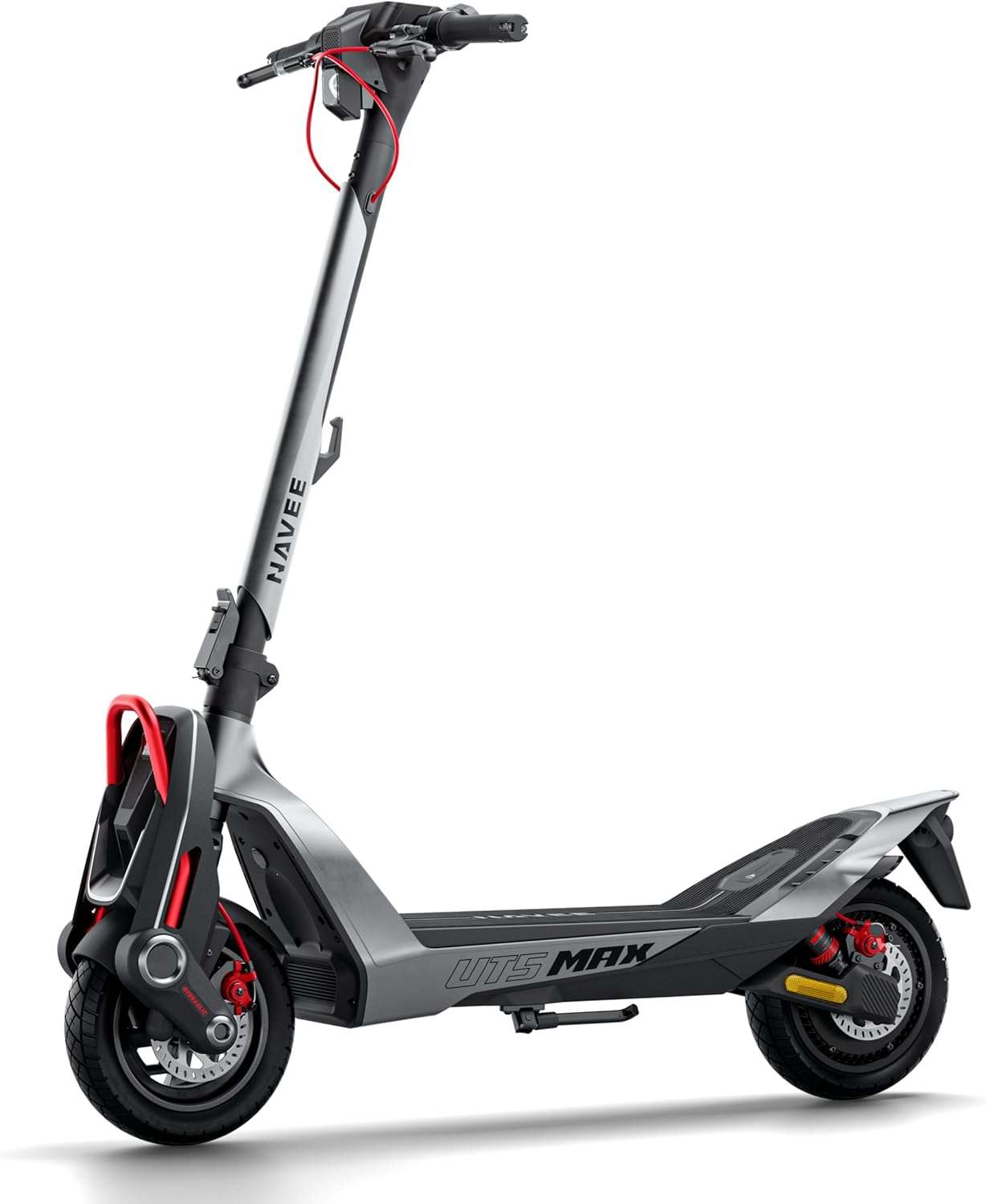
The NAVEE UT5 Max aims at riders who want real speed and range, but who still ride on everyday streets. It also tries to keep the ride calm, with big tires and hydraulic suspension.
On NAVEE’s own listing, the UT5 Max uses an 850W rated rear motor with 2400W max output. NAVEE also lists a top speed of 31 mph (50 km/h). Range is listed up to 62 miles (100 km) at 9 mph, which is a slow test speed, so treat that number as best case.
It looks like a strong mix of comfort and control. NAVEE lists dual hydraulic suspension, front and rear disc brakes with EABS, and an IPX6 water resistance rating. You also get turn signals, app support, and Apple Find My support.
One thing is clear though. This is not a light scooter. NAVEE lists it at 34 kg, so it fits better when you roll it most of the time and lift it only when you have to.
Specs that matter
Here are the headline specs NAVEE lists for the UT5 Max.
- Top speed: 31 mph (50 km/h)
- Motor power: 850W rated, 2400W max
- Battery: 716Wh (48V 15.3Ah)
- Range claim: up to 62 miles (100 km) at 9 mph
- Charging time: about 7 hours, and up to 2 hours with flash charge
- Max gradeability: 39%
- Max load: 330 lb (150 kg)
- Tires: 12 inch self-healing tubeless
- Suspension: dual hydraulic suspensions
- Brakes: front disc, rear disc, plus EABS
- Water resistance: IPX6
- Weight: 34 kg (about 75 lb)
- Size open: 1258 x 620 x 1345 mm (about 49.5 x 24.4 x 53.0 in)
- Size folded: 1258 x 620 x 650 mm (about 49.5 x 24.4 x 25.6 in)
- Deck size: 220 x 545 mm (about 8.7 x 21.5 in)
Pricing changes often, so check your local NAVEE store or reseller for today’s number.
Design and build feel
The UT5 Max has a wide, planted stance. It looks built to feel stable at speed, not built to disappear under a desk.
The deck is roomy, and that matters more than people expect. You can shift your feet, and you can settle into a stance that feels natural. So longer rides feel less tiring.
The 12 inch tires shape the whole scooter. Bigger tires usually smooth out cracks and broken pavement, and they roll over rough patches with less fuss than 10 inch tires. The tradeoff is bulk. Big tires and a heavier frame do not come for free.
Folding is still useful, but it is not a daily carry scooter. You can fold it for a car trunk or storage, but you will notice that weight right away.
Ride comfort and handling
Comfort is where the UT5 Max tries to win.
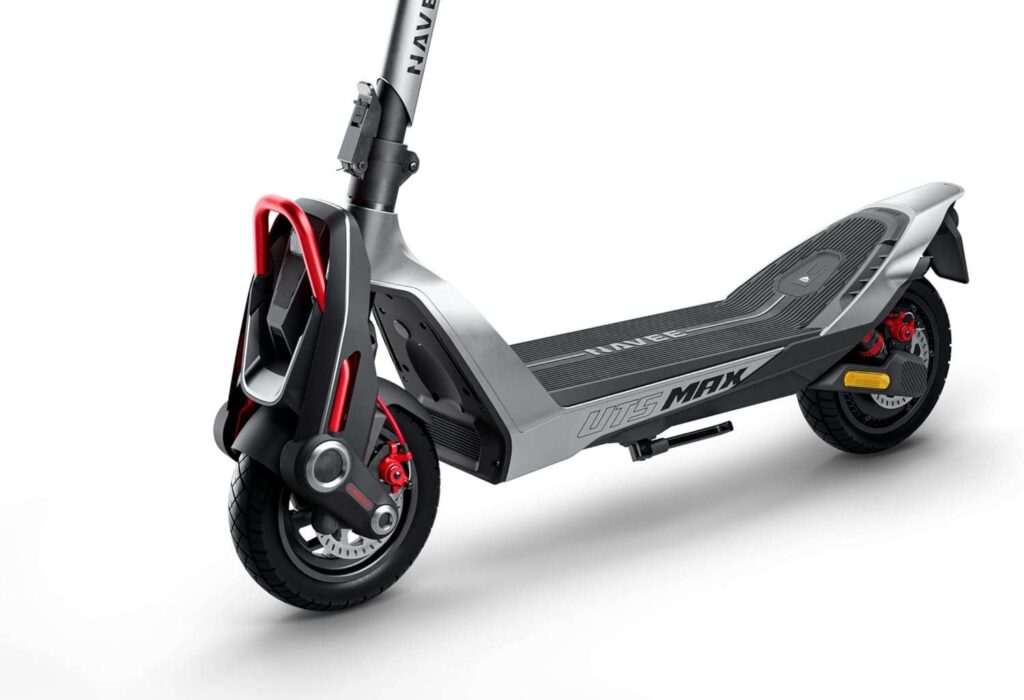
NAVEE lists dual hydraulic suspensions. In real riding, hydraulic setups often feel smoother than basic spring designs, especially on repeated bumps. Pair that with 12 inch tubeless tires, and you get a setup that should take the edge off rough city roads.
Deck space also helps comfort. It lets you move your feet and avoid the locked-in feeling you get on narrow decks.
Handling at higher speed depends on geometry, frame stiffness, and tire behavior. NAVEE does not publish every detail, so I cannot confirm exactly how it feels in fast turns from specs alone. Still, the choices here point toward stability. Bigger tires and more mass usually calm the ride, especially on uneven pavement.
Speed, acceleration, and hills
NAVEE lists 31 mph (50 km/h) top speed. That is a lot for daily riding, so you need to think about your local rules and your local traffic mix.
Power numbers also look strong. NAVEE lists 850W rated power and 2400W max power. Rated power often tells you more about steady riding, while max power points to short bursts for launches and climbs.
NAVEE also lists 39% gradeability. Brands test this in different ways, and they rarely share the full test setup. So you should treat the number as a directional guide, not a promise. Even so, a 39% claim suggests it should handle steep ramps better than most basic commuters.
Acceleration matters most at city speeds. NAVEE lists 0 to 12 mph in 3.4 seconds. If that holds close in real use, it should feel quick off the line, and that can help when you need to move with traffic flow.
Range and battery, the honest view
NAVEE lists a 716Wh battery (48V 15.3Ah). That is a solid size for a fast scooter, and it should support longer rides when you keep your speed reasonable.
But range claims always come with conditions. NAVEE’s 62 mile figure is based on 9 mph riding. Most riders do not cruise at 9 mph for long, so real range will be lower if you ride faster.
Range drops with these common factors.
- Higher speed
- Frequent stops and starts
- Steep hills
- Cold weather
- Heavier rider weight
- Low tire pressure
- Rough surfaces and strong wind
If you want a simple rule, use the published range as the ceiling, then step it down based on how hard your route is. If you cruise fast and climb often, expect a bigger drop. If you ride smoother routes at moderate speed, you can land closer to the published number.
Charging is interesting here. NAVEE lists about 7 hours for a normal charge, and it also lists up to 2 hours with flash charge. That could be a big deal if you ride daily and want quick top-ups. Still, NAVEE does not spell out every condition in the spec block, so I cannot confirm what exact charger, mode, or limits apply in every region.
Brakes, lights, and practical safety
At this speed class, brakes and visibility are not optional.
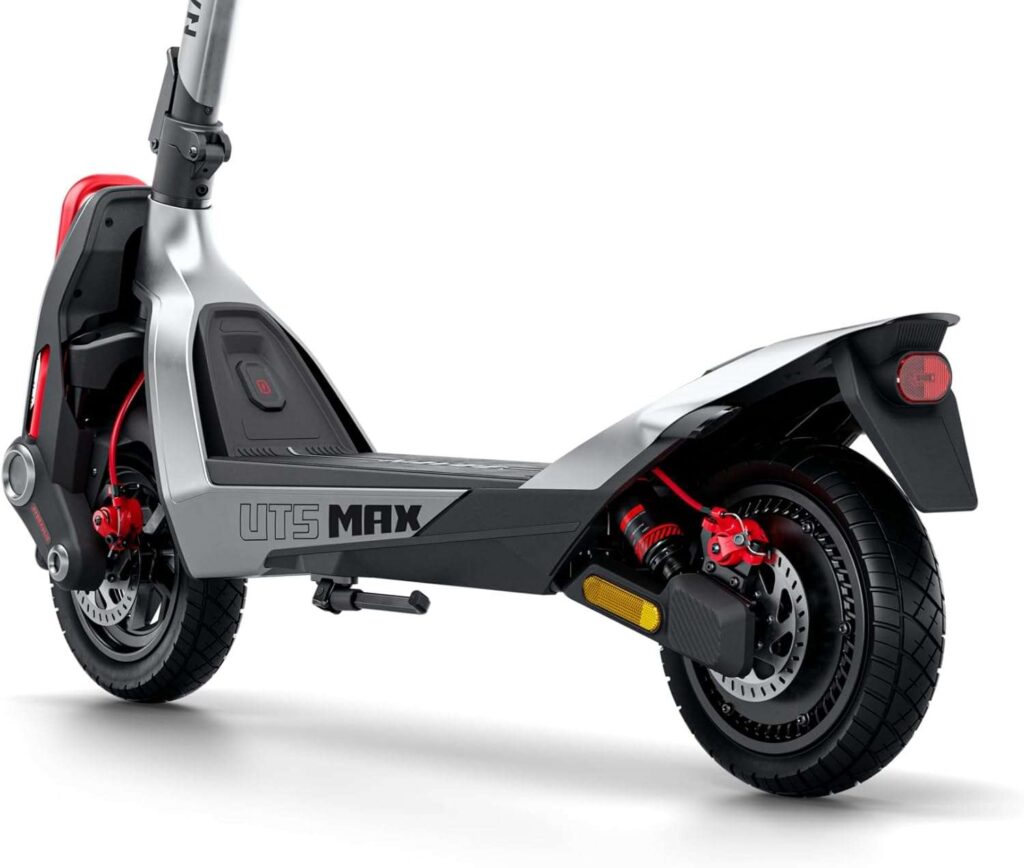
NAVEE lists front and rear disc brakes, plus EABS. Disc brakes usually give stronger stopping power than basic commuter setups, and they cope better with repeated braking. EABS can help reduce wheel lock under hard stops, especially when the road surface changes.
NAVEE also highlights traction control as TCS anti-slip control. If it works well, it can help manage sudden loss of grip on dusty or damp pavement. It will not replace careful riding, but it can add support when conditions get sketchy.
Lighting and signals matter too. NAVEE lists turn signals, and that helps you communicate with cars and other riders. It is a small feature that can make day rides feel less stressful.
NAVEE also lists IPX6 water resistance. That should help with rain exposure and road spray, but it does not make wet riding safe by default. Wet paint lines, metal covers, and slick leaves can still surprise you.
Tires and puncture protection
NAVEE lists 12 inch self-healing tubeless tires. That combo usually aims at fewer flats and a smoother ride.
Tubeless tires can reduce pinch flats, and self-healing features can seal small punctures, depending on the hole and the sealant system. Bigger tires also tend to feel more stable, especially on uneven pavement and at higher speed.
Grip still depends on rubber compound and tread pattern, and NAVEE does not list those details in the main spec block. So I cannot confirm how it behaves on loose gravel or mud. But for broken pavement and mixed city surfaces, the hardware choice makes sense.
One simple tip that matters. Check tire pressure often. Low pressure hurts range and handling, and it can raise heat in the tire. Correct pressure makes the scooter feel sharper and safer.
App features and anti-theft tools
NAVEE lists app support and Apple Find My support. That can help you track the scooter if it goes missing, and it can make daily use feel smoother.
Still, tracking is not a lock. You should use a solid lock and park in smart places.
If you are comparing NAVEE models, it can also help to look at different ride styles in the lineup. For a more commuter-leaning NAVEE option, see this NAVEE XT5 Pro review: https://scooterpick.com/navee-xt5-pro-review. And if you want another NAVEE model comparison point, this NAVEE K100 Pro review can help: https://scooterpick.com/navee-k100-pro-review.
Portability and storage
This is where you need to be honest with yourself.
NAVEE lists the UT5 Max at 34 kg, which is about 75 lb. That can feel fine while riding, because weight can add stability. But it becomes a real problem on stairs, on public transit, or when you lift it into a trunk.
It does fold, and NAVEE lists a folded height of 650 mm (about 25.6 in). Length stays the same at 1258 mm (about 49.5 in). So it will store more easily than a non-folding scooter, but it still takes up real space.
If your home has tight storage, measure before you commit. It sounds obvious, but it saves headaches later.
Who is the UT5 Max for
So who should buy it. Riders who want speed, comfort, and long range, and who do not need to carry the scooter often.
It also fits riders who deal with rough pavement. The 12 inch tires and hydraulic suspension aim at comfort over cracks and potholes.
Who should skip it. Anyone who has to lift a scooter every day, or anyone who needs a compact setup for trains and stairs. This weight will annoy you fast.
Pros and cons
Pros
- Strong listed speed and power for a daily capable scooter
- Large 716Wh battery for longer rides
- 12 inch tubeless tires that should improve stability and comfort
- Dual hydraulic suspension for rough roads
- Front and rear disc brakes, plus EABS
- IPX6 water resistance rating
- Turn signals, app support, and Apple Find My support
Cons
- Heavy at 34 kg, so carrying is not fun
- Range claim is based on 9 mph testing, so faster riding will cut it down
- Flash charge details vary by setup, and the spec block does not explain every condition
- Price can be high depending on your region and stock
Price

Final verdict
The NAVEE UT5 Max looks built for riders who want a fast scooter that still feels steady and comfortable. The big tires and hydraulic suspension should help on rough streets, and the dual disc brakes with EABS fit the speed it claims. You also get practical touches like turn signals and Find My support, which can make daily riding feel easier.
But the tradeoff is weight. If you can roll it most of the time, that trade is fine. If you carry it up stairs, it will get old.
If your routes are long and your roads are rough, the UT5 Max can make sense. Just plan for real world range and real world storage, then you will be much happier with it.