

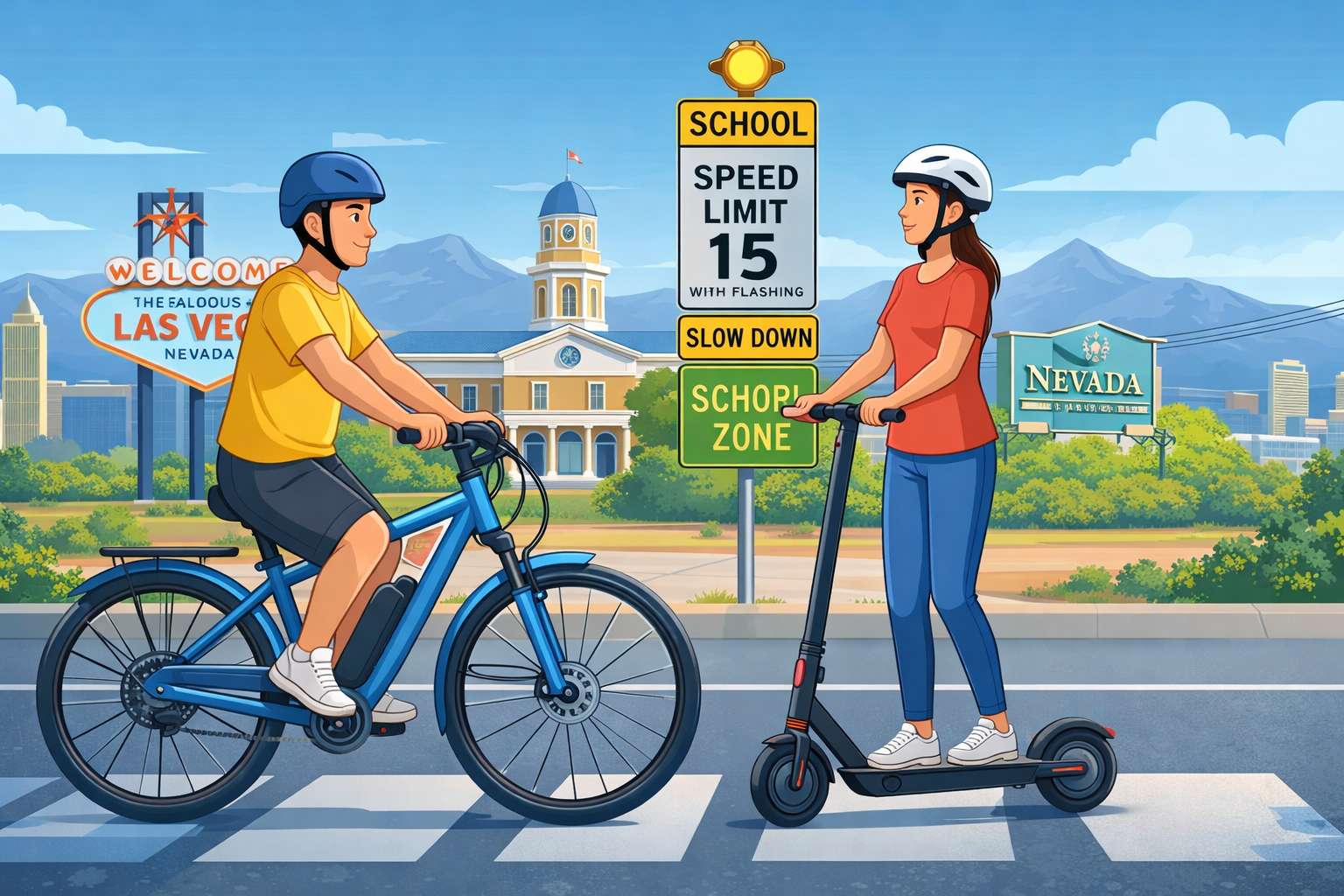
Nevada has opened the door to new e-bike and e-scooter rules
Nevada lawmakers have officially started a new review of electric bike and electric scooter laws, and that matters more than it may seem at first glance. The state is not just looking at one narrow fix. It is reviewing how current rules handle e-bikes, scooters, motorcycles, and safety near schools. That means future changes could touch helmet rules, school zone riding, sidewalk use, local enforcement, and the legal line between a true e-bike and a higher powered electric motorcycle.
For riders, parents, and daily commuters, this is the kind of policy shift worth watching early. Once lawmakers begin a formal study, it often leads to draft bills, clearer definitions, and stronger enforcement in the next legislative cycle. In other words, Nevada is now in the stage where officials gather facts, hear concerns, and decide where current law no longer fits real world use.
Why Nevada is taking a closer look now
The main driver is safety. State lawmakers have been told to study road safety during the 2025 to 2026 interim period, with special attention on electric bikes, motorcycles, scooters, and school zone safety. That tells you where the pressure is building. Officials want a better answer to a simple question. Are Nevada’s current laws keeping up with the speed, popularity, and everyday use of these devices?
That question has become harder to ignore. E-bikes and e-scooters are no longer niche products. They now serve short city trips, school runs, work commutes, and weekend rides. Some are slow and practical. Others look and perform more like small motorcycles. When all of them share roads, sidewalks, trails, and school areas, weak definitions create confusion fast.
Nevada is not alone here. Cities and states across the U.S. are adjusting micromobility rules as ridership grows. The wider debate also mirrors changes in other markets, including Liverpool’s new e-scooters and e-bikes rollout in 2026, where local leaders are also trying to balance access, safety, and public space.
What Nevada law says right now
At the statewide level, Nevada already defines electric bicycles and separates them from mopeds and other motor vehicles. Current state guidance says electric bicycles do not require helmet use, a driver’s license, registration, or insurance. That point surprises many people, especially parents who assume every motor assisted ride automatically falls under stricter rules.
Nevada also uses the familiar class system for e-bikes. In simple terms, Class 1 e-bikes use pedal assist up to 20 mph. Class 2 models can use throttle power up to 20 mph. Class 3 models use pedal assist up to 28 mph. Those definitions matter because they shape where a bike can ride, how it is marketed, and whether local governments may treat it differently.
That said, statewide law is only part of the story. Nevada also gives local authorities room to regulate electric scooters and related programs. So even when state law looks fairly light, local rules can still be much stricter.
Local rules already make things more complicated
This is where Nevada riders can get caught out. What looks legal under state guidance may face tighter limits at the county or city level.
In unincorporated Clark County, minors must wear helmets when riding e-bikes or e-scooters. The county also requires basic safety equipment such as a bell or horn, proper lights for night riding, and functional brakes. In county parks, e-bikes and e-scooters are generally limited to 15 mph. The county also lists fines that increase for repeat violations, and parents or guardians can be financially responsible for a minor’s violations.
Henderson has gone even further. The city updated its code in early March 2026 and now requires minors under 18 to wear helmets when using bicycles, e-bikes, and e-scooters. It also bans reckless behavior such as stunts, wheelies, riding on handlebars, and unsafe speeds. Just as important, Henderson drew a sharper line between legal e-bikes and illegal e-motorcycles. If a bike lacks operable pedals and relies on a throttle, the city treats it as an e-motorcycle and says it is illegal to operate anywhere in Henderson.
That kind of patchwork is one reason this state study matters. A family may buy what looks like a normal e-bike, only to learn that one city treats it very differently from another. Riders searching for answers about Nevada helmet laws, sidewalk riding, school commuting, or e-bike age rules often run into a mess of state and local language. Right now, that confusion is real.
What lawmakers are likely to examine next
The official study order points in a clear direction. Lawmakers must examine Nevada laws on electric bikes, motorcycles, and scooters. They must also assess best practices for school zone safety and consider what authority local governments need to regulate these issues effectively.
That does not tell us the final law yet, but it does show the likely pressure points.
Helmet rules for minors look like a strong candidate for future debate. School zone restrictions also seem likely to get attention, especially around morning drop off and afternoon pickup traffic. Another hot area is device classification. Officials will need to decide whether current labels are clear enough, or whether more powerful throttle based machines should face tougher limits.
Sidewalk use may also come under review. So could trail access, speed limits in parks, safety equipment standards, and penalties for repeat violations. None of that is guaranteed yet, but those are the issues already sitting on the table.
Why this matters for parents and everyday riders
For parents, the stakes are simple. A child may ride an e-bike to school thinking it is no different from a regular bicycle, but local rules may say otherwise. If the rider skips a helmet, exceeds a park speed limit, or uses a device that does not meet the legal definition of an e-bike, the family can end up dealing with fines or enforcement.
For commuters, the issue is consistency. People want to know where they can ride, whether sidewalks are allowed, and what happens when city rules change as they cross into another jurisdiction. Clearer statewide standards would make that easier.
There is also a public safety angle that goes beyond tickets. Federal safety officials have repeatedly warned that injuries tied to micromobility devices are rising, and head protection remains one of the most basic ways to reduce harm. So even where helmets are not required statewide, many riders will read the direction of travel correctly. The legal minimum is not always the smart minimum.
What riders should do now
For now, the safest move is to act as if enforcement will get tighter, because in many places it already has. Check the local rules where you actually ride, not just the statewide summary. Make sure the device you own truly qualifies as a legal e-bike. Confirm that it has operable pedals if the local code requires them. Use a helmet, especially for minors. Add lights, brakes, and a bell or horn if those are required in your area.
Parents should also check school property rules. Even when a city allows e-bikes and e-scooters in general, an individual school may set its own limits for storage, access, or on campus riding.
The bigger picture
Nevada has not passed a sweeping new e-bike law yet. Still, the state has moved into a serious review phase, and that usually means change is on the horizon. The questions now are not whether officials are paying attention. They clearly are. The real questions are how far lawmakers will go, how much uniformity they want across Nevada, and whether the next round of rules will make life easier for safe riders or more confusing for everyone.
Right now, the safest reading is this. Nevada’s e-bike and e-scooter rules are no longer a quiet side issue. They are now part of a formal state level conversation about road safety, school zones, local control, and where micromobility fits in everyday life. Riders who pay attention now will be in a much better position when the next set of laws arrives.