

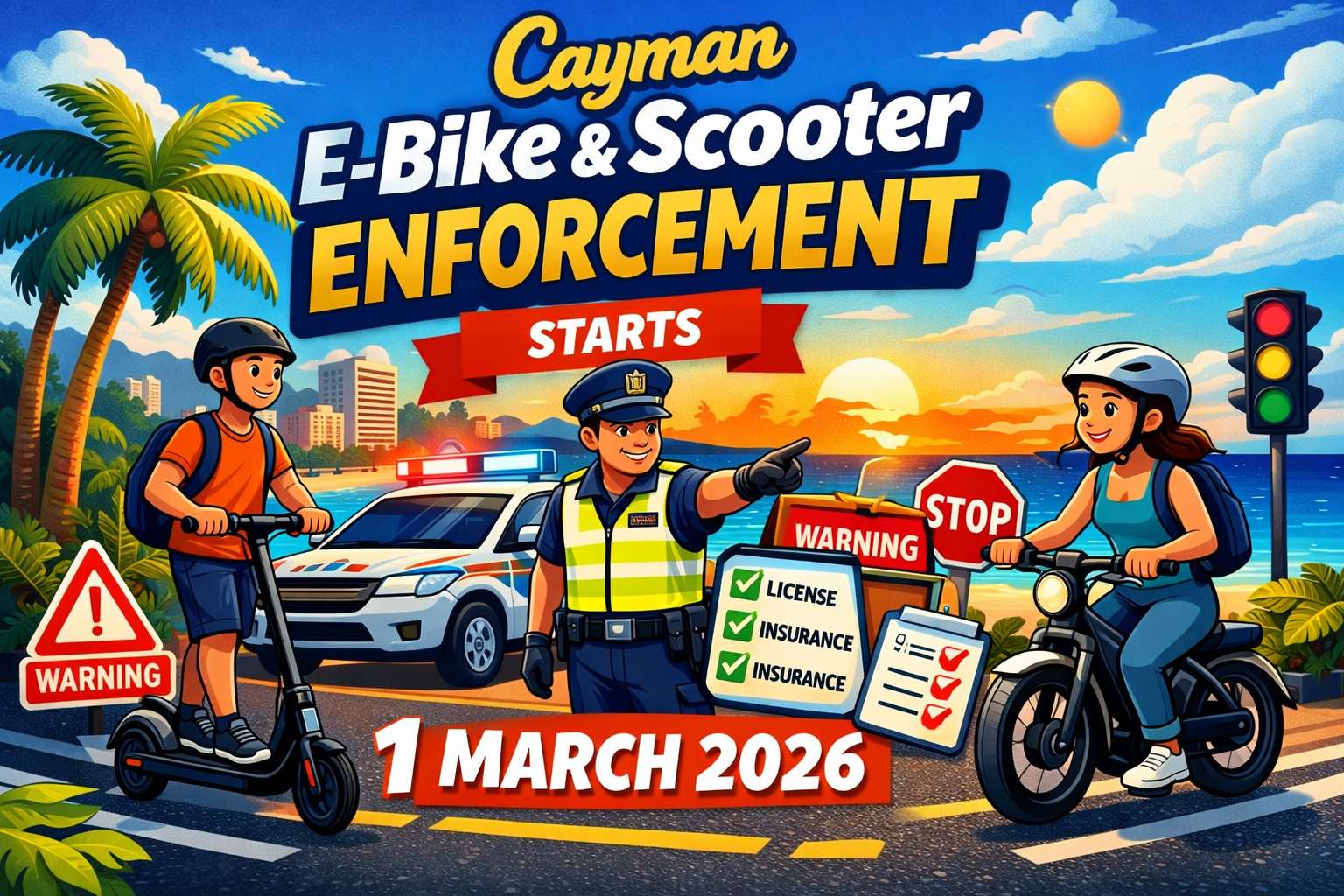
Cayman’s push to crack down on unsafe e-bike and scooter use has moved again. This time, police confirmed that stronger enforcement will begin on 1 March 2026, not mid-January as first planned.
So, riders and local businesses just got a little extra breathing room. Still, the rules did not vanish. They already exist, and the next few weeks are the best chance to get everything sorted without stress.
The new date and why it matters
The Royal Cayman Islands Police Service (RCIPS) shared the updated date on 16 January 2026. That announcement came on the same day enhanced enforcement was meant to start.
Police said the Commissioner of Police decided to delay after hearing concerns from the public and from businesses. Then, they discussed the move with the Governor and Cabinet.
So yes, enforcement shifted. Yet the bigger message stayed the same. Cayman wants legal, insured, properly registered rideables on public roads.
What “enhanced enforcement” really means
You may hear people say, “They delayed the law.” That is not accurate. The law stays in place.
This delay changes how strict and how visible the policing will be. From March 1, riders should expect more checks and quicker action on clear breaches.
So, even now, it makes sense to ride like enforcement already started.
The core legal requirements for riders
If you ride an e-bike or electric scooter on Cayman’s public roads, the rules treat it like a motor vehicle in key ways. That means you need the basics in place, not just a charged battery.
Here is what riders need:
- You must be at least 17 years old
- You must have a Category 0 or Category 2 driver’s licence
- Your device must be inspected, registered, licensed, and insured
So, the “I only ride short trips” argument does not change anything. Road use triggers road rules.
What devices fall under the enforcement push
Many riders think this applies only to stand-up scooters. In reality, Cayman groups a wide range of powered devices under the same safety umbrella.
That includes:
- Throttle-controlled electric bikes
- Pedal-assist e-bikes
- Stand-up and seated electric scooters
- Mopeds and motor scooters
- Motorized bicycles
- Self-balancing devices like Segways
- Other small powered personal transport devices
So, if it has a motor and rolls onto public roads, it can land on the enforcement list.
What police will likely check after 1 March
From March 1, police will focus on compliance that is easy to confirm during a stop. That means you should expect checks for things that prove the device and the rider belong on the road.
Police attention will likely go to:
- The rider’s age
- The rider’s licence category
- Proof the device passed inspection
- Valid registration and licensing
- Proof of insurance
- Unsafe road behaviour, like riding against traffic or using sidewalks
So, even one missing piece can turn into a stop, a fine, or the device being taken off the road.
Why Cayman is taking this seriously
These devices are fast, quiet, and easy to use. That sounds great, and it often is.
At the same time, small wheels and quick acceleration create real risk on busy streets. Then add distracted riding, night riding without lights, or sidewalk weaving, and the danger climbs fast.
So, the goal is not to punish riders. The goal is fewer crashes and fewer injuries.
What riders should do right now
The best move is simple. Use this time to get legal before March 1.
1) Check your licence status
Category 0 or Category 2 matters here. So, if you do not have the right category yet, start that process now.
2) Get the device inspected
Inspection proves roadworthiness. Then it becomes much easier to register and insure the device.
3) Register and license the device
This step is where many riders fall behind. So, once inspection is done, follow through and finish the paperwork.
4) Get insurance locked in early
Insurance has been one of the biggest sticking points. So, call around, ask what documents they need, and keep copies ready. Do not wait for late February.
5) Fix the riding habits that get attention
Bad habits stand out fast, even without a police stop.
Ride with traffic. Avoid sidewalks. Slow down near driveways and junctions. Then stay alert around pedestrians, cyclists, and parked cars.
So, your ride stays calm, and you stay out of trouble.
What this delay means for February road life
This extra time will help some riders catch up. It will help businesses too, since customers keep asking the same questions.
Still, the roads will stay busy. Tourists will keep renting scooters. Locals will keep commuting. Then the same conflicts will keep popping up in tight areas, car parks, and near crossings.
So, expect more warnings and more public reminders through February, even before March 1 arrives.
A quick note on helmets and wider safety trends
Cayman’s update focuses on enforcement and legal road use. Yet rider protection has become part of the global conversation too, especially with helmet rules under review in different places.
If you want a useful comparison, take a look at this update on Ireland’s e-scooter helmet law and what could change next. It gives a clear view of how fast these rules can shift once injuries rise and public pressure builds.
So, even if helmets are not the headline today, smart riders still treat safety as part of the plan.
What to expect on and after 1 March 2026
Once March 1 lands, the “grace period” vibe should end. So, if your device is unregistered, uninsured, or uninspected, you should expect problems.
At the same time, compliant riders should feel more comfortable on the road. Fewer unsafe devices can mean smoother traffic flow and less chaos around pedestrians.
So, the next move is simple. Get your documents sorted, ride respectfully, and treat public roads like public space.