

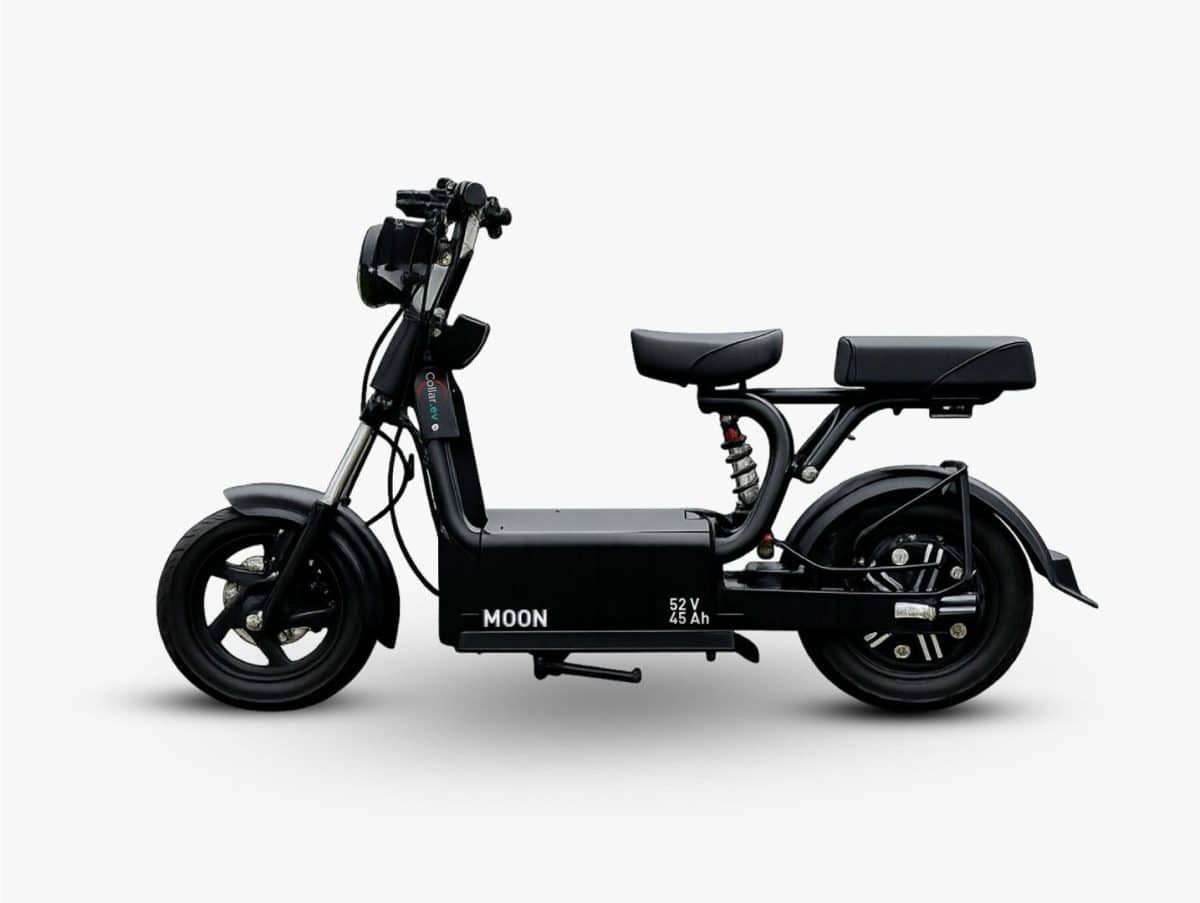
CollarEV targets the real needs of delivery fleets
CollarEV has launched the Moon as a work-focused electric two-wheeler for B2B delivery fleets in India. This is not a style-first city scooter. It is a utility EV built for businesses that need dependable transport for daily routes, repeat stops, and heavy use.
That matters because fleet buyers do not shop like private riders. They care about range, payload, uptime, charging speed, and service support. The Moon tries to answer those needs with a practical layout, connected features, and a spec sheet built around delivery work.
The launch also lands at a good time. Last-mile delivery keeps growing in India, and fleet operators want electric options that can lower fuel costs and simplify urban operations. In that context, the Moon looks like a serious commercial entry, not just a rebadged commuter model.
Why the Moon stands out in the fleet EV space
The biggest selling point is its purpose. CollarEV designed the Moon for delivery fleets, logistics businesses, and commercial operators. That gives it a different position in the market. Most consumer electric scooters sell comfort, style, or smart features first. The Moon sells utility.
That wider use case gives the model strong search value too. Buyers may look for a delivery e-bike, electric cargo bike, fleet electric scooter, last-mile delivery EV, or B2B electric two-wheeler. The Moon fits into all of those conversations.
It also enters a space where competition is heating up. More brands now chase fleet contracts, and operators want vehicles that can work long hours without turning into a maintenance problem. That is why practical launches like this matter. Businesses need machines that keep moving.
If you are tracking this part of the market, it also makes sense to compare it with other commercial launches such as the Quantum Bziness Emo electric scooter for last-mile delivery fleets, which targets a similar business buyer with a different hardware and charging approach.
Key specs that matter in daily delivery use
On paper, the CollarEV Moon offers the kind of numbers fleet managers want to see. It has a claimed range of about 135 km on one charge. It uses a 51.2V 45Ah LFP battery with about 2.3 kWh capacity. CollarEV also says fast charging can take the battery from 0 to 80 percent in about two hours, and a full charge takes about 2.5 hours.
The motor setup also looks practical. The Moon uses a BLDC hub motor rated at 1,500W, with peak power of 2,200W. Top speed is around 50 km/h. Payload capacity goes up to 150 kg. CollarEV also lists the vehicle weight at 85 kg.
Those numbers tell a clear story. This vehicle is built for steady work, not speed thrills. A 135 km claimed range could help riders finish longer shifts with fewer charging breaks. A 150 kg payload gives businesses room for groceries, food bags, courier parcels, and custom cargo setups. The 50 km/h top speed also fits urban and semi-urban delivery use well.
Built for hard use, not showroom appeal
CollarEV seems to understand where many work EVs struggle. Delivery riders face rough roads, repeated starts and stops, changing loads, and long operating hours. So the Moon focuses on durable basics.
Reports around the launch say it uses a fully metal chassis and body. It also gets dual disc brakes and 12-inch wheels. That combination should help in daily commercial use, especially on mixed road surfaces where lightweight urban scooters often feel underbuilt.
The design details also point to flexibility. CollarEV says the Moon comes with attachments like a rear seat and rear carrier. It also says users can remove them with a single Allen key. That sounds like a small thing, but it matters in real work. A fleet vehicle that can shift between different route needs has a clear advantage.
Connected features that fleet operators may actually use
A lot of EV launches throw in tech for marketing. The Moon looks a bit more focused than that. CollarEV says it includes a TFT display, telematics, mobile connectivity, and keyless start and stop.
For a private buyer, those extras may feel optional. For a fleet manager, they can be useful. Telematics can help with tracking, route visibility, and battery status. Mobile connectivity can support better oversight of vehicles in daily use. Small details like that can shape running cost over time.
CollarEV also highlights battery monitoring features and says the battery is designed for more than 1,000 charging cycles. The company has also talked about strong battery support, though buyers should check the exact warranty terms before placing bulk orders.
Price and operating appeal
The reported launch price sits in the range of about ₹79,999 to ₹89,999, while CollarEV’s own site lists the Moon from around ₹80,000. That places it in a zone that could attract attention from businesses looking for a lower-cost electric delivery option.
Still, the real value goes beyond the headline price. Fleet buyers usually look at total running cost. That includes charging time, battery life, service access, payload ability, and time off the road. The Moon seems to target that wider picture. If CollarEV can support the product with good parts supply and responsive service, the model could become more attractive than its price alone suggests.
The company also notes that its high-speed models require registration and insurance. That is important. Some buyers may compare the Moon with lower-speed commercial EVs, but those vehicles often serve a different use case. The Moon aims at businesses that need proper road presence and broader route ability.
One thing buyers should verify before they place a fleet order
There is one issue smart buyers should check carefully. CollarEV’s own materials do not line up perfectly across every source.
One version of the specs points to a lithium-ion battery at 58V, with 1.5 kWh and 2.4 kWh battery pack options, 60 Nm torque, and a three-hour charging time. Other official material describes a 51.2V 45Ah LFP battery, about 2.3 kWh capacity, 95 Nm torque at the wheel, and about 2.5 hours for a full charge.
I cannot confirm which version reflects the final production model. That does not mean the launch is weak. It just means buyers should ask for the latest confirmed production specs before signing larger fleet deals. That includes battery chemistry, torque figure, charging time, included accessories, and exact warranty terms.
Final thoughts
The CollarEV Moon looks like a focused commercial EV with a clear job to do. It offers useful claimed range, strong payload capacity, fast charging, and fleet-oriented features. It also avoids the usual trap of trying to be everything at once.
That focus could work in its favor. Delivery fleets need vehicles that stay simple, durable, and cost-effective. They need EVs that can handle real workdays, not just clean spec-sheet promises. The Moon seems to aim right at that gap.
If CollarEV backs the product with reliable after-sales support and consistent specs, the Moon could become a solid option for businesses looking for an electric delivery vehicle in India. For operators searching terms like delivery e-bike, B2B fleet EV, electric cargo two-wheeler, or last-mile delivery scooter, this is a launch worth watching closely.