

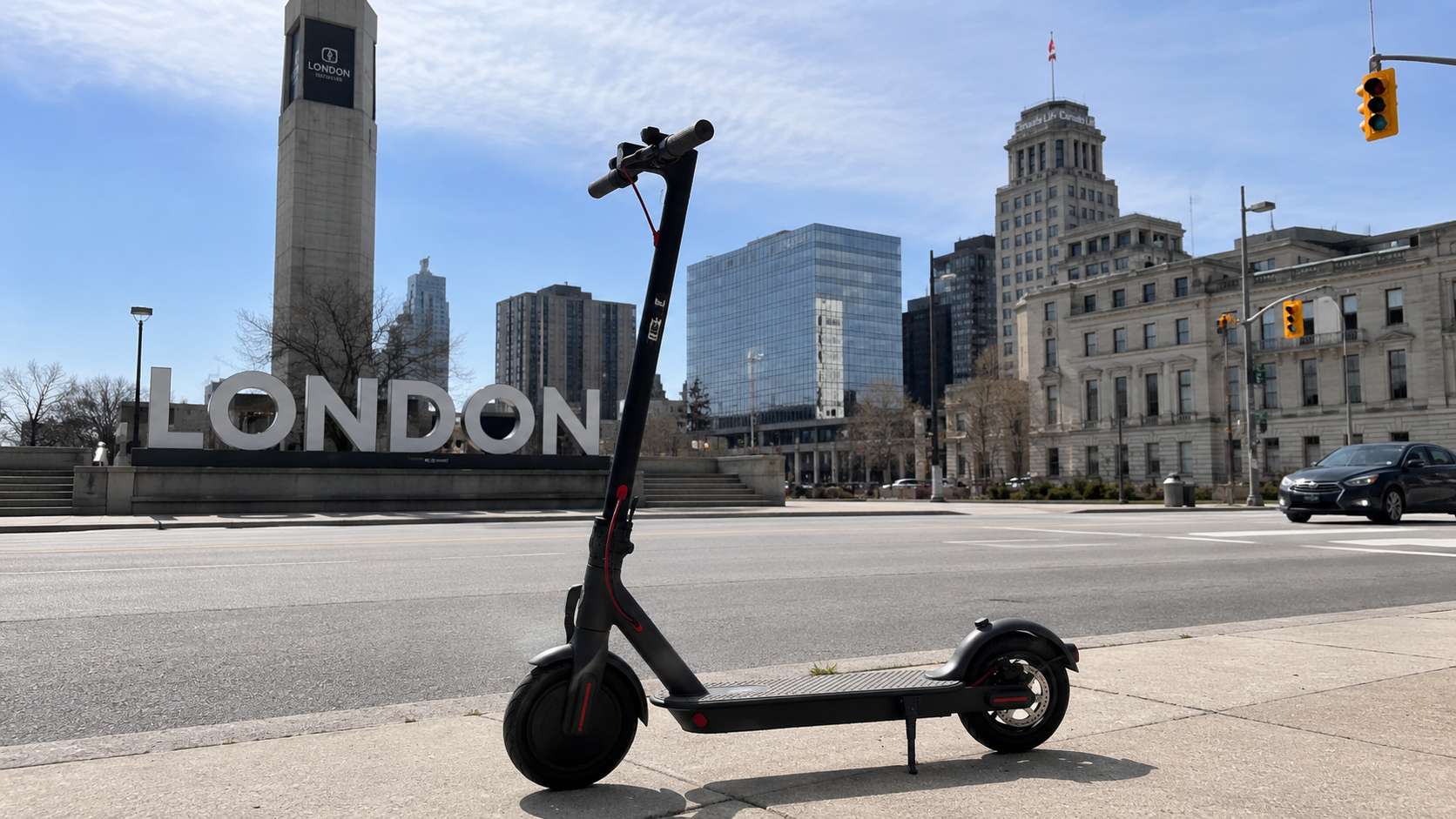
London keeps personal e-scooters legal
London, Ontario riders can keep using personal electric kick-scooters under the city’s updated pilot rules. City council passed the updated Electric Kick-Scooter By-law on May 12, 2026. The vote keeps personal e-scooters on local streets, bike lanes, cycle tracks, and approved multi-use paths.
For now, the decision gives riders more clarity. It also keeps London aligned with Ontario’s wider e-scooter pilot. The province has extended that pilot until November 27, 2029, so London’s rules now sit inside a longer test period.
Still, this does not mean every type of e-scooter program can operate in the city. London allows privately owned e-scooters. It does not allow shared rental e-scooter companies to operate on public property under the current local rules.
That detail matters for riders, commuters, students, and anyone shopping for a new scooter. A personal e-scooter remains legal in London, but only if the rider follows the local by-law and the scooter matches Ontario’s equipment rules.
What council’s vote means for riders
The council vote mainly gives the pilot more stability. Before this update, riders faced more uncertainty around local timelines. Now, London’s rules connect to Ontario’s extended pilot period, so personal e-scooters remain part of the city’s transport mix.
For riders, that means the basic rules stay familiar. You can ride a legal personal e-scooter on roads posted at 50 km/h or less. You can use bike lanes and cycle tracks. You can also ride on approved multi-use pathways, including the Thames Valley Parkway.
At the same time, sidewalks remain off limits. That rule applies across the city, including downtown streets, school areas, shopping zones, and transit stops. The city treats sidewalks as pedestrian space first, so riders need to stay off them.
In practice, the rule is simple. If a bike lane exists, use it. If no bike lane exists, ride near the right side of the road or shoulder. Then keep your speed under control and watch for people walking, cycling, driving, or stepping out from parked cars.
Where e-scooters can and cannot go in London
London’s rules allow personal e-scooters in several common travel areas. Riders can use:
- Roads with posted speed limits of 50 km/h or less
- Bike lanes
- Cycle tracks
- Multi-use pathways
- The Thames Valley Parkway
- Approved park paths
The city also restricts several areas. Riders cannot use personal e-scooters on:
- Sidewalks
- Hiking trails
- Environmentally protected areas
- Roads posted above 50 km/h
- Private property without permission
So, a scooter can help with a short commute or a quick ride across town. But it does not replace every trip. Riders still need to plan routes around legal streets, bike lanes, and paths.
This matters even more in mixed traffic. London has busy roads, older streets, and areas where bike lanes start and stop. For that reason, riders should check the route before leaving home. A legal route usually feels safer too.
Key e-scooter rules in London and Ontario
Ontario’s pilot sets the base rules, and London adds local use rules. Together, they create a clear list of limits for riders.
A legal e-scooter must have two wheels, a standing platform, a handlebar, and an electric motor rated at 500 watts or less. It must not exceed 24 km/h. It must weigh 45 kg or less.
The scooter also needs proper safety gear. It must have a bell or horn. It must have working front and rear lights in low light. It must have brakes strong enough to stop from 24 km/h within nine metres on a clean, flat, paved surface.
Riders must be at least 16 years old. Riders under 18 must wear a bicycle helmet. Passengers are not allowed. Cargo is not allowed. Seats are not allowed. Pedals are not allowed. Riders cannot tow another person, vehicle, or device.
Next, the scooter must stay in its original legal form. Speed changes, power boosts, and illegal modifications can push a scooter outside the pilot rules. That can create trouble for the rider during a police stop or after a crash.
Why provincewide e-scooter rules matter
London’s vote points to a larger issue across Ontario. Each city can make local choices under the provincial pilot. That gives municipalities control, but it also creates confusion.
A rider who understands the rules in London may face different rules in Toronto, Ottawa, Windsor, Mississauga, or another Ontario city. One city may allow shared scooters. Another city may reject them. One city may allow certain paths. Another may ban scooters from similar spaces.
For that reason, London politicians are pushing for clearer provincewide e-scooter rules. A single Ontario framework would help riders understand where they can ride, what equipment they need, what speed limits apply, and how enforcement works.
It would also help city staff and police. Clear provincial rules can reduce mixed messages and make education easier. Drivers, cyclists, and pedestrians would benefit from clearer expectations too.
The topic fits into a larger shift in urban transport. More cities are testing small electric vehicles, shared bikes, and low-car travel options. For example, Lime e-bikes are expanding in UK cities, which shows how other markets are adding more micromobility choices for short trips.
What buyers should check before buying a scooter
Anyone buying an e-scooter in London should check the legal specs first. Many online scooters advertise higher speeds, larger motors, seats, baskets, or off-road features. Those extras may look useful, but they can make the scooter illegal on public roads and paths.
Before buying, check for:
- Maximum speed of 24 km/h
- Motor rated at 500 watts or less
- Weight of 45 kg or less
- No seat
- No pedals
- No cargo basket
- Working bell or horn
- Front and rear lights
- Strong brakes
- No speed modifications
Then check the seller’s product page closely. Some scooters ship with speed modes that exceed the legal limit. Some models use marketing terms that hide the real motor rating. So, read the spec sheet before paying.
A legal scooter may feel slower than a high-powered model, but it fits the rules and reduces risk. It also makes more sense for city riding, where stops, traffic lights, pedestrians, and bike lanes shape the trip.
Safety still drives the debate
E-scooters can help people cover short trips without a car. They can reduce pressure on parking. They can also connect riders to buses, schools, offices, parks, and downtown shops.
Still, safety remains the main concern. Sidewalk riding can put pedestrians at risk. Fast scooters can surprise drivers at intersections. Poor parking can block people using wheelchairs, walkers, strollers, or mobility aids.
For that reason, riders need to use common sense along with the by-law. Slow down near crossings. Ring the bell before passing. Leave space around pedestrians. Park near a bike rack, not across a sidewalk. Use lights before dawn, after dusk, and in poor weather.
A safer scooter culture will help London decide what comes next. If riders follow the rules, the city has stronger reasons to keep personal e-scooters in the transport mix.
The bottom line for London riders
London’s council vote keeps personal e-scooters legal under the local pilot. Riders can use them on roads posted at 50 km/h or less, bike lanes, cycle tracks, and approved multi-use paths. They cannot ride on sidewalks.
The city still does not allow shared rental e-scooter companies on public property. So, London’s current system remains focused on privately owned scooters.
For now, riders should check their scooter specs, follow the 24 km/h speed limit, stay off sidewalks, and use bike lanes where they exist. Then, as Ontario works toward clearer provincewide rules, London’s pilot will keep shaping how e-scooters fit into daily travel.