

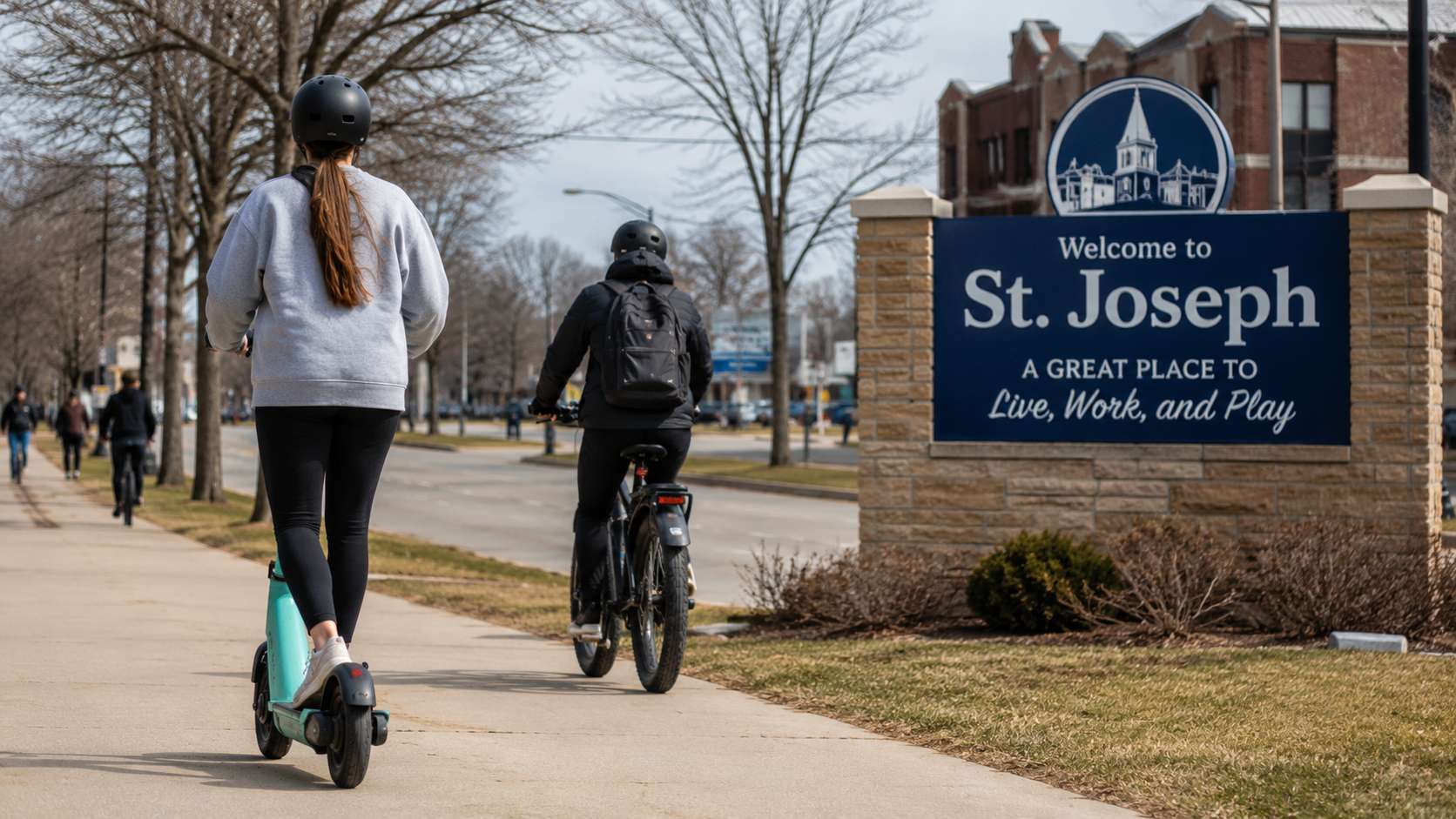
St. Joseph is taking a closer look at e-bike and e-scooter use on city streets, sidewalks, parks, and trails. The topic has gained attention as more riders use electric mobility devices for school trips, short errands, and warm-weather rides around town.
The city has not posted a final e-bike ordinance in the public materials reviewed for this article. Still, the direction is clear. Local leaders want clearer rules, better rider education, and safer shared spaces.
For riders, that means the casual “just hop on and go” habit needs to change. For parents, it means an electric scooter or e-bike purchase now comes with real road rules. For drivers and pedestrians, it means more attention near crosswalks, trail entrances, schools, and parks.
St. Joseph is not the only community facing this issue. Electric bikes and scooters now create the same questions in many cities, and similar concerns have already surfaced in places where e-bikes and e-scooters are everywhere in Iowa City. The core issue stays the same: the devices arrived fast, and local rules now need to catch up.
Why St. Joseph Is Reviewing E-Bike And E-Scooter Rules
City discussions in St. Joseph have focused on safety, education, and clear limits for public spaces. E-bikes and e-scooters can help people move around town with less traffic and lower fuel costs. But they can also create problems on narrow sidewalks, busy trails, and routes used by walkers.
A regular bike and a high-powered electric device do not carry the same risk. Speed changes the whole picture. A rider traveling 20 mph can reach a pedestrian in seconds. A child stepping off a curb has little time to react. A driver pulling out of a driveway may not expect an electric scooter to pass that fast.
So the city is looking at practical steps. Signs can tell riders where electric devices belong. A public education plan can explain the rules before tickets start. Rider classes can help young users learn safe habits. Fines can deal with repeat problems after warnings and education.
That mix gives the city a fair path. It does not treat every rider like a problem. But it does set boundaries for devices that move faster than many people expect.
Minnesota E-Bike Rules Already Apply In St. Joseph
State law already gives riders a starting point. Minnesota defines an electric-assisted bicycle as a bike with two or three wheels, a seat, working pedals, and an electric motor with a power output of no more than 750 watts.
The bike must fit one of three e-bike classes:
- Class 1: The motor helps only during pedaling and stops helping at 20 mph.
- Class 2: The motor can move the bike without pedaling and stops helping at 20 mph.
- Class 3: The motor helps only during pedaling and stops helping at 28 mph.
Minnesota law bars riders under age 15 from operating an electric-assisted bicycle. That detail matters for parents. A child may handle a regular bike well, but that does not mean the child can legally ride an e-bike on public streets.
Class 3 e-bikes need a speedometer. Makers and sellers must label e-bikes with the class, top assisted speed, and motor wattage. That label helps riders know what they own. It also helps police and city staff sort legal e-bikes from faster devices that fall outside the state definition.
E-Scooter Rules Are Different From E-Bike Rules
E-scooters follow a separate set of rules in Minnesota. Most stand-up electric scooters fall under motorized foot scooter rules. The rider must be at least 12 years old. Riders under 18 must wear a fitted and fastened helmet.
Passengers are not allowed. Sidewalk riding is banned except for entering or leaving nearby property. That rule matters in St. Joseph, where sidewalks near schools, parks, and homes can get crowded.
On roads, scooter riders must stay close to the right-hand curb or edge. For a left turn, the rider must stop, get off the scooter, and cross on foot like a pedestrian. At night or in low light, the scooter needs a headlight and taillight.
These rules sound simple. Yet many riders do not know them. That is why education keeps coming up in city discussions. A short video, school session, or printed guide can prevent many unsafe rides before enforcement becomes the main tool.
Sidewalks And Trails Sit At The Center Of The Debate
Sidewalks feel safe to riders, mainly younger riders. But sidewalks are built for walking, not fast electric travel. A scooter or e-bike can pass too close to someone with a stroller, a dog, a cane, or a small child.
Trails raise the same concern. Many people use shared paths for exercise, quiet walks, or family rides. A fast electric device changes the feel of that space. Even a careful rider can startle people from behind.
That is why St. Joseph leaders have discussed signs and route rules. A clear sign at a trail entrance gives riders an instant answer. A posted speed rule removes guesswork. A list of banned areas helps parents teach children before they ride.
For local riders, the safest habit is simple: slow down near people. Use streets or marked bike areas where allowed. Keep e-scooters off sidewalks. Treat parks and trails as shared spaces, not speed zones.
What A Local St. Joseph Ordinance Could Include
A final ordinance has not appeared in the reviewed city materials. Still, the ideas discussed so far point to a local rule package built around safety and education.
The city has reviewed options such as:
- Public education for riders and parents.
- Signs on sidewalks, trails, and park routes.
- Clear areas where e-bikes are allowed or banned.
- Possible bike registration for residents.
- Rider classes for rule violations.
- Fines or petty misdemeanor treatment for repeat or unsafe behavior.
A registration idea may sound strict at first. Yet it can help the city share rules with owners before problems happen. It can also help parents learn the difference between a legal e-bike, an e-scooter, and a faster electric motorcycle-style device.
That difference matters. Some online listings use the word “e-bike” for devices that do not match Minnesota’s legal e-bike definition. If a device has no pedals, exceeds the motor limit, or runs faster than the class limit, it may fall into another category.
What Parents Should Check Before A Child Rides
Parents should treat e-bikes and e-scooters as road devices, not toys. The first check is age. E-bike riders must be at least 15 under Minnesota law. Motorized foot scooter riders must be at least 12, and riders under 18 must wear a helmet.
Next, check the device label. A legal e-bike should show its class, assisted speed, and motor wattage. If the label is missing, unclear, or shows a motor above 750 watts, the device needs closer review.
Then, review where the child plans to ride. Sidewalks are not the default safe choice. Streets, marked bike lanes, and allowed paths are often the correct place, but local signs matter.
Parents should teach these basic habits:
- Stop at stop signs.
- Ride with traffic.
- Slow down near walkers.
- Use lights in low light.
- Wear a helmet on every ride.
- Avoid phone use during the ride.
- Never carry a passenger on an e-scooter.
Small habits make a real difference. A rider who slows near driveways and crossings gives everyone more time.
What Drivers And Pedestrians Should Expect
Drivers in St. Joseph should expect more electric devices on local roads this year. E-bikes can move faster than regular bikes, mainly Class 3 models. E-scooters can appear near intersections, schools, and trail crossings.
So drivers should look twice before turning. Give riders space. Watch for young riders who wobble, slow suddenly, or drift toward the curb. At crosswalks and driveways, assume an electric device can arrive sooner than expected.
Pedestrians should stay alert on shared routes. A rider should slow down and call out before passing, but not every rider does. Keep dogs on short leashes near bike paths. Leave space on trails where people pass in both directions.
The best system depends on shared habits. Clear rules help, but everyday care matters too.
What Happens Next For St. Joseph Riders
St. Joseph appears ready to keep working toward clearer e-bike and e-scooter rules. The next step is a draft rule set that tells riders where they can go, where they cannot go, and what happens after unsafe riding.
For now, riders should follow Minnesota law and watch for local signs. Parents should check age limits and device labels before handing over the keys, charger, or app. Drivers should expect more riders as spring and summer traffic grows.
The message is direct. E-bikes and e-scooters now belong in the daily traffic mix, but they need rules that match their speed. St. Joseph’s review gives the city a chance to protect walkers, guide families, and keep responsible riders moving safely.