

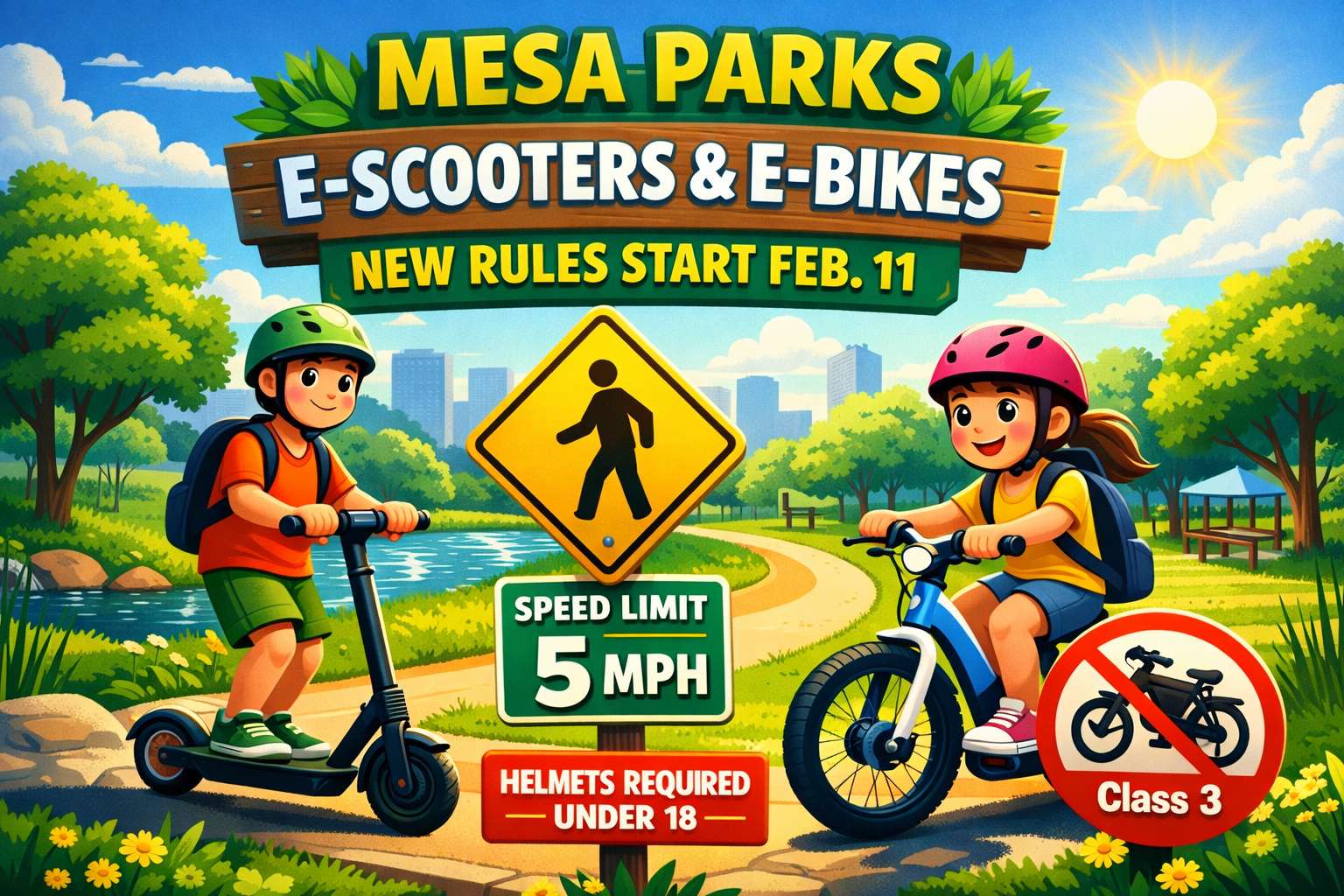
Mesa is changing how people ride in city parks. The City Council approved updated rules that allow certain electric scooters and electric bikes to use park sidewalks and shared-use paths. The goal stays simple. Keep parks safe and make the rules easy to understand.
The new rules start on Feb. 11, 2026. Mesa plans to add signs and share safety reminders before that date. So riders know what is allowed, and families know what to expect.
What Mesa changed, in plain terms
Mesa now allows these rides in city parks:
- Electric stand-up scooters
- Class 1 e-bikes
- Class 2 e-bikes
That means you can ride in parks in the same places where regular bicycles are allowed, like shared-use paths and park sidewalks. So if you already ride a bike in the park, the change will feel familiar.
Mesa still keeps a firm limit in place. Class 3 e-bikes are not allowed in city parks. The city wants to avoid higher assisted speeds in areas where people walk, stop suddenly, or move in unpredictable ways.
A quick guide to e-bike classes
A lot of riders hear “Class 1” or “Class 2” and shrug. Still, the class matters, since it decides what you can ride in the park.
Here’s the simple breakdown:
- Class 1 e-bike: pedal assist only, up to 20 mph
- Class 2 e-bike: throttle or pedal assist, up to 20 mph
- Class 3 e-bike: pedal assist, up to 28 mph
Only Class 1 and Class 2 e-bikes fit the new Mesa park rule.
Some electric rides look like bicycles at first glance, but they behave more like small motorcycles. So if your ride has a bigger frame, a higher top speed, or a motor that feels too strong for park paths, it may fall into a different category under state law. Then it will not get the same park access.
The speed rule that matters most
Mesa’s message is clear. Slow down in parks.
The updated rules set a 5 mph speed limit in designated park areas for e-bikes and e-scooters. That speed sits close to a fast walking pace, so it makes passing safer and reduces sudden collisions.
This is not just about comfort. Parks bring together many people at once, and they move in every direction. Parents push strollers. Kids drift across the path without looking. Dogs stop and sniff and then dart forward. Runners cut corners. So a low speed limit gives everyone more time to react.
Mesa also keeps the right-of-way rule simple. Pedestrians come first. Riders need to slow down, wait when the path gets tight, and pass with care.
New rules for kids and teens
The biggest change for minors is protective gear.
Under the new Mesa park rules, riders under 18 must wear a helmet when using an e-bike or an electric scooter in parks. That is a direct push toward fewer head injuries, especially in shared spaces where people ride close together.
This is where families should pay attention. A teen can ride a Class 1 or Class 2 e-bike in the park after the start date. A child can ride an e-scooter too. But the helmet rule still applies every time.
If you want to make this easy, set the helmet near the scooter or the bike. Then it becomes part of the habit, not a last-second argument at the car. Also check the fit. A helmet should sit level and stay stable when the rider shakes their head.
Want a bigger picture on helmet rules and how they change over time? This guide explains what could shift next, and why it matters: Ireland e-scooter helmet law: what could change next and why it matters.
Why Mesa changed the rule at all
Mesa did not change the ordinance just for fun. Electric rides have become normal for short trips, weekend rides, and quick park loops. So a lot of people already use them near parks and shared paths.
A full ban sounds clean on paper. But real life looks different. People still ride. Some ride fast. Some ignore walkers. Then the city ends up with a rule that feels invisible.
So Mesa chose a more practical approach. It set clear rules that people can follow, and that the city can actually enforce. That includes a speed cap, pedestrian priority, and helmet use for riders under 18.
What happens next in Mesa parks
Mesa plans to support the new rule with education, not just tickets. That means people should start seeing clearer signage at:
- Park entrances
- Shared-use path entry points
- Common crossing areas
The signs should remind riders about allowed devices, speed limits, and safe passing. So even casual riders who never read city rules still get the message.
Will this stop every risky rider? No. But it gives Mesa a consistent rule set to point to, and it gives park users a shared standard to expect.
The quick checklist for riders
If you want a smooth ride once the rules start, keep it simple.
Allowed in Mesa parks
- Class 1 e-bike
- Class 2 e-bike
- Electric stand-up scooter
Not allowed in Mesa parks
- Class 3 e-bike
Key park habits
- Keep speed near 5 mph in designated park areas
- Yield to pedestrians every time
- Wear a helmet if the rider is under 18
- Pass only when there is space
What this means for safety and daily park life
Mesa’s change will likely bring more riders into parks. That can be a good thing. It supports short rides, family outings, and fresh-air exercise. It also helps people who use e-bikes for mobility or quick errands.
Still, more devices on paths means more chances for close calls. So the best riders stick to the basics, even when the path looks clear.
Ride slower near crowds. Brake early, not late. Keep a steady line. Avoid weaving. Use a bell, or a calm voice, before passing. Then give space as you go by.
One question matters here: Will parks feel more crowded after Feb. 11, 2026? Yes, in many places they will, so slow riding and polite passing will matter even more.
Mesa is betting that clear limits will work better than vague rules that people ignore. If riders follow the speed cap and respect walkers, parks stay relaxed. Then everyone gets to enjoy the same paths without stress.