

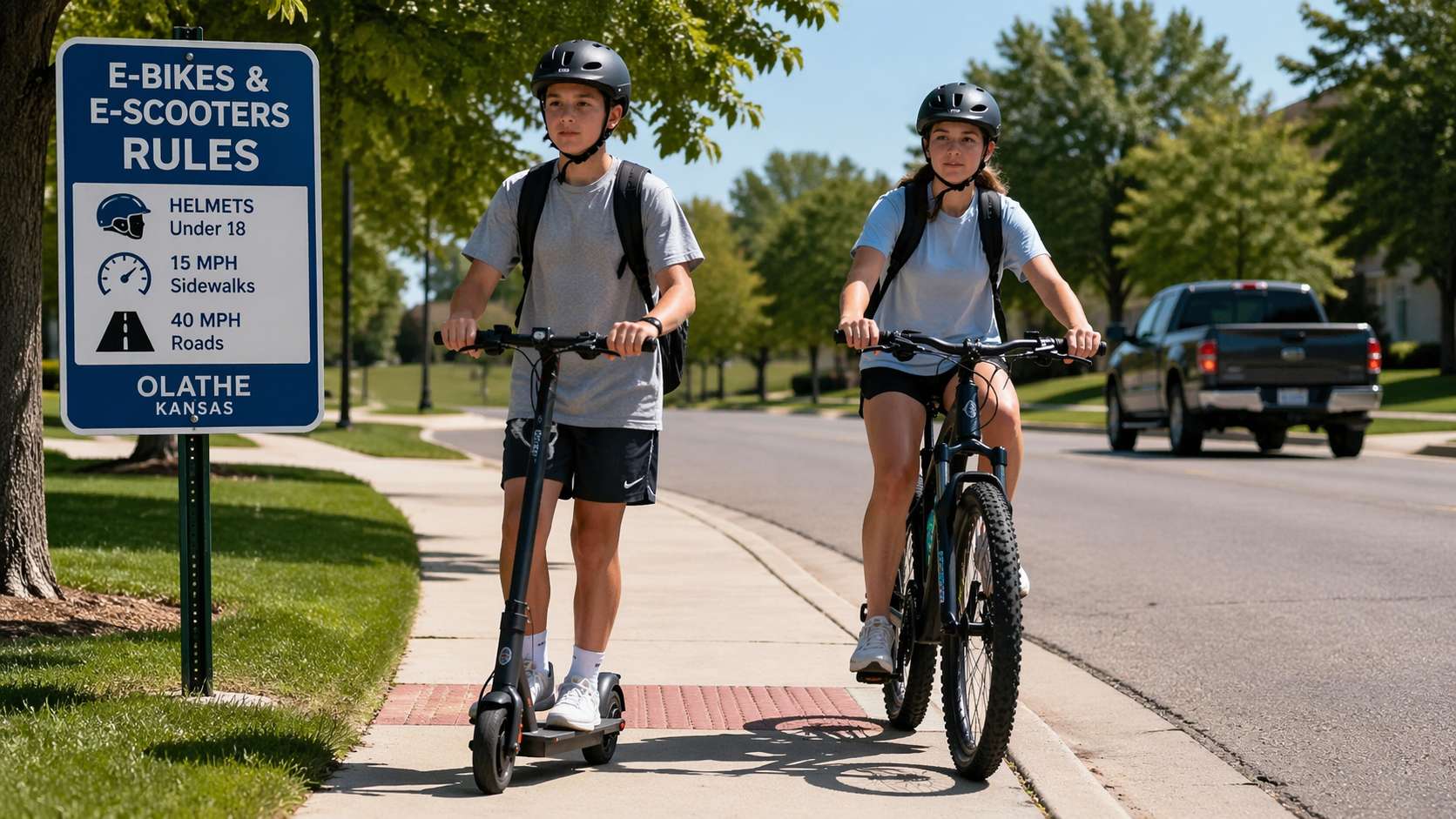
Olathe has updated its rules for e-bikes, electric scooters, and other small electric ride devices. The changes aim to make local streets, sidewalks, neighborhoods, and school areas safer as more children and teens use these rides.
The biggest change is easy to understand. Riders under 18 must wear a helmet on an e-bike or electric scooter. Olathe has also set clearer speed and road-use rules. E-bikes can use roads posted up to 40 mph. Electric scooters face tighter road limits. Both e-bikes and electric scooters must stay at or below 15 mph on sidewalks.
The update follows growing local concern about fast electric rides in areas shared with cars and pedestrians. Many families now use e-bikes and scooters for short trips, school runs, and weekend rides. That makes clear rules more useful for everyone.
Before this update, many riders were unsure where they could ride and how fast they could go. Now, Olathe has put those limits in plain terms. If you followed the earlier discussion around how Olathe e-bike and e-scooter rules may change soon, this new ordinance gives riders the answer they were waiting for.
Olathe Adds Helmet Rules for Young Riders
The helmet rule applies to anyone under 18 riding an electric scooter or e-bike in Olathe. That includes teens riding to school, younger riders using sidewalks, and children riding near parks or homes.
This rule matters. Many e-bikes and electric scooters move faster than parents expect. A child can leave a driveway, reach a street corner, and cross traffic in only a few seconds. A helmet cannot stop every injury, but it gives the rider basic protection during a fall or crash.
Olathe also encourages helmet use for adults. The legal rule targets riders under 18, but the safety advice applies to all riders. A short trip can still end badly if a rider hits a curb, loses balance, or meets a car at the wrong moment.
Parents have a role too. The city says adults cannot knowingly allow children to break bicycle, e-bike, or electric scooter rules. So this is not only a rule for kids. It also tells parents to check the basics before a young rider leaves home.
That means checking the helmet, lights, brakes, speed setting, and route. It may feel like extra work at first. Still, it can prevent a risky ride before it starts.
What the New E-Bike Rules Mean
E-bikes can ride on Olathe roads with posted speed limits up to 40 mph. That gives e-bike riders more road access than electric scooter riders, but it still draws a clear line. Roads posted above 40 mph are not included in that local rule.
Sidewalk riding has a lower limit. E-bikes must stay at or below 15 mph on sidewalks. That matters near driveways, schools, parks, and shopping areas. People walking may not hear an e-bike coming, and children can step sideways without warning.
Kansas law also matters for faster e-bikes. Riders under 16 cannot operate a Class 3 electric-assisted bicycle. A younger person can ride as a passenger only if the Class 3 e-bike is built for passengers.
That detail is worth checking before buying an e-bike for a teen. Some e-bikes look similar online, but the class rating changes how they can be used. A Class 3 model is faster than many parents expect, so families should check the label, speed, and motor type before purchase.
Electric Scooter Rules Are Tighter
Electric scooters face stricter road rules in Olathe. Riders can use them on a road only if the posted speed limit is 30 mph or lower and no sidewalk is available.
That rule keeps scooters away from faster traffic. It also pushes riders toward sidewalks and lower-speed areas. Still, sidewalk riding comes with responsibility. Electric scooters must stay at or below 15 mph on sidewalks.
Riders must also yield to pedestrians. They need to warn people before passing, too. A bell works. A clear “on your left” also works. The main point is simple: walkers should not have to guess that a scooter is coming from behind.
For scooter riders, this means speed control matters more than ever. Many electric scooters can go faster than 15 mph. Riders need to slow down before they reach busy sidewalks, driveways, corners, and crosswalks.
Sidewalks, Trails, and Shared Spaces
Olathe does not appear to ban e-bikes or electric scooters from all city trails. Still, some county trails or private trails may have separate rules. Riders need to watch posted signs and respect local limits.
This matters because many trips cross different areas. A rider might start on a neighborhood sidewalk, move onto a trail, then return to a street. One route can include several types of space.
The city also bans careless, reckless, or negligent riding. Riders should not weave through traffic. They should stay near the right side of the road unless they are turning left.
These rules are not just technical details. They respond to real problems. Fast passing on sidewalks, sudden turns, and traffic weaving can scare pedestrians and create crashes. The new ordinance gives the city a clearer way to address that behavior.
Lights, Night Riding, and Crash Rules
E-bikes and electric scooters need proper lighting for dusk or night riding. This rule is especially useful during school months and winter, when daylight fades earlier.
A rider in dark clothes on an unlit scooter can be hard for drivers to see. The same goes for an e-bike moving through a neighborhood after sunset. Lights help drivers, walkers, and other riders understand what is coming.
The ordinance also covers crashes. If a rider gets into an accident that injures someone or damages property, the rider must share contact information and report the crash to police.
That rule makes sense. E-bike and electric scooter crashes are still traffic incidents. Riders should not leave after hitting a person, car, fence, mailbox, or parked vehicle.
Parents should explain this part to young riders before handing over the device. A child or teen needs to know what to do after a crash, not only how to ride.
Some Electric “Bikes” May Not Count as E-Bikes
Olathe also warns riders about electric-powered bikes that cannot be pedaled. These devices may count as motorcycles or motor-driven cycles. That means they may require a license to ride.
This can confuse shoppers. Some products look like e-bikes in photos but act more like small electric motorcycles. If the device has no working pedals, buyers should not assume it falls under normal e-bike rules.
Before buying, families should check the device type, pedals, top speed, class label, brakes, lights, and passenger design. A low price can look tempting, but the wrong device can create legal and safety problems.
Police Will Focus on Education First
Olathe says the ordinance can lead to tickets, but police will begin with education. That means riders may see warnings, outreach, and reminders before strict enforcement becomes the main focus.
Still, the rules are active. Riders should not treat the education period as permission to ignore them. The city now has clearer standards for helmets, speed, road access, lighting, passing, and crash reporting.
For families, the best plan is simple. Check the helmet if the rider is under 18. Keep sidewalk speed at 15 mph or lower. Use lights at dusk or night. Know which roads are allowed. Yield to pedestrians. Warn before passing. Report serious crashes.
Olathe’s new e-bike and electric scooter rules are not a ban. They are a safety reset. Riders can still use these devices across much of the city, but they now have clearer limits.
For parents, teens, commuters, and casual riders, the message is direct: ride slower near people, wear a helmet under 18, know where the device belongs, and treat every trip like real traffic.