

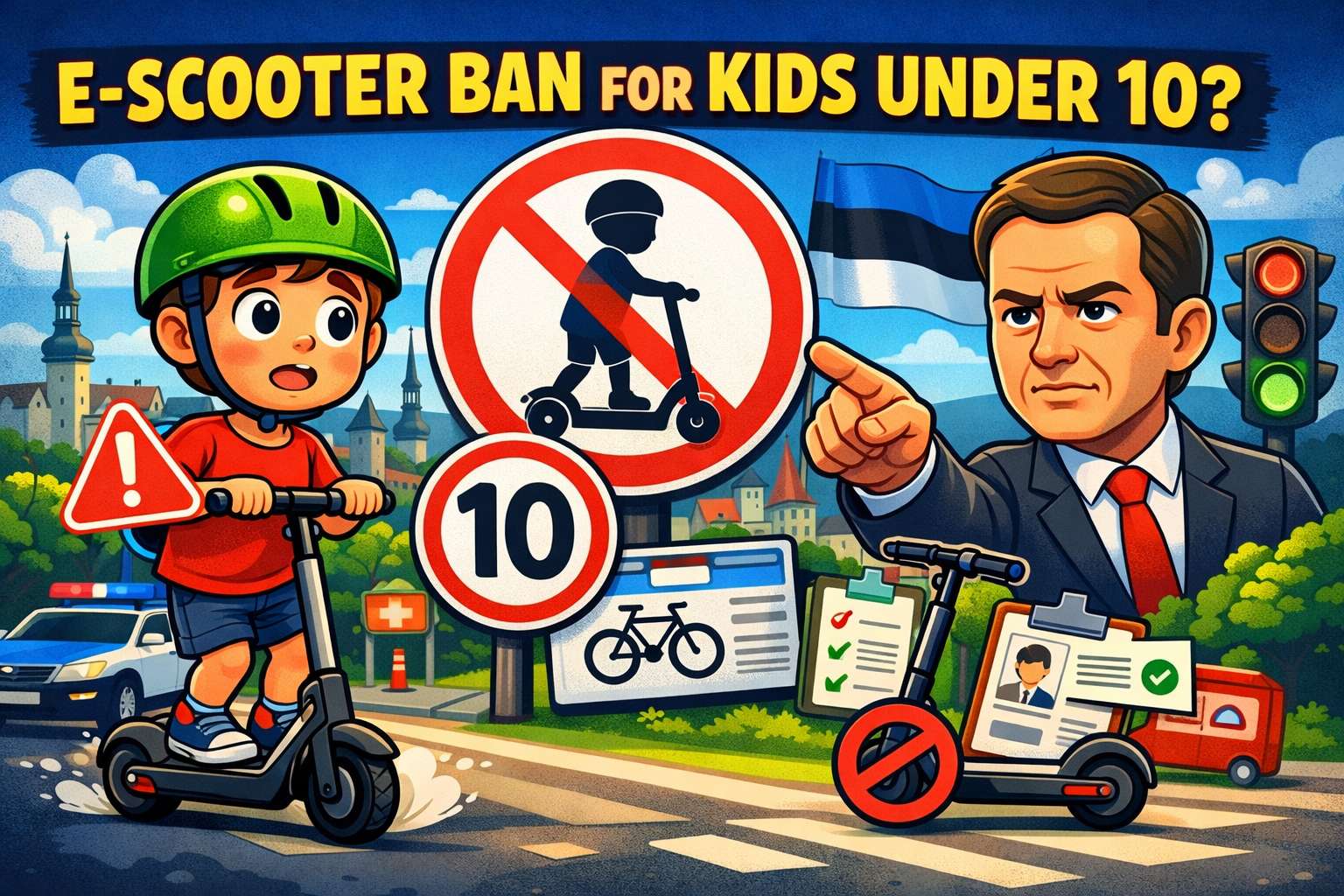
Estonia may soon tighten its electric scooter rules for children, and that could change daily travel for many families. Infrastructure Minister Kuldar Leis wants to ban children under 10 from riding electric scooters. He wants basic school pupils to hold a bicycle license too. That would move Estonia toward a much firmer child safety rule for e-scooters and other light personal mobility vehicles.
A sharper line for young riders
Leis has drawn a very clear line. Children under 10 would not be allowed to ride electric scooters at all under the planned change. And children aged 10 to 15 would need a bicycle license before they ride. He linked that rule to road safety and basic traffic knowledge, since these vehicles can still reach 25 km/h.
The plan reaches past private riders. It would push rental scooter firms to verify a user’s identity and right to ride. Local governments would then oversee compliance by rental operators. ERR reported that the state could fine rental firms up to €3,200. It could fine a parent up to €160 for giving a scooter to a child who has no right to ride it. That makes this proposal more than a simple age rule. It would pull parents, rental apps, and local authorities into the same legal chain.
That matters for search terms like Estonia electric scooter law 2026, e-scooter age limit in Estonia, and child electric scooter rules. People are not just asking who can ride. They are asking what counts as legal use, who checks age, and what happens after a rule break. So this proposal could affect a lot more than school runs and short leisure rides.
What the law says right now
Right now, Estonia already has official e-scooter rules. The Estonian Transport Administration says riders under 16 must wear a helmet. It says riders must travel alone, use cycle and pedestrian tracks or pavements, and stay under 25 km/h. It tells riders to slow near pedestrians, and it tells them to cross roads at pedestrian speed. So the country does not treat electric scooters like toys. It already treats them like traffic vehicles with real duties.
The current age rules are more limited than the new plan. Children under 8 must not ride on carriageways. Young people aged 8 to 15 without a cycling license can ride on a carriageway only with adult supervision, and only in the rare case that safer road types are not available. Young people aged 10 to 15 with a cycling license can ride on a carriageway without adult supervision in that same case. So the new Leis proposal goes further. It would ban under-10 riders outright, not just limit where they ride.
That distinction is easy to miss, and it matters a lot. Under the current rule book, a child’s riding rights depend on age, road type, and cycling license status. Under the new plan, the first gate would be much simpler. A child under 10 could not ride at all. Then the next gate would be the bicycle license. That kind of structure is easier to explain, and it is easier to enforce too.
Why the debate is growing now
The safety case is not hard to see. A legal e-scooter can move at up to 25 km/h. That speed is not extreme for a road user, but it is fast in mixed spaces with pedestrians, parked cars, driveways, and crossings. A young child can misread traffic, brake late, or drift into a risky position in a second. So the debate now centers on age, judgment, and basic road knowledge.
Police concerns add to that picture. ERR reported that intoxicated riders remain a concern, and police have flagged overly powerful, overly fast scooters as a growing problem too. That concern reaches minors as well. So the new proposal is part of a wider push to bring more order to light personal mobility use, not just a narrow rule aimed at one age group.
Bolt’s position adds another layer. ERR reported that Bolt already bans under-16 users from renting scooters, and the company said the legislative change would not greatly disrupt its present operations. Still, the firm expects identity checks to become stricter, with checks that may include selfie verification at intervals after a user’s identity and age have been confirmed. That points to a clear trend. Estonia wants stronger age verification in the rental market, and it wants clearer accountability too.
What parents should take from this
For parents, the main lesson is simple. Estonia is treating the electric scooter less like a casual gadget and more like a real road vehicle. That shift has been building for some time, and this new proposal pushes it further. So parents who buy e-scooters for children need to think about age, road skills, helmet use, and day-to-day supervision in a more serious way.
A bicycle license now sits near the center of this debate. That makes sense in one way. Estonia already has a known system for basic road training, and the proposal builds on that. But it raises a practical question too. Are families ready to treat child e-scooter use like child cycling in traffic? In legal terms, Estonia looks ready to move in that direction.
And this is the part many families should not miss. The current official rules already say riders under 16 must wear a helmet, and they already set strict limits on speed, road use, and crossing behavior. So even before any new ban takes effect, parents have a clear duty to read the present rule set and act on it. A good first step is teaching age-fit riding habits, helmet use, and route choice. This kids’ scooter safety guide helps frame those basics in a practical way.
What happens next
As of March 26, 2026, Estonia has a live proposal, not a final nationwide ban for children under 10. The policy direction looks clear, but the legislative process still needs to run its course. So families should read this as a serious warning about where the law is heading, not as a final rule already in force today.
Still, the message from Tallinn is strong. Kuldar Leis wants a harder age limit, a bicycle license rule for school-age riders, and tighter identity checks for rental scooters. And the official rules already show that Estonia takes e-scooter safety seriously. So this topic will stay active in search, in schools, and in family buying choices for some time yet.