

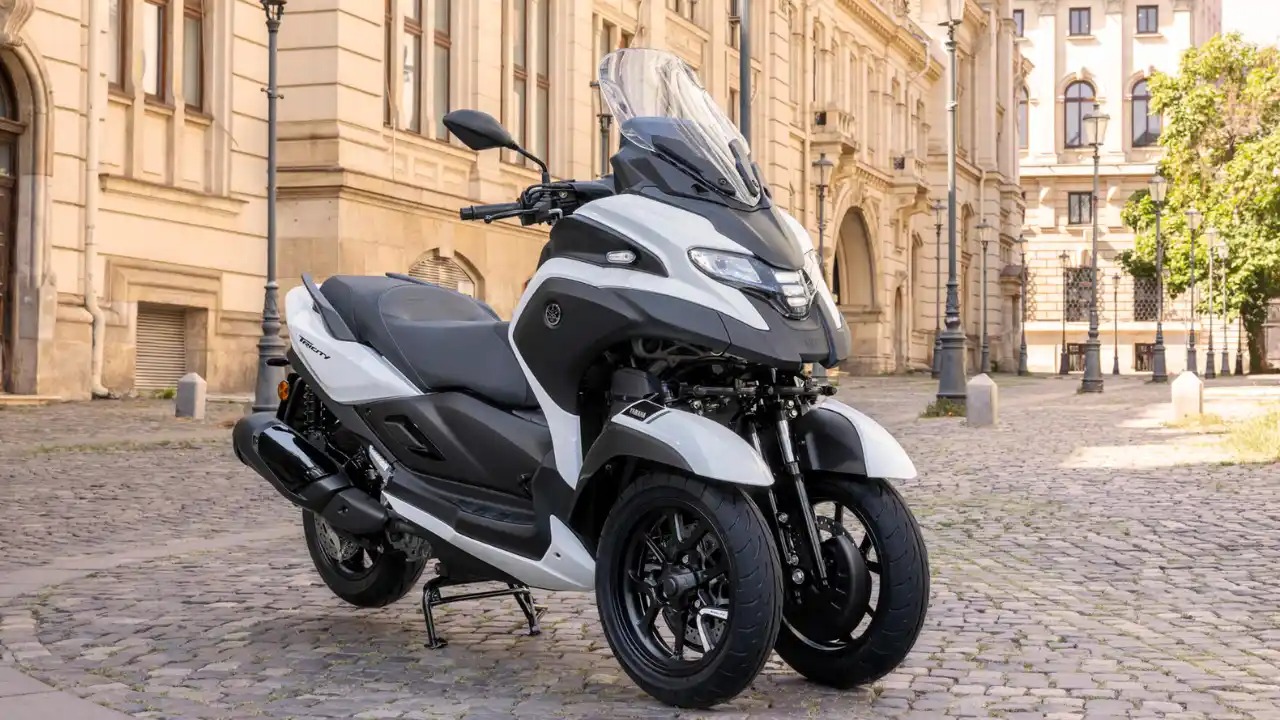
Yamaha has pulled the wraps off the 2026 Tricity 300 Airbag, and this is not a small update. The new model brings a rider airbag, fresh styling, better onboard tech, and a stronger list of safety features. That instantly makes it one of the most interesting urban scooters announced this year.
For many riders, the airbag is the main reason this launch stands out. Scooters usually get updates like new colors, a sharper front end, or a revised display. Yamaha went much further. It added a safety feature that most people still expect to see only in cars, not in a production scooter.
The result is a Tricity 300 that feels more serious, more modern, and more valuable for daily use. If you have been searching for the 2026 Yamaha Tricity 300, Yamaha Tricity 300 airbag, Tricity 300 specs, or Yamaha 3 wheel scooter price, this new model deserves a close look.
The airbag gives the Tricity 300 a rare edge
The biggest change is simple. Yamaha has fitted the 2026 Tricity 300 with an airbag system designed to help in severe frontal collisions. That alone sets this scooter apart from most of the market.
It is a bold move, and it makes sense. Safety has become a bigger part of the buying decision, especially for commuters and newer riders. Many people want a scooter that feels stable, predictable, and easy to live with every day. Yamaha already had part of that formula with the Tricity platform. Now it adds another layer of protection.
This update also lands at a time when riders are paying closer attention to safety issues, braking performance, and manufacturer fixes. That wider conversation has stayed active in the scooter space, especially after cases like this recent Yamaha scooter recall in India, which focused on a free front brake repair for affected models.
The Tricity 300 Airbag does not just try to look safer. It aims to be safer in a way riders can understand right away.
Yamaha kept the core formula, and that was the right call
Not every new model needs a brand new engine. Yamaha has kept the Tricity 300’s 292 cc liquid cooled single cylinder Blue Core engine for 2026, and that feels like a smart decision.
The official figures point to 20.6 kW at 7,250 rpm and 28.9 Nm at 5,750 rpm. Fuel consumption is listed at 3.3 liters per 100 km. That should keep it attractive for riders who want a practical commuter with decent efficiency and enough power for city work, ring roads, and short highway runs.
This scooter was never meant to be a wild performance machine. It was built for urban mobility, everyday comfort, and extra confidence on the road. Yamaha seems to understand that its buyers want a polished package more than a bigger power number. So instead of chasing an attention grabbing top speed claim, it focused on safety, ease of use, and real daily benefits.
That feels like the right priority for this class.
The braking and rider aids now look much stronger
The airbag grabs headlines, but Yamaha also made useful changes elsewhere. The 2026 Tricity 300 adds cornering ABS with Brake Control, which uses IMU data to help manage braking in turns. That is a meaningful update because sudden braking in a corner can unsettle any two or three wheeled vehicle.
Yamaha also keeps Unified Braking System and traction control. These features matter more in the real world than some riders admit. Wet streets, painted road markings, drain covers, and rough city surfaces can all catch you out. Extra electronic support cannot break the laws of physics, but it can give riders a better margin for error.
That is especially important on a commuter scooter. People ride these in traffic, in poor weather, and under pressure. They ride them on the way to work, to school, or across town when the road is busy and time is tight. In that setting, calm and predictable behavior matters a lot.
The Tricity 300 already had the benefit of Yamaha’s Leaning Multi Wheel setup. Now the electronics better support that mechanical advantage.
The design looks sharper and more premium
Yamaha did not stop at the hardware. The 2026 Tricity 300 also gets a cleaner and more modern design.
The front end looks tighter, slimmer, and more technical than before. The LED light signature gives it a stronger road presence, while the rear gets a cleaner, more horizontal look. It still looks like a Tricity, but now it feels less soft and more premium.
That change matters. Buyers in this segment still care about practicality first, but they do not want a scooter that looks dull. A three wheel scooter already stands out in traffic, so styling plays a bigger role than some people expect. Yamaha seems to know that.
This updated version looks more polished without losing its commuter friendly identity.
The new display and connectivity make daily riding easier
One of the most useful upgrades is the new instrument setup. Yamaha has given the 2026 model a 4.2 inch full color TFT display alongside a 2.8 inch LCD. That sounds like a simple spec sheet line, but it should make a clear difference in daily use.
A better display helps with readability, navigation, and overall feel. It also makes the scooter look current. Many riders now expect a cleaner dash, phone connectivity, and easier access to ride information. Yamaha answers that with MyRide support and Garmin StreetCross navigation integration.
That should appeal to commuters who rely on live directions, traffic awareness, and connected features. Even short trips become easier when the tech feels modern and well laid out.
This is one of those updates that owners will notice every day, not just when they compare brochures.
Practical features still sit at the heart of the Tricity 300
The Tricity 300 has always aimed to be useful first, and Yamaha has kept that approach. The scooter still offers generous underseat storage, Smart Key operation, Standing Assist, and commuter friendly ergonomics.
The seat height is listed at 795 mm, which should help many riders feel more comfortable at stops. The wet weight sits at 239 kg, so it is not a light machine, but that is not surprising for a premium three wheel scooter with this size and feature set. It also uses a 13 liter fuel tank, which supports its role as a practical daily machine.
Storage remains a key selling point too. Space for helmets and everyday items can make a huge difference for people who use a scooter instead of a car for local trips.
In short, Yamaha did not forget the basics. It added new tech and safety features without dropping the things that made the Tricity 300 appealing in the first place.
License rules may still vary by market
One point still needs care. In some markets, Yamaha says the Tricity 300 can be ridden with a full B car license. That sounds attractive, but local rules differ from country to country.
So if you are searching for Yamaha Tricity 300 license rules or whether you can ride the Tricity 300 on a car license, check your local law before making plans. That detail can change by market, and it is too important to guess.
Why this scooter matters in 2026
The 2026 Yamaha Tricity 300 Airbag feels important because it is more than a routine facelift. Yamaha has taken a known platform and made it smarter, safer, and easier to recommend.
The airbag gives it a unique hook. The upgraded braking package adds real value. The sharper design helps it feel more premium. The TFT display and navigation support make it more useful in daily life. The 292 cc engine still fits the job well.
Put all of that together, and the Tricity 300 Airbag looks like one of the strongest premium urban scooter updates of the year. It will not be for everyone. Some riders will still want a lighter scooter, a cheaper commuter, or a traditional two wheeler. But for buyers who want extra front end confidence, modern tech, and a serious focus on safety, Yamaha has made a compelling case here.