
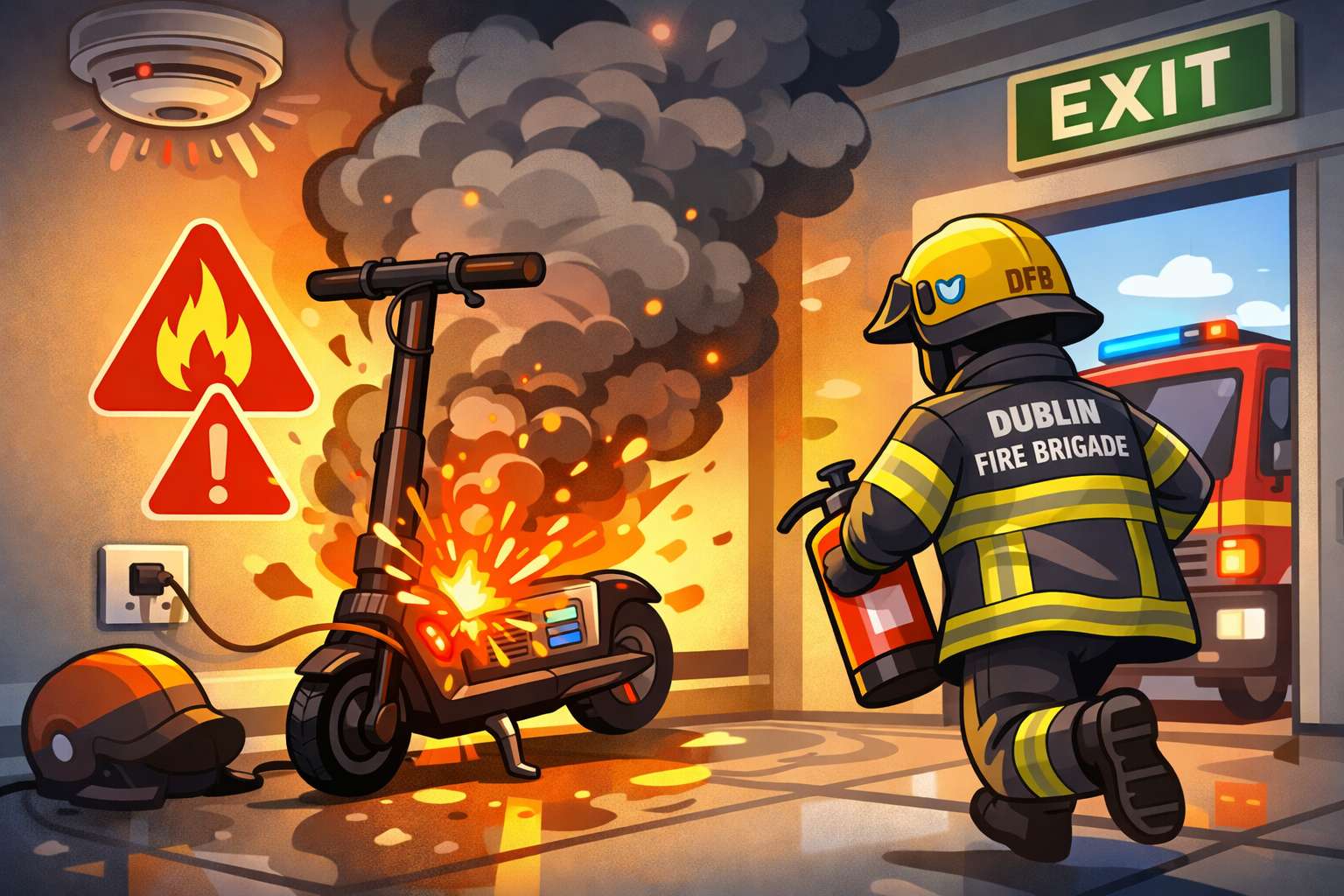
Dublin Fire Brigade has a clear message about e-scooters, e-bikes, and hoverboards. Treat charging like a safety job, not a quick chore. Lithium-ion batteries can fail without warning, and the fire can grow fast. So small habits at home can make a real difference.
Why these battery fires feel so sudden
Most personal electric rides use lithium-ion batteries. They pack a lot of energy into a small space. So when something goes wrong, heat can build quickly.
A battery fault can trigger thermal runaway. One cell heats up, then nearby cells overheat, then the pack releases more heat. Then the device can vent hot gas and thick smoke into the room. That smoke can turn dangerous fast, and it can block your view in seconds.
This kind of fire can be hard to control with basic home tools. So the best move is prevention, and a fast exit if things go wrong.
The charging mistakes to stop today
People often charge wherever the plug sits. That feels normal, yet it creates risky patterns. Dublin Fire Brigade highlights a big one. Charging in hallways and near doors can trap you if a fire starts.
Here are the mistakes that show up again and again, and the fixes that go with them.
Charging in escape routes.
A hallway looks like open space, so people park devices there. But a fire in that spot can cut off the only way out. So charge away from hallways, stairs, and front doors.
Charging overnight.
Sleep feels like the perfect time to charge. Yet you cannot spot warning signs when you sleep. So charge when someone stays awake and nearby.
Leaving the home during a charge.
Many people plug in, then run errands. That creates a long window with no supervision. So unplug before you leave, even for a short trip.
Covering the device or charger.
Coats, bags, and blankets trap heat. Heat stresses batteries and chargers. So keep devices uncovered, and keep the area clear.
Using the wrong charger.
Mixing chargers across brands and models can push the battery outside safe limits. So use the charger made for that device, and replace it with the correct part if it breaks.
If you live in an apartment, this matters even more. Shared corridors and lobbies serve as escape routes for many people. So keep them clear at all times. For practical steps that fit apartment living, read this guide on apartment charging fire safety.
Buy smart, then check the basics
Not every device on the market meets the same standard. So shop with reputable retailers, and look for clear product information.
Check the packaging and the manual. Look for a real manufacturer name, a model number, and safety instructions that make sense. If the product looks vague or poorly labelled, skip it.
Second-hand devices need extra care. You do not know how the battery lived its life. A hard crash can damage cells inside the pack, and you may not see it from the outside. So get a second-hand scooter or bike checked before regular use.
Warning signs you should never ignore
Battery problems often start small. So watch for early signals, even if the device still “works.”
Look out for:
- A burning or chemical smell
- Hissing, popping, or crackling sounds
- Smoke or vapor
- A charger that runs unusually hot
- A battery case that swells, cracks, or leaks
- A device that charges in strange bursts, then stops
If you notice any of these, stop charging right away. Then move people away from the device. If you can unplug safely, do it. If you cannot, leave it alone and focus on getting out.
What to do if a fire starts
A fast response saves lives. So keep it simple.
- Get everyone out right away.
- Close doors behind you if you can do it safely.
- Raise the alarm in the building.
- Call emergency services once you are outside and safe.
- Tell the call-taker it involves an e-scooter, e-bike, or hoverboard battery.
Do not go back inside. Smoke from battery fires can turn toxic fast, and it can take over a stairwell quickly.
A simple home setup that works
Pick one charging spot, then stick with it. Choose a hard surface, and keep it away from curtains, paper, and soft furniture. Keep the cable tidy, so it does not snag or fray. Then charge in shorter sessions, and unplug once it reaches full charge.
After a fall or crash, inspect the scooter or bike before you charge it again. Look for dents near the battery area, loose parts, or cracks in the deck. If you see damage, stop using it until someone checks it.
These steps sound basic, and they are. Still, they reduce risk in a real and practical way. So you get the convenience of electric rides, and you keep your home safer at the same time.