

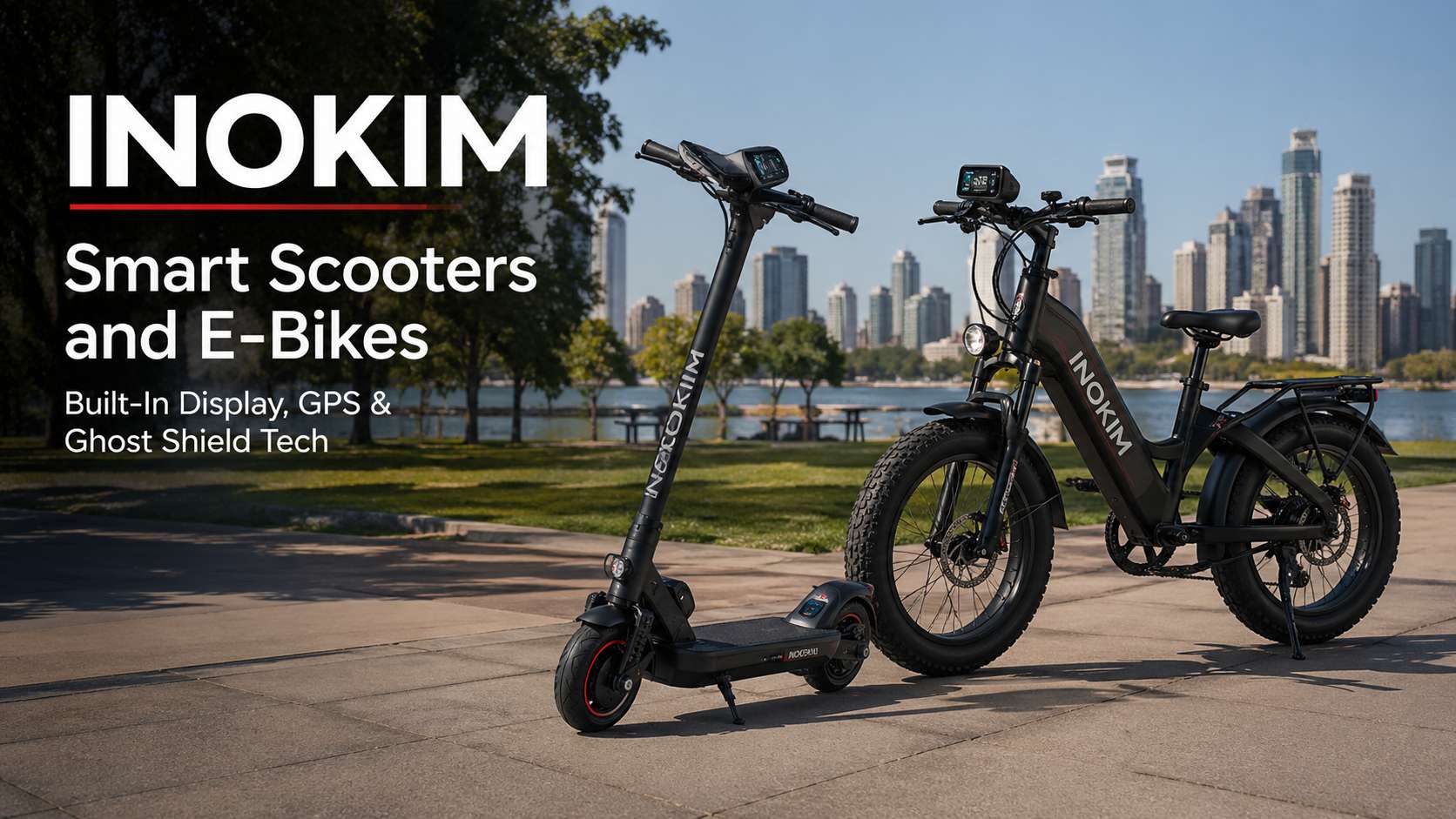
INOKIM brings smart display tech to its 2026 lineup
INOKIM has announced a new 2026 range of electric scooters and e-bikes built around a smart connected display. The system places navigation, calls, messages, music, GPS tools and rider controls on the vehicle screen, rather than on a phone attached to the handlebar.
The launch was announced on April 28, 2026, ahead of the Shanghai International Bicycle Show, which runs from May 5 to May 8, 2026. INOKIM is using that event to present its new scooters, its first e-bikes and its updated smart tech package.
The idea is simple. INOKIM wants the scooter display to feel more like a car dashboard. Riders get key information in one place, and the handlebar stays cleaner. Delivery riders get a neater setup too, since they often rely on maps, calls and order alerts during long work shifts.
INOKIM calls this the world’s first electric scooter and e-bike range with a built-in smart connected display. That claim comes from the brand’s launch material. Independent market checks will give a clearer picture later, but the feature itself fits the direction of urban transport in 2026.
Built-in display aims to fix a common rider problem
Many scooter riders already use phone mounts. They use them for maps, music, ride data and app alerts. That setup works, but it brings problems. A phone mount can shake on rough roads. It can block part of the cockpit. It can distract the rider at the wrong moment.
INOKIM’s built-in display tries to move those tools into the scooter itself. The screen handles navigation and basic connected features, so the rider does not need to keep a phone exposed on the handlebar.
This matters most for delivery riders. A courier may check routes, take calls and follow order updates many times per hour. A built-in display gives that rider a cleaner and more secure setup. It also lowers the chance of a phone slipping, vibrating loose or getting damaged in bad weather.
App connection still matters, of course. Riders who already deal with setup problems on other brands know how frustrating that can feel. For example, this guide on what to do when a Xiaomi scooter won’t connect to the Xiaomi Home app shows why stable software and clear pairing steps matter for daily use.
INOKIM Light 3 appears to lead the smart scooter range
The INOKIM Light 3 looks like the key scooter in this new push. INOKIM describes it as a flagship model with a smart connected display, built-in GPS, comfort-focused design and daily commuter features.
Full specs have not been published in a complete public sheet yet. That means buyers still need confirmed details for motor power, battery capacity, real-world range, top speed, charging time and final price.
Even so, the direction is clear. INOKIM wants the Light 3 to do more than move riders from point A to point B. It wants the scooter to manage the ride, protect the vehicle and reduce phone dependence.
That matters in a crowded scooter market. Many brands already compete on range, speed and suspension. INOKIM is trying to stand out with software, display design and built-in security.
Ghost Shield adds GPS and anti-theft protection
The new Ghost Shield system is one of the most useful parts of the launch. INOKIM describes it as a protection package with a built-in alarm, GPS tracking, rider controls and a three-layer anti-theft setup.
Theft remains one of the biggest worries for scooter owners. A premium electric scooter can cost far more than a basic commuter bike. Many riders park outside offices, shops, apartments and train stations. A normal lock helps, but it does not solve every problem.
A built-in alarm can scare off casual theft attempts. GPS tracking can help owners locate the scooter after it moves. Rider control features can add another layer between the thief and the vehicle.
This does not replace a strong lock. It works best as part of a wider setup. A good lock, safe parking habits and built-in tracking give the rider a stronger security plan.
INOKIM enters the e-bike market
The launch marks INOKIM’s first move into electric bikes. The new e-bikes use the same smart connected display idea and target city riders, delivery workers and people who want connected commuter transport.
That step makes sense for the brand. E-bikes now play a large role in urban delivery, short commutes and car-free travel. They give riders more comfort over longer distances, and they often handle rough streets better than small-wheel scooters.
INOKIM can use its scooter experience here. The brand already knows lightweight frames, batteries, brakes and compact city transport. The e-bike range lets it reach riders who want pedals, a seated position and longer daily use.
Search interest around smart e-bikes, e-bikes with GPS, delivery e-bikes and electric bikes with built-in display keeps growing. INOKIM now has a product story that speaks directly to those searches.
UL 2272 certification gives the lineup a stronger safety angle
INOKIM says every model in its 2026 lineup is UL 2272 certified. That matters, mainly for buyers in the United States and other markets that place more attention on battery and electrical safety.
UL 2272 covers the electrical system of personal e-mobility devices. It looks at the drive train system, battery system and charger system together. For riders, the value sits in tested electrical safety, especially around fire and charging risk.
This certification does not mean a scooter is crash-proof. It does not mean the scooter cannot be stolen. It does not replace local traffic laws. Still, it gives buyers and retailers a useful safety marker.
INOKIM says the range also carries CE, FCC and RoHS marks. These marks support sales in more regions and help the brand work with dealers, fleets and business buyers.
What riders should watch next
The 2026 INOKIM launch sounds promising, but buyers still need the full numbers. Price, range, weight, battery size, screen size, water resistance and warranty terms will decide how strong this lineup really is.
The smart display also needs to work well in daily use. It must stay readable in sunlight. It must react fast. It must handle rain, vibration and long rides. App support needs clear setup steps too, since riders will not accept a premium scooter that feels confusing on day one.
Delivery riders will care about battery life, repair cost and durability. Commuters will care about weight, folding size and braking. E-bike buyers will look at frame comfort, tire size, motor support and cargo options.
Why this launch matters
INOKIM is not only adding a screen to a scooter. It is trying to change what riders expect from premium micromobility in 2026.
Speed and range still matter, but smart features now carry more weight. Riders want GPS. They want theft alerts. They want clear navigation. They want a cleaner handlebar and fewer loose accessories.
The new INOKIM range answers that demand with a built-in display, Ghost Shield protection and its first e-bike lineup. The next step is real-world testing. If the software feels stable, the hardware feels strong and the prices stay fair, INOKIM could have one of the more interesting smart scooter launches of 2026.