

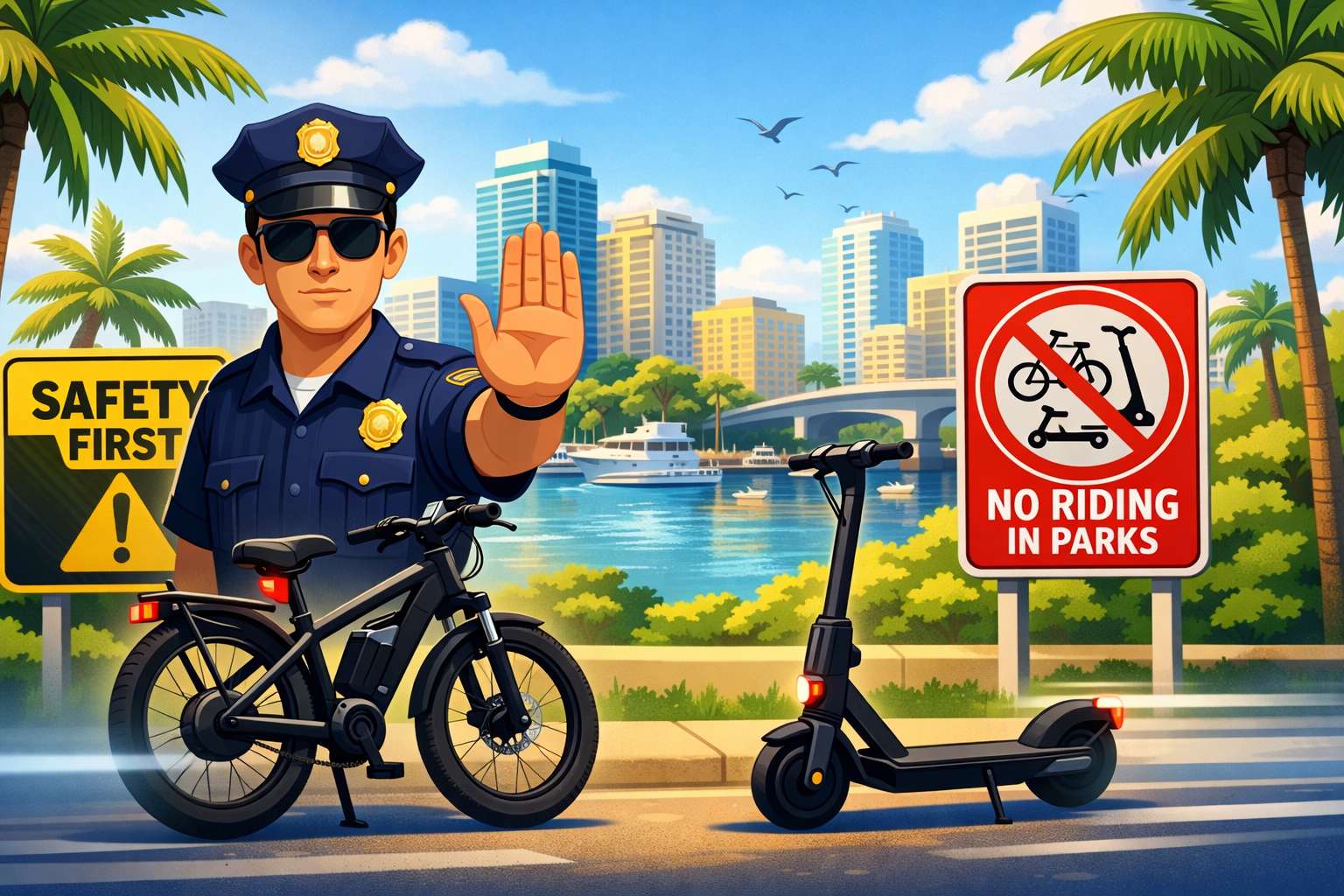
Fort Lauderdale is moving closer to new rules for e-bikes and electric scooters. City leaders are reacting to a wave of resident complaints about speed, sidewalk riding, and close calls near parks and homes. The issue has picked up fast, and now it looks like the city wants stricter control over where these devices can go and how they should be used.
That matters for riders, parents, drivers, and people on foot. It matters for anyone searching terms like Fort Lauderdale e-bike laws, electric scooter rules in Fort Lauderdale, Florida sidewalk riding law, or park rules for e-bikes and scooters. The city has not approved a final ordinance yet. Still, the public direction is already clear. Officials want slower riding in pedestrian areas, tighter park access rules, and stronger enforcement.
Why Fort Lauderdale is looking at new rules
The current push started after residents raised fresh concerns about reckless riding in neighborhoods such as Harbordale. People described teens riding fast on e-bikes and said they felt unsafe on sidewalks and near homes. City Commissioner Ben Sorensen said the problem is not limited to one street or one part of the city. Instead, it has become a broader safety issue that now needs a citywide response.
City records back that up. Recent commission materials show that leaders asked staff to look at the types of bikes involved in these complaints and to prepare an enforceable ordinance. So this is no longer just talk. The city is actively working on language that could change how e-bikes and scooters are used across Fort Lauderdale.
That early stage matters. No final vote has happened yet. No final wording has been released either. Even so, the outline that city leaders have shared gives riders a good sense of where this is heading.
What the city may change
The ideas on the table are direct and easy to understand. Fort Lauderdale is looking at possible limits on e-bikes in city parks. The city is reviewing whether these devices should be kept off park pathways too. At the same time, officials are studying sidewalk speed limits and rules for passing close to pedestrians.
That combination points to one main goal. The city wants fewer fast-moving devices in places built for walking, relaxing, and family use. A Class 3 e-bike can travel much faster than a normal bicycle, and that speed feels very different on a narrow sidewalk than it does in a bike lane. So even a legal bike can become a problem if the riding behavior is aggressive or careless.
The city’s message is broader than just rental scooters. Officials have signaled that the new rules may cover all micromobility devices. That includes private e-bikes, private electric scooters, and other similar machines that now move through parks, sidewalks, and neighborhood streets.
What Florida law says right now
Florida law already gives local governments room to act. Cities can regulate e-bikes on streets, sidewalks, sidewalk areas, and other local spaces under their control. The same basic local authority applies to motorized scooters and micromobility devices. So Fort Lauderdale does not need to start from zero. It already has the legal space to create more local rules.
State law still treats e-bikes in a bicycle-like way in many respects. Riders do not need a driver license, title, registration, or insurance just to operate an e-bike under that framework. The same point applies to many scooter and micromobility rules at the state level. That legal structure helped these devices spread fast. Yet it has left many cities trying to catch up once sidewalks and shared paths got crowded.
Florida defines an electric bicycle as a bike with operable pedals, a seat or saddle, and an electric motor of less than 750 watts. State law recognizes three classes of e-bikes. The fastest common type, Class 3, can provide pedal assist up to 28 mph. That is a useful speed on the road. It is a very different story near people walking a dog, pushing a stroller, or stepping out of a driveway.
Helmet rules matter too. In Florida, riders and passengers under 16 must wear a helmet on a bicycle. That rule carries over in practice for e-bikes under the state’s bicycle-based framework. So families with younger riders should pay attention to that part right now, even before Fort Lauderdale adopts anything new.
A new Florida safety bill could shape the debate
The local conversation is happening at the same time as a wider state push. A Florida safety bill tied to e-bike use has moved through the Legislature, and it could change how riders behave in pedestrian areas if it takes effect. That gives Fort Lauderdale even more reason to act now.
One key part of that bill is the proposed 10 mph cap for e-bike riders on sidewalks or other pedestrian-designated areas when a pedestrian is within 50 feet. The bill would push riders to slow down near people on foot. It would require yielding on shared pathways and would call for an audible signal before passing in certain spaces. In plain terms, it tries to reduce surprise, speed, and unsafe passing where people walk.
That state effort fits neatly with what Fort Lauderdale is discussing. City leaders are worried about speed, sidewalk conflict, and behavior near pedestrians. The proposed state rules target those same pressure points. So if you want the bigger picture, this recent breakdown of the Florida e-bike safety bill helps explain why local cities are paying closer attention now.
Fort Lauderdale already has some scooter and micromobility controls
Fort Lauderdale is not building from scratch. The city already adopted rules in past years for dockless micromobility programs. Those rules limited where shared scooters could operate and gave the city power to create no-ride zones, speed limits, geofenced areas, and time restrictions.
Past rules already restricted some shared devices in parts of the barrier island, on parts of Las Olas Boulevard, and around Riverwalk areas. So the city has experience with this type of control. What is changing now is the scale of concern and the focus on private devices, not just shared ones.
Park rules matter too. Existing city guidance says motorized or electric vehicles should not operate off roads or on certain bike paths inside park interiors. Yet many residents still feel that fast e-bikes and scooters are slipping through the gaps between old park rules, general bicycle law, and real-world enforcement. That is likely why city leaders want a clearer ordinance with language that police officers and riders can understand on the spot.
What riders and residents should watch next
The biggest thing to watch is the draft ordinance itself. Once the city releases the text, riders will be able to see whether Fort Lauderdale wants a full park ban, a sidewalk speed cap, age rules, ID requirements, fines, or some mix of all of them. Right now, several outcomes are possible. Yet the direction is not hard to read. The city wants tighter control in shared public spaces.
For riders, this is a good time to adjust habits before the rules change. Slow down near people on foot. Treat sidewalks as high-conflict areas, not fast lanes. Know the class of your e-bike. Check whether your route crosses parks, pathways, or other places where local rules may tighten soon. Small changes in behavior now can prevent fines and reduce the pressure for even stricter rules later.
Residents should watch the commission agenda and city updates closely. Once draft language appears, the conversation will shift from broad complaints to exact limits and penalties. That next step will matter far more than any headline.
Why this story matters beyond Fort Lauderdale
Fort Lauderdale is part of a wider shift in Florida. E-bikes and scooters are now common in cities, beach areas, downtown districts, and neighborhood streets. That growth has brought convenience, lower travel costs, and less traffic for short trips. Yet it has brought new friction too, especially where fast devices mix with people on foot.
So this story is bigger than one city meeting. It speaks to a question that many Florida communities are now asking. How do you keep e-bikes and scooters useful without letting sidewalks and parks turn into speed corridors? Fort Lauderdale seems ready to answer that question with stricter local rules. The final details are still coming, but the city’s direction is already easy to see.